By Charles Pitts

The global energy landscape is undergoing a tectonic shift as the ai energy nexus mining stocks sector becomes the focal point for Silicon Valley’s largest players. In what industry analysts are calling the “Silicon-Nuclear Nexus,” hyperscalers like Microsoft, Amazon, and Google are no longer content with merely purchasing green energy credits. They are moving upstream, deploying billions in capital directly into uranium mining infrastructure and small modular reactor (SMR) development to secure the baseload power required for the next generation of artificial intelligence.
As of May 2026, the estimated hyperscaler capital expenditure (capex) allocated toward SMR and nuclear initiatives has surpassed $15 billion. This surge is driven by a stark reality: the AI revolution is power-hungry, and intermittent renewables cannot meet the 24/7 reliability standards of modern data centers.
The $15 Billion Hyperscaler Shift
For over a decade, Big Tech’s energy strategy was defined by Power Purchase Agreements (PPAs) focused on wind and solar. However, the volatility of these sources: and the physical constraints of the grid: have forced a strategic pivot. The ai energy nexus mining stocks rally of early 2026 is a direct result of these companies transitioning from “grid-power buyers” to “uranium mine financiers.”
Microsoft’s $16 billion partnership with Constellation Energy to restart the Three Mile Island facility served as the opening salvo. Since then, the trend has accelerated. Amazon (AWS) and Google have followed suit, not just by signing contracts, but by taking equity stakes in the fuel cycle itself. By securing direct interests in uranium projects, these companies are insulating themselves from a projected structural deficit in the uranium market.
More Read


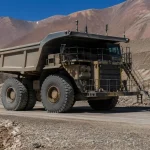
Open-pit mining remains the primary source for the uranium feed needed to meet burgeoning SMR demand.

Beyond PPAs: The Move Into Direct Mine Financing
The most significant development in 2026 is the emergence of Big Tech as a source of mining finance. Historically, uranium mines were funded by institutional investors or large mining conglomerates like Cameco or Kazatomprom. Today, hyperscalers are providing the “patient capital” required to bring junior developers into production.
This vertical integration is a defensive move. With smr uranium demand 2026 projections showing a 20% year-over-year increase in fuel requirements for advanced reactors, the “just-in-time” supply chain is no longer viable. Big Tech firms are now acting as anchor tenants for mining projects in the Athabasca Basin and the Western United States, offering prepayment structures that de-risk the massive capex required for new mines.
More Read

For more on this trend, see our analysis of the multi-billion dollar race for uranium.
SMR Uranium Demand 2026: The Technical Drivers
The rise of Small Modular Reactors is the primary catalyst for the new uranium bull market. Unlike traditional gigawatt-scale reactors, SMRs are designed to be factory-built and deployed in clusters directly adjacent to data centers.
Technical specifications for these reactors often require High-Assay Low-Enriched Uranium (HALEU), a specialized fuel that is currently in short supply. The push for HALEU production has created a secondary investment boom within the mining sector, as companies race to develop the enrichment and conversion facilities necessary to process raw ore into SMR-ready fuel.
Table: Big Tech Nuclear and SMR Commitments (May 2026 Update)
| Company | Key Partner(s) | Capacity Commitments | Primary Focus Area | Estimated Capex ($B) |
|---|---|---|---|---|
| Microsoft | Constellation, Helion | 2.5 GW | Brownfield Restarts / Fusion | $16.0 |
| Amazon (AWS) | X-energy, Talen | 1.8 GW | SMR Deployment / Co-location | $4.5 |
| Kairos Power | 500 MW | Molten Salt SMRs | $2.2 | |
| Meta | Oklo, Vistra | 1.2 GW | Fast Fission SMRs | $3.1 |
Source: Skillings Mining Intelligence Data (2026)
The Impact on AI Energy Nexus Mining Stocks
The entrance of Big Tech into the mining space has fundamentally re-rated the valuation of uranium developers. Stocks that were once viewed as speculative are now being treated as critical infrastructure plays.
Investors are looking beyond the “blue-chip” anchors like Cameco and exploring junior miners with high-grade assets. The Sprott Junior Uranium Miners ETF (URNJ) has seen record inflows in the first half of 2026, as retail and institutional investors alike chase the “Big Tech tailwind.”

Operational efficiency is paramount as mines scale up to meet the specific delivery windows required by tech-led SMR projects.
Companies like Uranium Energy Corp (UEC) and EnCore Energy have been highlighted as potential beneficiaries of this trend, given their focus on domestic U.S. production: a key requirement for tech firms looking to minimize geopolitical risk. The convergence of energy security and national security is making these ai energy nexus mining stocks a permanent fixture in diversified portfolios.
Operational Realities: The 2026 Mining Landscape
Despite the influx of capital, the physical reality of mining remains a challenge. Permitting timelines for new uranium mines in North America can still exceed 7–10 years. This has led Big Tech to prioritize “brownfield” projects or mines that are already in the advanced stages of the licensing process.
To bridge the gap, many hyperscalers are investing in technology that improves mine-site efficiency. This includes AI-driven exploration tools and autonomous drilling rigs, which are becoming the new standard for the industry. The integration of technology doesn’t just end at the data center; it starts at the rock face.

Modern underground extraction techniques are being modernized through Big Tech’s push for operational transparency and safety.
Risks and Regulatory Hurdles
The Silicon-Nuclear Nexus is not without its risks. The primary concern for 2026 remains the regulatory bottleneck. While the NRC has recently accepted commercial microreactor permits, the pace of approval still lags behind the speed of AI development.
Furthermore, the price of uranium remains volatile. If the spot price stays above $85/lb, many projects are viable, but a sudden supply glut from restarts in Kazakhstan or Canada could dampen the enthusiasm of tech-sector investors. There is also the “social license to operate”: public perception of nuclear power remains mixed in many jurisdictions, which could lead to project delays despite high-level corporate backing.

The fuel cycle, from pellet production to reactor loading, is now a core focus of hyperscaler supply chain management.
Conclusion: The 2026 Outlook
The marriage of Silicon Valley and the uranium mining industry is no longer a fringe theory; it is the dominant market narrative of 2026. As AI models grow in complexity and data centers scale to meet the demand, the need for reliable, carbon-free baseload power will only intensify.
For mining companies, the message is clear: the customer base has changed. You are no longer just selling a commodity to utilities; you are selling a mission-critical component to the world’s most valuable technology companies. Investors who understand this shift in the ai energy nexus mining stocks will be best positioned to capitalize on the next leg of the uranium bull market.
As we look toward the second half of the year, expect more direct equity deals and potentially the first instance of a hyperscaler acquiring a junior mining company outright. The line between “Tech” and “Mining” has never been thinner.
Stay updated on the latest SMR projects powering the AI boom.