By Penny Langford

TORONTO : Agnico Eagle Mines (TSX: AEM) (NYSE: AEM) has unveiled a comprehensive multi-year capital expenditure program for its Ontario operations, earmarking between US$10.2 billion and US$14 billion for project development and mine expansions through 2030. The strategic investment, announced Saturday, aims to solidify the province’s position as a premier global gold hub while significantly accelerating production profiles at the company’s flagship Detour Lake and Macassa complexes.
The announcement represents one of the largest single-province mining investment commitments in Canadian history. It comes as gold prices continue to face structural support from sovereign reserve trends and global inflationary pressures, as detailed in recent market outlooks for 2026. For Agnico Eagle, the move signals a shift from integration following its 2022 merger with Kirkland Lake Gold toward an aggressive "Ontario-first" growth phase.
Scaling the Detour Lake Underground Frontier
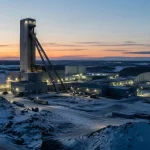
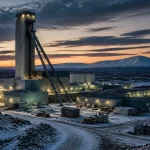
At the heart of the capital plan is the continued transformation of the Detour Lake mine. Already one of the world's largest gold producers, the site is transitioning into a dual-model operation combining its massive open-pit capacity with a high-grade underground project.
Agnico Eagle confirmed that a significant portion of the $14 billion envelope will be directed toward the Detour Lake underground development. Recent exploration has identified a high-grade corridor in the West Pit zone that is increasingly amenable to large-scale underground mining. By 2030, the company expects the underground component to contribute significantly to the site’s objective of sustaining production levels above 1 million ounces of gold annually.



“The focus at Detour Lake remains on mill optimization and the rapid advancement of the underground portal,” said a senior operational lead. “We have already completed the surface pad for the underground infrastructure and cleared overburden for the main portal. This investment ensures the technical and logistical complexity of such a large-scale transition is fully funded through the end of the decade.”
The expansion also includes a multi-phased mill optimization program. The goal is to increase throughput toward 32 million tonnes per annum (Mtpa), leveraging automation and advanced fleet management systems to lower unit costs as the mine reaches deeper into the Abitibi Greenstone Belt.

Deep-Level Optimization at Macassa
In the Kirkland Lake camp, the Macassa mine will receive targeted investment to optimize its high-grade underground operations. Following the successful commissioning of the No. 4 shaft, the new capital plan focuses on lateral development and the integration of battery-electric vehicle (BEV) fleets to improve ventilation and operational efficiency at depth.
Macassa remains one of the highest-grade gold mines in the world. The US$14 billion plan includes provisions for expanded near-mine exploration to replace reserves and extend the mine life beyond 2035. As part of Agnico’s broader ESG strategy, Macassa will serve as a pilot site for several new "green mining" technologies, including automated drilling platforms and AI-driven ore sorting systems.
The focus on high-efficiency, high-grade extraction is a trend seen across major producers, as companies seek to insulate margins against rising energy and labor costs. This capital discipline was recently highlighted in the Skillings 2026 Mining Power List, which tracks how majors are redefining operational excellence.
Provincial Support and Regulatory Tailwinds
The scale of Agnico Eagle’s commitment is supported by a shift in Ontario’s regulatory environment. Provincial officials have signaled a commitment to accelerating permitting processes for critical mineral and gold projects, recognizing the economic impact of the mining sector on Northern Ontario communities.
"Ontario is a tier-one jurisdiction not just because of the geology, but because of the regulatory certainty and the skilled workforce available," the company stated in its disclosure. "The provincial support for infrastructure: including road access and power grid stability: is a critical factor in our decision to deploy this level of capital here rather than in competing global jurisdictions."
The investment is expected to create over 2,500 permanent high-skilled mining jobs and several thousand more during the construction phases of the various expansion projects. This comes at a time when the industry is grappling with a broader workforce crisis, making Agnico's long-term commitment a vital anchor for regional economic stability.

Gold Mining News: The 2026-2030 Outlook
Industry analysts suggest that Agnico Eagle’s $14 billion spend is a defensive-offensive maneuver. By securing its production profile in a stable jurisdiction like Ontario, the company mitigates geopolitical risks associated with other mining regions. This move reflects a broader industry trend where majors are pivoting back to "safe-haven" jurisdictions despite higher initial capital requirements.
The capital expenditure breakdown is projected as follows:
| Project Phase | Estimated Spend (USD) | Primary Focus |
|---|---|---|
| Phase 1 (2026-2027) | $3.5B – $4.5B | Detour Underground Portal, Macassa Fleet Electrification |
| Phase 2 (2028-2029) | $4.0B – $6.0B | Mill Expansion (32 Mtpa), Regional Infrastructure |
| Phase 3 (2030+) | $2.7B – $3.5B | Deep-level Macassa Exploration, Long-term Waste Management |
This financial roadmap is set against a backdrop of increasing consolidation in the sector. Smaller explorers are finding it harder to secure funding, leading to a "majors-only" development landscape for large-scale projects. Comparable financial restructuring in the sector, such as Americas Gold's recent stock swap with Sprott, underscores the importance of a strong balance sheet in the 2026 market environment.
Technological Integration and Remote Monitoring
A portion of the $14 billion investment is earmarked for the "Digital Mine" initiative. Agnico Eagle plans to centralize its Ontario operations through a state-of-the-art control center. This facility will allow for real-time monitoring of equipment health, operator safety, and production metrics across both the Detour Lake and Macassa sites.

The use of remote-controlled machinery in high-risk zones and AI-assisted geological modeling is expected to reduce operational costs by as much as 12% by 2029. "We are no longer just moving rock; we are managing data," the company noted. This integration of technology is a core pillar in the company’s plan to maintain its status as a low-cost producer while expanding into more challenging underground environments.
Implications for Ontario as a Global Gold Hub
With this $14 billion roadmap, Agnico Eagle is effectively betting on the long-term viability of the Abitibi Greenstone Belt. The province of Ontario is now positioned to rival major gold-producing regions like Western Australia and Nevada in terms of both annual output and technological sophistication.
For investors and industry stakeholders, the move provides a clear timeline for production growth. While the capital intensity is high, the focus on tier-one assets in a tier-one jurisdiction provides a level of de-risking that is increasingly rare in the current commodity cycle. As Agnico Eagle executes on this plan, the focus will remain on whether the company can maintain its project timelines amidst global supply chain pressures and a tightening market for specialized mining equipment.
The company is scheduled to provide a further technical update on the Detour Lake underground resource model in the third quarter of 2026, which will likely serve as the next major catalyst for the capital program.
About Agnico Eagle Mines
Agnico Eagle is a senior Canadian gold mining company, producing precious metals from operations in Canada, Australia, Finland, and Mexico. It has a pipeline of high-quality exploration and development projects in these countries as well as in the United States. Agnico Eagle is a partner of choice within the mining industry, recognized globally for its leading environmental, social, and governance practices.