By Penny Langford

The global mineral landscape is shifting, and 2026 has emerged as the definitive tipping point for one of the most critical yet overlooked elements in the industrial periodic table: antimony. While lithium and copper often dominate the headlines of the energy transition, antimony has quietly become the centerpiece of a high-stakes geopolitical tug-of-war.
As we move through 2026, the convergence of China’s rigid export restrictions, a surge in North Atlantic defense requirements, and the accelerating demand for high-performance solar glass has created a "perfect storm" for the antimony market. For operators and investors, understanding the antimony price trend 2026 is no longer a niche concern: it is a strategic necessity.
The China Catalyst: From Restrictions to a Total Ban
The primary driver of the current supply squeeze dates back to late 2024. In December of that year, Beijing escalated its "resource security" strategy by banning the export of antimony and related technologies to the United States. This move followed an August 2024 policy that required export licenses for several antimony-related products.
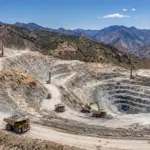
China currently controls approximately 61% of global antimony production and a significantly higher percentage of the world’s refining capacity. The impact of these restrictions has rippled through the 2025 calendar year and solidified into a structural deficit in 2026. According to the USGS 2026 Antimony Report, China’s domestic crackdown on illegal mining and declining ore grades at its massive Xikuangshan mine have further constrained the available "free market" supply.
This tightening of the supply chain mirrors broader trends explored in our analysis of China’s mineral cooperation questions, where the weaponization of critical minerals has forced Western nations into an aggressive race for domestic procurement.


The Three Pillars of 2026 Demand
Antimony is often called the "Great Transformer" because it enhances the properties of other materials. In 2026, three sectors are competing for a dwindling supply of the metal.

1. The Defense Industrial Base
Antimony is a non-negotiable component in modern munitions. It is used as a hardening agent for lead bullets and shell primers, in tracers, and in infrared sensors for night-vision goggles. With the ongoing replenishment of NATO stockpiles and heightened geopolitical tensions in Eastern Europe and the Indo-Pacific, military demand has become price-insensitive. Analysts note that defense contractors are now prioritizing security of supply over cost, creating a "hard floor" for prices.
2. The Photovoltaic (PV) Surge
In the renewable energy sector, antimony is used to clarify the glass used in high-efficiency solar panels. Data from CRU Group suggests that PV-related demand in 2026 is nearly 350% higher than 2020 levels. As global solar capacity continues to expand, solar glass manufacturers are competing directly with defense buyers for the same high-purity antimony trioxide.
3. Flame Retardants and Electronics
Traditionally, flame retardants account for over 50% of global antimony consumption. While substitution with phosphorus-based alternatives is possible in some applications, antimony remains the industry standard for plastics, textiles, and aircraft interiors. In the electronics sector, its use as a dopant in semiconductors for high-speed computing and AI data centers provides a small but high-value growth lever.

Antimony Price Trend 2026: Drivers and Forecasts
The volatility of the antimony market has reached historic levels. After a massive price spike in mid-2025 that saw spot prices peak near $60,000 per tonne (approximately $27.50/lb), the market has entered a period of "higher for longer" stabilization.
As of Q2 2026, the antimony price trend 2026 reflects a bifurcated market:
- Bull Case ($55,000–$65,000/t): Driven by further Chinese export tightening or a sudden escalation in regional conflicts requiring immediate munitions surges. This scenario assumes thin liquidity will cause dramatic price gaps on the LME and regional exchanges.
- Base Case ($25,000–$35,000/t): Driven by steady military demand and solar glass growth, offset by a gradual increase in secondary recycling and artisanal supply from Tajikistan and Myanmar. This remains more than double the 2023 average.
- Bear Case ($18,000–$22,000/t): Assumes a global industrial slowdown that sharply reduces flame retardant demand and a pivot by solar glass manufacturers to antimony-free glass technologies.
Regional divergence is also a key factor. In May 2026, prices in Rotterdam significantly outpaced those in Northeast Asia, reflecting the premium being paid for non-Chinese-origin metal.
Analyzing Critical Minerals Stocks to Buy 2026
For investors, the difficulty lies in the lack of "pure play" antimony producers. Most antimony is produced as a byproduct of gold or silver mining, making the corporate landscape complex.
Those identifying critical minerals stocks to buy 2026 frequently monitor the progress of Western development projects. Perpetua Resources (NASDAQ: PPTA) remains the primary focus in North America. Their Stibnite Gold Project in Idaho is projected to become the largest domestic source of antimony. While the project is still in the development and permitting phases, its strategic importance has been underscored by significant funding support from the U.S. Department of Defense.
Other companies, such as United Antimony and various junior explorers in Australia and Canada, are attempting to revive legacy mines. However, the timeline for new supply remains the biggest hurdle; the industry consensus is that no major "Western" mine will provide significant relief to the market until the 2027–2028 window. This supply-side lag is a common theme across the rare earths supply chain, where the lead time for new production often lags behind geopolitical shifts.

Strategic Outlook: The "New Normal"
The 2026 supply squeeze is not a temporary glitch; it is the realization of a structural shift. The era of cheap, readily available antimony from the East is over. Operators are now re-engineering supply chains to prioritize "friend-shoring" and metal recovery from scrap.
Investors should be wary of the extreme volatility inherent in such a small, opaque market. However, for the defense and energy sectors, 2026 is the year where the cost of not having antimony far outweighs the price of securing it.
The market has shifted from a commodity cycle to a security cycle. As we look toward the 2027 horizon, the lessons learned in the 2026 antimony market will likely serve as a blueprint for other critical metals caught in the crosshairs of the global energy and security transition.
Shareable Snippet for LinkedIn/X
? The Antimony Squeeze is Here. As of 2026, the antimony market has entered a structural deficit driven by China's total export ban to the US and a 350% surge in solar glass demand since 2020. With prices holding steady at historic highs, is this the most critical metal you aren't watching? Read our deep dive on the #Antimony price trend and the #CriticalMinerals outlook for 2026. #Mining #DefenseIndustry #SolarEnergy