By Penny Langford

The high-altitude plains of Puno, Peru, are undergoing a fundamental reclassification in the global hierarchy of critical minerals. Long recognized for its significant lithium potential, the Macusani Plateau is now the center of a strategic regulatory shift that formally integrates uranium into Peru’s national energy and technology framework.
A new Supreme Decree issued by the Peruvian government has declared uranium and lithium as "national pillars" of the country's mining and energy future. This move marks a departure from previous legislation that focused almost exclusively on lithium, effectively acknowledging the geological reality of the Macusani district: the two minerals are inextricably linked in one of the world's most unique volcanic-hosted deposits.
For operators and investors, this regulatory pivot provides the legal clarity necessary to advance the Macusani Plateau from an exploration frontier to a high-tech extraction hub. As global demand for carbon-free baseload power and long-duration storage intensifies, Peru is positioning itself as a dual-commodity provider of the energy transition’s most essential fuels.
The Geologic Blueprint: A Rare Dual-Asset District
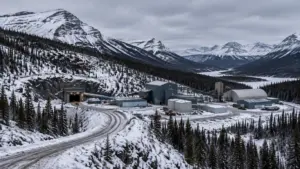
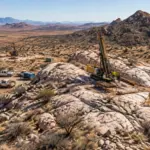
The Macusani Plateau, situated in southeastern Peru, is a high-altitude volcanic province that hosts two of the most significant undeveloped mineral assets in South America: the Falchani Lithium Project and the Macusani Uranium Project. Both are controlled by American Lithium Corp. through its subsidiary, Macusani Yellowcake S.A.C.
The geology of the plateau is distinct. Unlike the lithium-rich brines of the "Lithium Triangle" in Chile, Argentina, and Bolivia, Falchani is a hard-rock, tuff-hosted deposit. This distinction is critical for processing; the mineralized material at Falchani is essentially a lithium-rich volcanic glass that allows for high extraction rates using relatively simple leaching techniques.


Adjacent to these lithium resources lies the Macusani Uranium Project. With an estimated resource of approximately 124 million pounds of $U_3O_8$, it is widely considered the largest undeveloped uranium project in Latin America. The co-occurrence of these minerals in the same district created a historical regulatory bottleneck; until recently, Peru lacked a comprehensive framework to manage the extraction of radioactive materials alongside industrial minerals.
Regulatory Shift: From Commodities to National Pillars
The recent Supreme Decree signifies more than a routine update to mining law. By classifying uranium and lithium as "critical and strategic minerals," the Peruvian state is aligning its domestic policy with the geopolitical realities of critical minerals supply chain security.
The decree formalizes the organization of an International Forum in July 2026, titled “Uranium and Lithium: Pillars of energy leadership for mining, technological and smart city development in Peru and the world.” This forum is co-organized by the Ministry of Energy and Mines (MINEM) and the Ministry of Housing, Construction and Sanitation.
| Key Aspect | Previous Framework (2021) | New Supreme Decree (2026) |
|---|---|---|
| Primary Focus | Lithium only (Law 31283) | Lithium AND Uranium |
| Strategic Designation | Public necessity | National Pillar / Strategic Asset |
| Regulatory Scope | Focused on industrialization | Energy transition & Smart City tech |
| Investment Status | Permitting uncertainty for U | Streamlined strategic alignment |
This shift directly addresses the long-standing legal security concerns of developers. A December 2025 ruling from the Sixth Permanent Court of Lima had already confirmed American Lithium’s ownership of 32 disputed uranium concessions. The new decree effectively "codifies" this security, signaling to the international market that the Peruvian strategic pivot is a permanent fixture of the country's 2026 outlook.
The ‘Project Vault’ Context: Securing High-Density Energy
In the context of institutional interest, the Macusani Plateau has become a primary target for "Project Vault": a strategic initiative focused on mapping and securing high-density energy assets that can serve as long-term supply buffers for the global power grid.
Project Vault prioritizes assets where energy density (uranium) and storage capacity (lithium) are geographically concentrated. The Macusani Plateau is perhaps the only site globally that fits this profile with such high-grade concentration. For the energy sector, "Vault" assets represent a hedge against the volatility of fossil fuel markets and the intermittent nature of renewables.
By integrating these assets into a single regulatory "pillar," Peru is facilitating the creation of a vertically integrated energy hub. The goal is to move beyond the export of raw ore toward a domestic technology ecosystem capable of supporting "smart city" infrastructure and high-tech manufacturing.
High-Tech Operations and Monitoring
The development of the Macusani Plateau will require a departure from traditional Andean mining methods. Due to the high altitude and the sensitive nature of uranium handling, the project is expected to utilize advanced autonomous and remote-monitoring technologies.

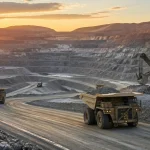
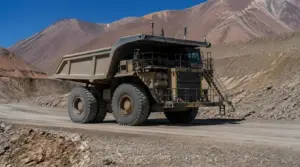
Operational benchmarks for 2026 suggest a focus on autonomous haulage and telemetry to minimize human exposure in the uranium extraction zones. This "high-tech frontier" approach is designed to meet strict international ESG standards, particularly regarding the management of radioactive tailings and water usage on the plateau.
Market Dynamics: Uranium’s New Bull Case
The resurgence of interest in the Macusani Plateau is driven largely by the tightening global uranium market. As nuclear power gains traction as a primary tool for decarbonization, the "uranium gap": the deficit between current production and reactor requirements: continues to widen.
Big Tech’s move toward small modular reactors (SMRs) to power data centers has further accelerated this demand. The AI-energy nexus is now a primary driver of uranium valuation, turning previously "stranded" assets like Macusani into high-value strategic priorities.
Project Snapshot: Macusani & Falchani (Puno Region)
- Operator: American Lithium Corp (Macusani Yellowcake S.A.C.)
- Lithium Resource (Falchani): ~5.5M tonnes LCE (Measured & Indicated)
- Uranium Resource (Macusani): ~124M lbs $U_3O_8$
- Proposed Production: ~6M lbs $U_3O_8$ per year (10-year initial life)
- Geological Host: Volcanic-hosted rhyolitic tuffs
Risk Factors and 2026 Outlook
While the regulatory environment has improved, the Macusani Plateau remains subject to regional political dynamics and social licensing requirements. The Puno region has a history of skepticism toward large-scale extractive projects. The government's decision to include the Ministry of Housing and Construction in the development forum suggests a strategy to tie mining development directly to local infrastructure and "smart city" benefits for the Puno population.
From a valuation perspective, investors are looking at P-NAV (Project Net Asset Value) resets as the projects move toward definitive feasibility studies (DFS). The convergence of lithium and uranium into a single "strategic pillar" likely reduces the risk premium associated with permitting radioactive materials in Peru.
Summary for Decision-Makers
The Macusani Plateau is no longer just a geological curiosity. It has become the testing ground for Peru's new "National Pillar" mining strategy. By aligning uranium and lithium under a unified high-tech framework, Peru is addressing two critical vulnerabilities in the global energy supply chain simultaneously.
For the mining industry, Macusani represents the "Project Vault" ideal: a massive, high-density energy resource secured by a modern regulatory environment. As the July 2026 forum approaches, the industry's eyes will be on Lima to see how these strategic declarations translate into long-term extraction permits and capital flows.
Shareable Snippet (LinkedIn/X)
Peru’s new “Strategic Pillars”: Uranium and Lithium. A new Supreme Decree has formally reclassified the Macusani Plateau as a national priority for the energy transition. With the Falchani Lithium and Macusani Uranium projects moving toward advanced development, Peru is positioning itself as a dual-commodity giant in the high-tech energy frontier. #MiningNews #Uranium #Lithium #EnergyTransition #PeruMining #ProjectVault