By Charls Pitts

The global copper market is undergoing a seismic geographic shift. For decades, the towering peaks of the Chilean Andes were the undisputed heart of global production, with majors like Codelco and BHP anchoring the world’s supply. However, as we look toward the 2026 horizon, a “Great Re-Mapping” is underway. The Democratic Republic of Congo (DRC), once viewed as a high-risk frontier, is rapidly emerging as the world’s most critical growth engine for the “red metal,” effectively winning a high-stakes race against aging, low-grade Chilean giants.
As the energy transition accelerates, the copper price forecast 2026 suggests a period of sustained volatility and potential price spikes. With global inventories at historic lows and structural demand from electric vehicles (EVs) and artificial intelligence (AI) data centers surging, the ability of the DRC to bring high-grade supply online is the only factor preventing a catastrophic market squeeze.
The Chilean Stalemate: Declining Grades and Water Woes
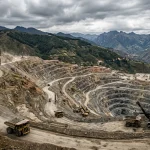
Chile remains the world’s largest copper producer, but its dominance is fraying. The country’s output has stagnated near 5 million tonnes annually, hampered by a combination of geological maturity and environmental constraints. At Codelco, the state-owned behemoth, production recently hit a 25-year low. The reason is simple but difficult to solve: the ore is getting harder to reach and lower in quality.
In the 1990s, Chilean mines frequently boasted ore grades of 1.0% or higher. Today, those grades have plummeted to an average of 0.6% or less. This means miners must move significantly more rock, consume more energy, and use more water to produce the same amount of refined copper.
More Read

“Chile is fighting a war of attrition against its own geology,” notes one senior analyst. “Even with massive capital expenditure, Codelco and BHP are struggling just to keep production flat, let alone grow it.”

Water scarcity has become a secondary, but equally potent, bottleneck. The Atacama Desert, home to many of the world’s largest copper mines, is one of the driest places on earth. New regulations and social pressure are forcing mines to stop drawing from local aquifers and switch to expensive desalinated water pumped thousands of meters up the mountains. This operational complexity adds significant “inflation” to the cost of production, a key driver in the copper deficit impact 2026.

More Read

The Ascent of the DRC: The Kamoa-Kakula Factor
While Chile struggles with maturity, the DRC is experiencing a mining renaissance. Central to this story is Ivanhoe Mines’ Kamoa-Kakula complex. Unlike the declining grades in the Andes, Kamoa-Kakula is producing ore with grades frequently exceeding 5%, making it one of the highest-grade and lowest-cost major copper operations in the world.
By 2026, the expansion of Kamoa-Kakula is expected to propel the DRC into the position of the world’s second-largest copper producer, potentially overtaking Peru and narrowing the gap with Chile. The DRC’s production has already surged toward the 3 million tonne mark, driven by a wave of Chinese-backed and Western-led investments.
The sheer scale of the DRC’s resource base is difficult to overstate. While Chilean projects often take over a decade to move from discovery to production, the DRC has shown an ability to bring massive tonnages online with remarkable speed. This agility is critical for meeting the copper price forecast 2026 benchmarks that anticipate a refined copper shortfall of over 300,000 tonnes by mid-decade.
Logistics Revolution: The Lobito Corridor
Historically, the DRC’s greatest disadvantage was its geography. Landlocked and reliant on inefficient, congested road routes through South Africa or Tanzania, getting copper to international markets was a logistical nightmare.
Enter the Lobito Corridor. This multi-billion dollar infrastructure project: backed by a consortium of Western governments and private interests: rehabilitates the railway line connecting the DRC’s Copperbelt to the Atlantic port of Lobito in Angola.

The Corridor is a game-changer for 2026 market dynamics. It slashes transit times from weeks to days and significantly lowers the carbon footprint of transport. By de-risking the evacuation of minerals, the Lobito Corridor makes the DRC more attractive to Western investors who were previously wary of the logistical hurdles. It effectively moves the DRC’s copper closer to European and North American smelters, challenging the traditional logistics dominance of Latin American coastal mines.
Market Outlook: Copper Price Forecast 2026
The convergence of Chilean stagnation and the DRC’s rapid growth creates a “bipolar” supply side. Market analysts are increasingly focused on the 2026 window as a period of structural deficit. While high-grade supply from the DRC helps cap the deficit, it is unlikely to create a surplus given the massive demand coming from the energy transition.
Copper Price Scenarios for 2026
| Scenario | Average Price (LME USD/t) | Key Drivers |
|---|---|---|
| Bull Case | $13,500 – $15,000 | Deep Chilean disruptions, US tariff shocks, accelerated AI grid demand. |
| Base Case | $11,000 – $12,500 | DRC growth offsets Chile decline; 300kt structural deficit persists. |
| Bear Case | $9,500 – $10,500 | Global recession, significant aluminum substitution, DRC oversupply. |
The baseline expectation for 2026 remains a market in a “tight balance.” Exchange inventories are currently hovering at less than three weeks of global consumption. In such an environment, any minor disruption: a strike in Chile or a power outage in the Katanga Basin: can trigger massive price volatility.
Data Centers and the “Digital Copper” Surge
Beyond EVs, the 2026 demand profile is being rewritten by the AI boom. Data centers are incredibly copper-intensive, requiring the metal for power distribution, cooling systems, and cabling. A single large-scale AI data center can consume upwards of 50,000 tonnes of copper.
As hyperscalers rush to build out global infrastructure, they are competing directly with automakers and grid operators for the same limited supply of high-grade cathode. This “digital copper” demand is a relatively new variable that most traditional 2026 forecasts are only now beginning to fully quantify.

Operational Efficiency and the ESG Divide
The “winning” mines of 2026 will not just be those with the highest grades, but those with the best operational intelligence. As shown in modern control rooms across both regions, the integration of real-time data and autonomous fleet management is becoming the industry standard.
However, a divide is emerging in ESG (Environmental, Social, and Governance) performance. Chile, with its established regulatory framework, is leading in “green copper” initiatives, utilizing solar power and desalinated water. The DRC, while possessing the grade advantage, faces ongoing scrutiny over artisanal mining issues and sovereign risk. For investors and OEMs (Original Equipment Manufacturers), the choice in 2026 will be between the “cleaner” but more expensive Andean copper and the high-volume, high-grade, but geopolitically complex African supply.

Conclusion: A Re-Mapped Reality
By the end of 2026, the global copper map will look fundamentally different than it did at the start of the decade. The “Andean era” of easy, high-volume production is giving way to a more fragmented and complex reality. The DRC’s success in scaling up Kamoa-Kakula and the operationalization of the Lobito Corridor represent a significant victory for Central African mining.
For operators and investors, the lesson is clear: grade and logistics are the new kings. While Chile will remain a vital pillar of the industry, its “aging giants” are no longer enough to satisfy the world’s hunger for copper. The race for 2026 is being won in the Katanga Basin, and the implications for global trade, pricing, and the energy transition will be felt for decades to come.