By Penny Langford

The global nickel market has entered a new era of managed supply. As of June 2026, the narrative has shifted away from the chaotic surpluses of the early 2020s toward a structured, Indonesia-centric dominance that effectively sets the price floor for the entire industry. By leveraging its massive High Pressure Acid Leach (HPAL) capacity and implementing strict ore production quotas, Jakarta has transformed from a disruptive low-cost producer into something akin to the "OPEC of nickel."
This realignment is creating a stark divergence between the two hemispheres of the industry. While Indonesian critical minerals production continues to scale through sophisticated chemical processing, Western producers are grappling with a higher-cost environment that demands either massive policy intervention or a strategic pivot to niche, low-carbon markets.
The 2026 market snapshot: Tighter supply, firmer floors
Throughout the first half of 2026, London Metal Exchange (LME) nickel prices have stabilized within a range of US$16,500 to US$18,500 per tonne. While this is lower than the peaks seen during the 2022 short squeeze, it represents a significantly firmer floor than many analysts predicted two years ago.
The primary driver is Indonesia’s decision to cap 2026 ore production at approximately 250–260 million tonnes. This move, coupled with a shorter one-year validity for mining quotas, has allowed the Indonesian government to maintain tight control over the physical market. Analysts suggest that the "clearing range" for the current market is moving toward US$20,000–22,000 per tonne, a level Indonesia appears comfortable defending.

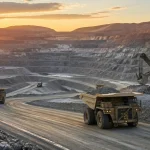
Large-scale extraction of nickel laterite ore in an Indonesian open-pit mine.

The HPAL revolution and the rise of MHP
The technical centerpiece of Indonesia’s dominance is the rapid ramp-up of HPAL projects. Unlike traditional Nickel Pig Iron (NPI) smelters, which primarily feed the stainless steel industry, HPAL facilities process lower-grade limonite ores into Mixed Hydroxide Precipitate (MHP).
MHP has become the "gold standard" for the electric vehicle (EV) battery supply chain. It provides a direct, cost-effective pathway to nickel sulfate without the carbon intensity of converting NPI to matte. By June 2026, Indonesia's share of global nickel production is trending toward 70%, with the vast majority of new battery-grade supply originating from HPAL hubs like Obi Island and Weda Bay.
This technological leap has effectively neutralized the advantage once held by Western sulfide miners. Historically, sulfides were preferred for their relative ease of processing into Class-1 nickel. However, the sheer scale and improving efficiency of Indonesian HPAL plants have closed the gap, allowing Indonesia to dominate both the stainless and battery segments of the nickel market outlook 2026.
Western producers: Survival in a high-cost environment
For Western producers, the current landscape is one of consolidation and optimization. The wave of closures seen in 2024: including major operations in Australia and New Caledonia: has left the remaining players in a defensive posture.

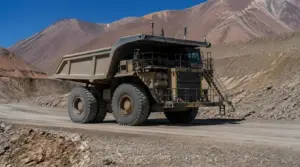
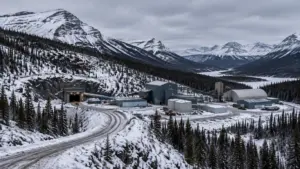
A Western-style nickel mining complex, representing the high-cost, high-grade operations found in regions like Canada and Australia.
Operations in jurisdictions like Canada, Australia, and Scandinavia are now sitting far up the cost curve relative to Indonesian integrated complexes. These producers are increasingly reliant on three pillars to maintain viability:
- Premium Pricing: Attempting to capture a "green premium" for low-carbon, traceable Class-1 nickel.
- Policy Support: Utilizing domestic critical minerals subsidies and tax credits, such as those provided by the U.S. Inflation Reduction Act (IRA) and similar EU frameworks.
- High-Grading: Focusing extraction on only the most lucrative ore bodies to lower the break-even point.
The challenge remains the cost differential. Even with policy support, a Canadian sulfide mine often faces operational costs that are 30% to 50% higher than an Indonesian HPAL counterpart. As we have seen in our analysis of the 2026 resource realignment, the surge in chemical processing costs has impacted everyone, but the integrated nature of Indonesian projects provides a buffer that Western mines lack.
Comparing the global giants: 2026 Outlook
The following table highlights the structural differences between the two dominant production models as they stand in mid-2026.
| Feature | Indonesia (HPAL/NPI Hubs) | Western Producers (Sulfide & Laterite) |
|---|---|---|
| Global Market Share | ~65–70% and rising | ~30% and shrinking |
| Primary Feedstock | Limonite & Saprolite (Laterite) | High-grade Sulfide & Laterite |
| Primary End-Product | MHP, Matte, NPI | Class-1 Briquettes, Sulfate, Cathode |
| Cost Basis | First/Second Quartile | Third/Fourth Quartile |
| Regulatory Climate | Centralized, quota-driven | ESG-intensive, policy-dependent |
| 2026 Strategic Focus | Value maximization & quota control | Cost optimization & survival |

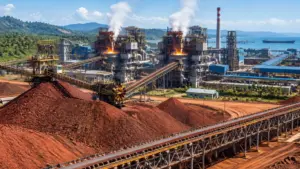
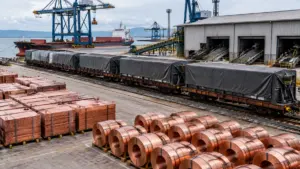
The processing of MHP, the critical intermediary for the EV battery supply chain.
Geopolitics and the "OPEC" effect
The most significant change in the 2026 nickel market is the role of the Indonesian government. By implementing a ban on new NPI and HPAL permits, Jakarta has signaled that it will no longer allow oversupply to crash the market. This policy shift is designed to protect the massive capital investments made by Chinese and domestic partners in the country's downstream infrastructure.
This "OPEC-style" management has implications for global trade. OEMs in North America and Europe are finding themselves in a difficult position: they need the volume of nickel that only Indonesia can provide, yet they are under political pressure to diversify away from concentrated supply chains. This tension is mirrored in other sectors, such as the 2026 lithium outlook, where supply concentration remains a primary risk for the energy transition.
The Road Ahead: 2026 and Beyond
As we look toward the second half of 2026, the nickel market is defined by a paradox. On one hand, there is more than enough nickel to meet current global demand. On the other hand, the right kind of nickel: IRA-compliant, low-carbon, and diversely sourced: remains in short supply.
Indonesia's HPAL dominance is not just a story of volume; it is a story of total market capture. For Western producers to thrive, the market will likely need to see sustained prices above US$22,000 per tonne: a level that Indonesia can now prevent or permit at its discretion. Until then, the center of gravity for the nickel world remains firmly in Southeast Asia.

The geology of high-grade nickel extraction requires precise engineering and significant capital investment.
Social Media Snippet (LinkedIn/X)
The Nickel "OPEC" is Here. ??
In 2026, Indonesia has solidified its role as the center of gravity for global nickel. With HPAL capacity scaling and strict production quotas in place, Jakarta is now setting the price floor for the entire industry.
What does this mean for Western producers sitting higher on the cost curve? From the rise of MHP to the battle for "green premiums," Penny Langford breaks down the 2026 nickel market outlook.
Read the full analysis: [Link] #Nickel #Mining #EVs #CriticalMinerals #Indonesia #SkillingsMining