By Penny Langford

The convergence of terrestrial resource extraction and orbital logistics reached a multi-billion-dollar milestone this June. Gina Rinehart’s Hancock Prospecting has secured a stake exceeding US$1 billion in SpaceX, following the aerospace giant’s record-breaking initial public offering (IPO). The move, which values SpaceX at approximately US$2.1 trillion, signals a fundamental shift in how the world’s most successful mining magnates view the resource frontier.
While the deal is nominally a diversification into satellites and artificial intelligence, its implications for the global mining industry are profound. For an operator like Hancock: rooted in the massive iron ore deposits of Western Australia: investing in the primary consumer of high-performance materials and the architect of orbital connectivity is a strategic bridge to the next decade of industrial operations.
The SpaceX IPO and the $2.1 Trillion Valuation
SpaceX’s debut on the public markets in mid-June 2026 was the most anticipated financial event of the year. The company’s ability to vertically integrate hardware and software: ranging from the Starship launch system to the Starlink mega-constellation: has created a moat that few aerospace or technology firms can match.
Rinehart, who described SpaceX as a “rare business,” is positioning Hancock Prospecting not just as a financial beneficiary of the IPO, but as a strategic partner. According to Hancock CEO Garry Korte, the collaboration is expected to focus on the intersection of mining technology 2026 and space-based infrastructure. This includes the deployment of orbital data centers and the utilization of Starlink for real-time telemetry in remote, autonomous mining environments.
Rare Earths Supply Chain 2026: The Strategic Cliff
The timing of this investment coincides with a critical juncture for the rare earths supply chain 2026. In late 2025, a temporary suspension of Chinese export controls on critical minerals provided a brief window of stability. However, that agreement is set to expire in November 2026, creating what analysts call a "supply cliff."

For SpaceX, securing reliable, non-Chinese sources of magnetic rare earths (Nd, Pr, Dy, Tb) is essential for the production of everything from rocket actuators to satellite propulsion systems. Hancock’s recent aggressive moves into the rare earths sector: including significant stakes in Arafura Rare Earths and Brazilian Rare Earths: now make sense as a downstream integration play. By controlling both the extraction of these minerals and having a stake in their largest potential high-tech consumer, Hancock is insulating itself from the geopolitical volatility that currently dominates the sector.

Mining Technology 2026: From Pits to Platforms
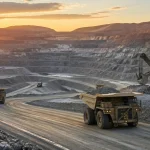
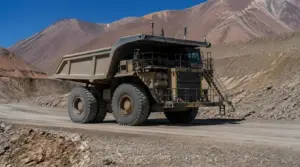
The technological overlap between terrestrial mining and space exploration is no longer theoretical. By June 2026, the adoption of autonomous haulage and remote operation centers has become the industry standard for Tier 1 miners. These systems rely heavily on the high-bandwidth, low-latency connectivity that SpaceX’s Starlink provides.
Hancock Prospecting’s investment suggests a future where the distinction between "mining tech" and "space tech" blurs. Key developments include:
- Modular Processing Units: The same compact, energy-efficient separation technologies being developed for lunar in-situ resource utilization (ISRU) are being adapted for modular terrestrial plants in remote regions.
- AI-Driven Geological Modeling: SpaceX’s data processing capabilities are expected to enhance Hancock’s exploration efforts, using satellite-based remote sensing to identify deep-seated ore bodies with unprecedented precision.
- Autonomous Fleet Management: The integration of SpaceX’s AI hardware into terrestrial fleet management systems allows for real-time optimization of haul cycles, reducing carbon footprints and operational costs.

Market Snapshot: June 2026 Performance
As the industry navigates the 2026 mining supercycle, the following data points illustrate the current market landscape:
| Commodity / Asset | Current Price (USD) | 12-Month Change | 2026 Outlook |
|---|---|---|---|
| Copper (LME) | $10,850 / t | +14.2% | Bullish (Deficit forecast) |
| Neodymium (99% min) | $142.00 / kg | +22.5% | High Volatility (Supply risk) |
| SpaceX (POST-IPO) | $198.50 / share | N/A | Growth (Expansion focus) |
| Iron Ore (62% Fe CFR) | $112.40 / t | -3.1% | Stable (Strong demand) |
Space Resources: The Commercial Reality
Despite the hype surrounding asteroid mining, the 2026 reality remains grounded. Commercial-scale extraction of off-world minerals is not yet contributing to terrestrial supply chains. Instead, the current "space mining" economy is focused on the Moon.
Government-led programs, including NASA’s Artemis missions, are currently contracting commercial partners to demonstrate the extraction of lunar water ice for rocket fuel. For companies like Hancock, the goal is not to bring lunar minerals back to Earth, but to build the infrastructure required to support operations in orbit. If and when commercial asteroid mining becomes viable, the partnership between a resource giant and a launch provider will be the blueprint for success.

Critical Minerals and Geopolitical Leverage
The U.S. government has mobilized over $30 billion to secure domestic and allied critical mineral supply chains, emphasizing that these materials are now "leverage" rather than simple commodities. The 2026 Critical Minerals Ministerial highlighted that projects in Australia, Canada, and Africa are the new front lines of economic security.
Hancock’s investment in SpaceX effectively aligns one of the world’s most powerful mining houses with the most critical component of the Western space and defense ecosystem. It is a strategic hedge against the potential re-tightening of Chinese export controls in the fourth quarter of 2026.
Operational Synergies and Safety
On the ground, the immediate benefits of this stake are visible in mine site safety and efficiency. High-resolution satellite monitoring and Starlink connectivity allow for the centralized management of geographically dispersed operations. In the Pilbara, control rooms are now utilizing AI models: likely enhanced by SpaceX’s tech stack: to predict equipment failures and monitor tailings dam stability in real-time.

2026-2030 Outlook: What’s Next?
The Rinehart-SpaceX deal is more than a headline-grabbing investment; it is a signal that the mining industry’s future is inextricably linked to space. As we move toward 2030, the focus will shift from terrestrial extraction to orbital support systems.
For investors and decision-makers, the message is clear: the most valuable mining companies of the late 2020s will be those that integrate vertical supply chains, from the raw ore in the ground to the high-tech systems orbiting the planet. The copper demand surge driven by data centers and AI is just the beginning; the infrastructure required to sustain a presence in space will require a new generation of mining technology and a more resilient rare earths supply chain.

The resource frontier has moved. While Hancock Prospecting remains a titan of the iron ore industry, its $1 billion stake in SpaceX ensures it will also be a titan of the stars. The 2026 outlook for space resources is no longer a question of if, but a question of how quickly the world’s mining leaders can adapt to this new, multi-planetary reality.