By Charles Pitts

Big Tech’s nuclear deals just passed 10 GW in the U.S., rewiring uranium demand ahead of actual Small Modular Reactor (SMR) builds. This surge triggers a seismic shift in uranium market dynamics for 2026 as companies race to secure supply for AI-driven data centers.
Key Takeaways
- Big Tech has contracted over 10 GW of nuclear power in the United States by mid-2026.
- The U.S. NRC advanced SMR regulations; projects like Rolls-Royce and TerraPower are entering deployment phases.
- High-Assay Low-Enriched Uranium (HALEU) supply remains a key bottleneck for SMR fuel cycles in 2026.
- Russian uranium import bans accelerated supply shifts toward Canada, Australia, and U.S. domestic producers.
How Big Tech’s 10 GW Nuclear Contracts Drive the 2026 Uranium Demand Boom
Major hyperscale companies including Amazon, Google, and Microsoft signed power purchase agreements for over 10 GW of new nuclear capacity in the past 18 months. These contracts specifically target the “firm” grid power SMRs provide, supporting AI training facilities unable to rely on intermittent renewables. As a result, uranium demand forecasts reflect this surge even though physical SMR fuel burn is nascent. For more insights on nuclear offtake, see our uranium market analysis.
Why the 2030 Nuclear Capacity Gap Propels Uranium Prices Higher
Goldman Sachs estimates an 85–90 GW deficit in nuclear capacity needed to meet data center power demand by 2030. However, under 10% of that capacity will complete construction on time. This gap underpins the “bull case” for uranium as utilities and tech firms compete for scarce fuel supply ahead of reactor completions. The ongoing demand mismatch links directly to price and contract dynamics visible in uranium spot and long-term markets today.
U.S. NRC and Global SMR Projects Shift Focus from Design to Deployment
The regulatory environment supports SMR advancement, with the U.S. NRC moving beyond initial certifications in 2026. Projects like Rolls-Royce in the UK and North American initiatives by X-energy and TerraPower are in advanced licensing or site-prep phases. Analysts are no longer debating if SMRs will be built, but how fast their specialized HALEU fuel supply chains can scale. This fuels increased interest in both uranium miners and fuel cycle technology providers.
More Read

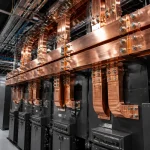
A large-scale industrial facility supporting data operations and energy infrastructure.

Why HALEU Supply Remains the Top Challenge in the Uranium Fuel Cycle
Advanced SMRs demand High-Assay Low-Enriched Uranium (HALEU), enriched between 5% and 20% Uranium-235. Currently, Western HALEU supply chains lag behind anticipated demand. Companies like Centrus Energy have launched small-scale production, but global capacity must grow rapidly to support SMR fleets. This focus shifts investor attention from just uranium mining to enrichment and conversion capabilities.
Co-Location: A 2026 Strategy to Sidestep Grid Constraints and Boost Uranium Demand
Many Big Tech firms now place data centers directly adjacent to nuclear plants, as seen with the Susquehanna-Amazon deal. This “behind-the-meter” model circumvents decade-long grid upgrade delays, locking in uranium demand earlier. Consequently, it tightens the spot market further, competing with industrial users for limited supply.
More Read

How the 2024 Russian Uranium Import Ban Reshaped Supply Chains in 2026
The U.S. ban on Russian uranium imports triggered major market realignments by mid-2026. Western utilities secured deals exclusively with suppliers from Canada, Australia, and the U.S., benefiting domestic producers. Uranium Energy Corp’s restart of Burke Hollow and Energy Fuels’ output ramp at White Mesa exemplify this shift. These developments decrease supply risks and increase focus on friendly jurisdictions.
What the 2026 “Timing Gap” Means for Uranium Demand and Nuclear Deployment
Grid connection delays and equipment shortages pushed 30% to 50% of planned 2026 data center launches into 2027 or 2028. This deployment lag creates a “timing gap” where forward-looking uranium demand outpaces immediate physical fuel consumption. Investors see this as a final window to secure long-term contracts before prices potentially rise with late-2020s ramp-up.
Comparing Uranium Demand Growth to Data Center Power Needs by 2026
The following table highlights the rapid escalation of nuclear contracts and uranium demand alongside data center power growth:
| Sector Component | 2023 Actuals | 2026 Estimate | 2030 Forecast |
|---|---|---|---|
| Data Center Power Demand (GW) | ~15 GW | ~28 GW | ~45-50 GW |
| Big Tech Nuclear Contracts (GW) | < 1 GW | 12 GW | 35+ GW (est) |
| Operating SMR Units (Global) | 2 | 5 | 25+ |
| Annual Uranium Demand (M lbs U3O8) | ~175M | ~192M | ~220M+ |
Source: Skillings Industry Research & Market Data Aggregate 2026.
Why SMRs Are Driving New Industrial Applications and Fuel Demand in 2026
Besides power generation, SMRs are gaining traction for industrial heat in chemical and mining sectors. This “secondary demand” competes with data center needs for SMR reactors and uranium fuel. As a result, uranium fuel players face growing demand across multiple industrial applications, signaling increased market complexity and longer-term growth.
How Investor Focus Has Shifted Toward Production Execution in Uranium Mining
In 2026, the uranium market rewards companies demonstrating production milestones over speculative discoveries. Investors now prioritize firms with proven pounds in the ground and HALEU enrichment capabilities. Companies able to navigate permitting and scale production gain competitive advantages in this execution-driven environment.

Large-scale extraction operations at an open-pit mine site, critical for meeting rising fuel demand.
How 2026 Sets the Stage for Uranium Demand Acceleration and SMR Growth
The uranium sector’s long-term fundamentals center on SMR expansion and related data center power needs. Strategic stockpiling and contracts by Big Tech are underpinning prices even while physical SMRs consume limited fuel. Investors must watch Western HALEU supply development and grid infrastructure advancements closely to understand near-term uranium market movements.
Meanwhile, competing capital demands in mining, like Ivanhoe Mines’ Kipushi zinc project, illustrate continuing investment trade-offs across commodities and energy sources.
Industry Impact: What This Means for Uranium Mining and SMR Advancement
Uranium demand in 2026 is reshaping the mining landscape, especially for producers focused on high-assay fuel supply chains. Companies such as Uranium Energy Corp and Energy Fuels benefit directly from Western supply chain shifts following the Russian import ban. Their project restarts and expansions help secure market share as utilities and Big Tech lock in contracts.
Furthermore, the transition from uranium discovery to production execution signals a maturing industry. There is mounting pressure on miners and fuel cycle providers to meet contracted volumes. This industry evolution supports company news on mine restarts and enrichment plant licensing.
SMR projects’ rapid movement to deployment drives demand for specialized fuel grades. It pushes uranium mining toward more value-added production and vertical integration. This trend aligns with growing interest in miners that can supply HALEU-compatible material alongside conventional uranium.
Market Analysis: How Uranium Prices Reflect 2026 Supply-Demand Tensions
Uranium spot and long-term prices respond to tightening supply caused by delayed SMRs and accelerated contract signings. Big Tech’s 12 GW in nuclear contracts creates an unprecedented demand floor in 2026, up from less than 1 GW in 2023. This contract volume, combined with global SMR deployment lag, temporarily restricts physical fuel burn but elevates contracted uranium prices.
Western enrichment constraints on HALEU intensify supply risks, stimulating investor interest in upstream fuel conversion companies. Meanwhile, the loss of Russian imports forces utilities to pay premiums to secure supply from friendly jurisdictions. These dynamics drive higher all-in sustaining costs (AISC) for uranium mining and a tighter spot market environment.
For detailed uranium market trends and forecasts, refer to the World Gold Council market insights and USGS uranium reports at usgs.gov.
Future Outlook: What Uranium Demand in 2026 Means for Investors and Industry Growth
Investors should expect uranium demand to keep rising as SMRs continue deployment and Big Tech firm power needs accelerate. Watch milestones such as increasing Western HALEU production and resolution of data center grid connection delays.
These factors will dictate whether uranium prices sustain their 2026 gains or face volatility during the “timing gap.” Long-term bullish fundamentals remain intact, offering opportunities for producers with strong supply chain integration and fast execution.
In summary, Uranium Demand 2026: 10 Facts highlight a market poised for significant growth driven by nuclear SMR expansion and large-scale AI data center contracts.