By Penny Langford

For decades, silver was largely viewed through a precious metals lens: a "poor man's gold" that tracked the movements of its yellow counterpart with higher volatility but similar macroeconomic triggers. However, as the global energy transition accelerates into 2026, the narrative surrounding silver is undergoing a fundamental shift. The metal is increasingly being reclassified by market analysts and industrial operators as a critical mineral, essential for the high-conductivity requirements of the modern world.
The market enters 2026 facing a sixth consecutive year of structural physical deficits. Unlike previous cycles where silver prices were primarily dictated by investor sentiment or inflation hedging, the current environment is being anchored by industrial consumption that is becoming price-insensitive in key sectors like electric vehicles (EVs) and high-performance computing.
The 2026 Deficit: A Structural Reality
The most compelling argument for a permanent change in silver’s market dynamics is the sheer math of supply and demand. According to data projected from the Silver Institute and Metals Focus, the silver market is expected to face a deficit of approximately 46.3 million ounces (Moz) in 2026, a significant increase from the 40.3 Moz deficit recorded in 2025.
This is not a temporary blip. A multi-year deficit indicates that above-ground inventories are being steadily depleted. For industrial consumers, these drawdowns mean that the "safety cushion" of readily available physical silver is thinner than it has been in decades.

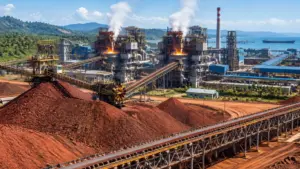
On the supply side, primary silver mines are struggling to keep pace. Global mined silver output is forecast to dip by roughly 0.3% to approximately 844 Moz in 2026. Primary silver production peaked nearly a decade ago, and because roughly 70% of silver is produced as a byproduct of lead, zinc, and copper mining, increasing silver supply requires a massive ramp-up in base metal extraction: a process that faces its own regulatory and operational headwinds.


Why it Matters: The Industrial Pillars
The industrialization of silver is driven by its unique physical properties. It possesses the highest electrical and thermal conductivity of any metal, making it virtually irreplaceable in high-efficiency electronics. While silver "thrifting": the process of reducing the amount of silver used in a component: is a constant pressure, the sheer volume of new applications is outstripping these efficiency gains.

1. The Solar Evolution and Thrifting Risks
Solar photovoltaics (PV) have historically been the heavyweight of silver industrial demand. However, 2026 marks a turning point in how the solar industry interacts with the metal. As prices have pushed toward the mid-$30s, solar panel manufacturers have accelerated their transition to N-type cells (like TOPCon and HJT), which, while more efficient, initially used significantly more silver.
The industry response has been aggressive. Silver consumption in the solar sector is forecast to drop nearly 19% in 2026 as manufacturers adopt copper-plating or "low-silver" pastes. This "thrifting" is a natural market response to scarcity, but it also underscores silver’s criticality: manufacturers are spending billions on R&D specifically to avoid a metal they cannot live without but can no longer afford in bulk.
2. Electric Vehicles and Autonomous Systems
While solar demand may see a localized dip due to thrifting, the automotive sector is picking up the slack. Every internal combustion engine (ICE) vehicle uses between 15 and 28 grams of silver. In contrast, battery electric vehicles (BEVs) can require up to 50 grams per unit.
Silver is used in virtually every electrical connection within an EV, from the power management systems to the charging infrastructure and autonomous driving sensors. As the global fleet transitions toward electrification, the automotive industry's demand for silver is becoming a "sticky" component of the market that does not fluctuate based on the daily gold-to-silver ratio.

3. AI, Data Centers, and the Grid
The rise of artificial intelligence has introduced a new, high-growth demand center. AI-optimized data centers require immense amounts of power and high-speed data transmission, both of which rely on silver-plated connectors and high-conductivity wiring. Furthermore, the global push to modernize power grids: essential for carrying renewable energy: relies on silver-coated components to minimize energy loss during transmission. These sectors represent a growing segment of critical minerals demand that is far less sensitive to price fluctuations than the retail jewelry or investment sectors.
Creating a Permanent New Floor: The $30 Battleground
For years, the $20 to $25 range was seen as the standard "equilibrium" for silver. However, the 2026 outlook suggests that a new floor is forming around the $30 mark. This is driven by several factors:
- Production Costs: Inflation in labor, energy, and machinery has pushed the "all-in sustaining cost" (AISC) for primary silver producers higher. Selling silver below $25–$30 is becoming increasingly uneconomic for many marginal mines.
- Inventory Depletion: With six years of deficits, the "paper silver" markets in London and New York are backed by shrinking physical stockpiles. Any attempt to push prices significantly lower faces the reality of a physical supply crunch.
- Investment Demand: Retail and institutional investment in silver coins and bars is forecast to rise 18% in 2026. This "dual-demand" (industrial + investment) creates a pincer effect on supply.
While volatility remains a hallmark of the silver market, the fundamentals of 2026 make a sustained return to the "teens" highly unlikely. The market is pricing in the reality that silver is no longer just a luxury or a hedge; it is a vital industrial consumable.

2026 Outlook: Bullish with Volatility
The consensus among industrial analysts points toward a bullish trajectory for 2026, with price targets often ranging from $35 to $40 per ounce, and potential spikes toward $50 if investment demand surges alongside industrial shortfalls.
However, risks remain. A global macroeconomic slowdown could dampen automotive and electronics manufacturing. Furthermore, if silver prices spike too aggressively, the "thrifting" seen in the solar industry could spread to other sectors, potentially capping the upside.
For mining industry professionals and investors, the key takeaway for 2026 is that the silver market has decoupled from its traditional role. It is now a supply-constrained industrial metal that happens to also be a precious one.

Summary for Decision-Makers
- Supply Deficit: 2026 marks the 6th year of physical silver deficits, projected at 46.3 Moz.
- Industrial Demand: EVs, AI data centers, and grid modernization are offsetting solar thrifting.
- Price Floor: Strong industrial consumption and rising AISC are establishing $30 as a critical psychological and fundamental floor.
- Inventory Risk: Continued drawdowns in global vaults increase the potential for a physical supply squeeze in late 2026.
Social Media Snippet (LinkedIn/X):
Is silver the new "must-have" critical mineral? With a projected 46.3 Moz deficit in 2026 and six consecutive years of supply shortfalls, the metal is moving beyond its "gold proxy" status. From EV power systems to AI data centers, silver’s industrial scarcity is creating a permanent new floor for prices. Read the full deep-dive on the 2026 silver outlook. #MiningNews #SilverDeficit #CriticalMinerals #EnergyTransition #SilverPrice2026