By Penny Langford

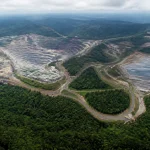
The British Columbia provincial government has officially granted key regulatory authorizations for the Red Chris block cave expansion, marking a transformative shift for one of Canada’s most significant copper-gold assets. The approval, announced in mid-June 2026, clears the path for Newmont Corporation to transition the facility from its current open-pit operations to a high-capacity underground block cave mine.
This regulatory milestone is notable not only for its technical scale but for its legal framework: it represents one of the first major mining projects in Canada to proceed through a formal, consent-based decision-making process with an Indigenous government under the Declaration on the Rights of Indigenous Peoples Act (DRIPA). With the Tahltan Nation’s formal consent secured, the project is now positioned to provide a projected 15% boost to Canada’s total annual copper production once it reaches full capacity in the early 2030s.
The Regulatory Milestone: A New Era of Consent
The provincial greenlight includes an amended Environmental Assessment Certificate (EAC) and an updated Mines Act permit. Unlike traditional permitting processes that often involve consultation without a veto or formal partnership, the Red Chris expansion was governed by the Red Chris Declaration Act Consent Decision-Making Agreement.
Under this framework, the Tahltan Central Government (TCG) held a formal seat at the decision-making table. The agreement stipulated that the provincial government could not approve the environmental certificate amendment without the explicit consent of the Tahltan Nation. This "consent-first" approach is seen by industry analysts as a blueprint for future resource development in jurisdictions prioritizing ESG and Indigenous sovereignty.

For Newmont, securing this consent is the final major hurdle before a Final Investment Decision (FID), which the company expects to reach later in 2026. The transition is essential as the existing open-pit operations at Red Chris are nearing their technical end-of-life, currently slated for 2027. Without the shift to block caving, the site would face a significant production cliff.


Block Cave Technology: Engineering the Transition
The move to block cave mining at Red Chris represents a massive technological undertaking. Unlike conventional "room and pillar" underground mining or high-cost "cut and fill" methods, block caving involves undermining an ore body and allowing it to collapse under its own weight into a series of funnels or "draw points."

This method is highly capital-intensive during the initial development phase but offers significantly lower operating costs and higher throughput once established. At Red Chris, the block cave will target the deeper, higher-grade sections of the porphyry deposit that are inaccessible via open-pit methods.

"The engineering requirements for a block cave of this scale are immense," noted an industry consultant familiar with the project. "You are essentially building an underground factory that must operate autonomously or semi-autonomously for decades. The infrastructure required for ventilation, ore handling, and ground support is an order of magnitude beyond what we see in standard underground mines."
The shift is also expected to improve the mine's environmental footprint. Underground block caving generally has a smaller surface disturbance footprint compared to massive open pits and results in lower greenhouse gas emissions per tonne of ore processed, aligning with Newmont’s broader corporate sustainability targets.
National Impact: Strengthening Canada’s Copper Supply
The significance of the Red Chris expansion extends beyond the borders of British Columbia. Canada has seen a steady decline in its mined copper output over the last decade, falling from nearly 700,000 tonnes in 2015 to approximately 515,000 tonnes in 2024.
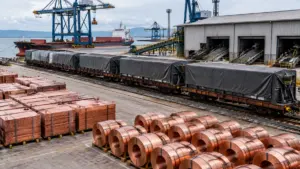
The 15% production boost attributed to the Red Chris block cave is critical for Canada’s ambition to become a primary supplier of minerals essential for the global energy transition. Copper remains a foundational element for electric vehicle (EV) manufacturing, renewable energy infrastructure, and the massive expansion of AI-driven data centers.
Recent analysis on copper supply vs. AI data center demand suggests that the global market faces a widening deficit in the late 2020s. Projects like Red Chris, which offer long-term, stable output, are vital for de-risking the supply chains of North American manufacturers. Furthermore, as copper demand for AI data centers continues to accelerate, the high-grade concentrates expected from the Red Chris underground expansion will likely command a premium in the market.
Timeline and Economic Outlook
With the provincial approvals in hand, the timeline for Red Chris is becoming clearer:
- Late 2026: Final Investment Decision (FID) by the Newmont Board of Directors.
- 2027: Expected commencement of full-scale underground construction.
- 2030: Target for first ore from the block cave.
- Early 2030s: Ramp-up to full run-rate capacity.
- Mid-2040s: Current projected end of mine life (with potential for further extensions).
The economic impact is substantial. The project is expected to sustain approximately 1,500 full-time operating jobs and create 1,800 jobs during the peak of construction. For the Tahltan Nation, the continuation of the mine means the extension of a vital economic engine. The Red Chris mine currently spends over C$100 million annually with the Tahltan Nation Development Corporation and provides significant royalty and mineral tax revenue sharing.

Operational Integration and Strategic Context
The transition to block caving requires a total rethink of site logistics. While the open pit currently utilizes large-scale haul trucks and electric shovels, the underground operation will increasingly rely on automated loaders and conveyor systems to move ore from the draw points to the primary crushers and then to the surface processing plant.

The integration of these systems is a key focus of Newmont’s current Definitive Feasibility Study (DFS). The company is leveraging lessons learned from its other global operations, as well as the expertise of its partner, Imperial Metals (which retains a 30% interest in the project), to ensure a smooth transition.
Key Risks and the Path to FID
Despite the regulatory victory, several risks remain as Newmont moves toward a final investment decision. Capital cost inflation remains a persistent concern across the mining sector. The "several billion dollars" required for block cave development must be weighed against the long-term price outlook for copper and gold.
Furthermore, while the Tahltan Nation's consent is a massive milestone, the ongoing management of the partnership requires constant engagement. The "consent-based" model is not a one-time event but a continuous process that covers environmental monitoring, water management, and social impact throughout the life of the mine.
Summary: A Future-Proof Asset
The BC government’s approval of the Red Chris block cave marks the end of the permitting phase and the beginning of a multi-decade industrial commitment. By combining advanced mining technology with a first-of-its-kind Indigenous consent framework, Newmont is not just expanding a mine; it is redefining the "social license to operate" in the 21st century. As the world looks to Canada for the critical minerals needed for a low-carbon future, Red Chris stands as a pivotal asset in the global copper pipeline.
Social Media Snippet (LinkedIn/X):
BC has greenlit the Red Chris block cave expansion, marking a historic win for @Newmont and the Tahltan Nation. This "consent-based" approval clears the path for a 15% boost to Canada's total copper output, extending the mine's life into the 2040s. A blueprint for ESG-led mining in the energy transition era. #MiningNews #Copper #ESG #IndigenousPartnerships #Newmont #RedChris