By Penny Langford

The lithium market is currently navigating what many analysts describe as a "tilted L-shape" recovery. After the parabolic price spikes of 2022 and the subsequent, bruising collapse through 2024 and 2025, the industry is entering a stabilization phase. For investors and operators, the 2026 outlook is less about a return to irrational exuberance and more about structural rebalancing, marginal cost floors, and the emerging role of energy storage systems (ESS).
As we look toward 2026, the question is no longer whether lithium prices have bottomed, but how long they will scrape along the floor before meaningful supply deficits return. While the explosive growth of the early 2020s has normalized, the underlying demand for the "white gold" remains anchored by the global energy transition.
The "L" Shape: Why the V-shaped recovery is off the table
The vertical leg of the "L" is firmly behind us. Lithium carbonate prices, which peaked at nearly $80,000 per tonne in late 2022, plummeted by over 70% during the downturn. This was driven by a combination of destocking by Chinese battery manufacturers, a slowdown in electric vehicle (EV) sales growth, and a flood of new supply from both traditional brine operations and higher-cost African and Chinese lepidolite projects.
By mid-2026, the market is expected to have processed most of the excess inventory that plagued the 2024-2025 period. However, a sharp "V-shaped" bounce is unlikely for several reasons:

- Inventory Discipline: Battery makers and OEMs have moved toward "just-in-time" inventory management, reducing the massive pre-orders that previously sparked price spikes.
- Capacity Overhang: Even though many high-cost projects have been deferred, a significant amount of "nameplate" capacity remains in the pipeline, ready to come online if prices rise too quickly.
- Substitution Risks: While sodium-ion batteries remain a niche technology for 2026, their presence in entry-level EVs acts as a psychological cap on lithium price blow-offs.
Instead of a vertical ascent, 2026 is shaping up to be a transition year: a grinding, volatile uptrend from depressed levels where quality and production costs become the primary differentiators for lithium producers.


Aerial view of large-scale lithium brine evaporation ponds showcasing the industrial scale required for global supply.
Key demand drivers for 2026
The demand narrative is shifting. While EVs remain the primary consumer of lithium, they are no longer the only engine in the room.

The Rise of Energy Storage Systems (ESS)
Energy storage is the fastest-growing demand segment in the lithium sector. By 2026, grid-scale batteries: essential for stabilizing renewable energy from solar and wind: are expected to take a significantly larger share of the total lithium carbonate equivalent (LCE) market. This demand is increasingly driven by the expansion of AI-centric data centers, which require massive, uninterruptible power supplies.
We have previously analyzed how AI data center demand is resetting the copper price forecast, and lithium is seeing a similar, albeit lagged, effect.
EV Penetration and Policy
Despite headlines of a "slowdown," EV adoption continues to grow at a double-digit rate globally. By 2026, the impact of the U.S. Inflation Reduction Act (IRA) and similar critical minerals policies in the EU will be more pronounced. These policies incentivize non-Chinese supply chains, creating a "two-tier" pricing environment where IRA-compliant lithium may command a premium over standard spot prices.
Supply dynamics: Curtailments and the "Nameplate" trap
On paper, the lithium market appears oversupplied through 2026. However, seasoned mining investors know that "nameplate capacity" rarely translates to actual output.
Project Delays and Cancellations
The low-price environment of 2024-2025 forced significant capital expenditure (Capex) cuts. Major players like Albemarle and Arcadium Lithium (formerly Livent and Allkem) have deferred expansions or slowed the ramp-up of new sites. This "supply response" is the catalyst for the 2026 rebalancing. When prices drop below the marginal cost of production for high-cost lepidolite and swing-producers, supply exits the market, setting the stage for the next deficit.
Operational Reality
Technical challenges remain a constant bottleneck. Whether it is water rights in the Atacama, permitting delays in the United States, or the logistical complexity of hard-rock operations in Western Australia, the "realistic" 2026 supply is likely to be 10% to 15% lower than theoretical forecasts suggest.

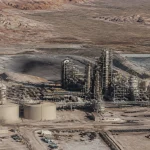
Active mining facilities must maintain operational efficiency to survive the L-shaped recovery phase.
Lithium price forecast 2026: Base, Bull, and Bear cases
Navigating the 2026 market requires a multi-scenario framework. Most analysts project the market moving from a clear surplus toward a balance or a modest deficit of 20,000 to 80,000 tonnes LCE.
Base Case: Stabilization
In this scenario, demand from ESS and EVs grows steadily, while supply remains constrained by recent project deferrals. Prices hold above 2025 lows but remain significantly below 2022 peaks. This environment supports profitable operations for low-cost brine and tier-1 hard-rock assets, but keeps high-cost marginal projects on ice.
Bull Case: The AI-Driven Deficit
If energy storage demand for AI data centers and global grid decarbonization accelerates faster than expected, 2026 could see a meaningful deficit. Combined with further delays in North American and European domestic projects, this could trigger a price rally that restores robust margins across the entire cost curve.
Bear Case: Prolonged Oversupply
In the bear case, EV adoption flattens due to macroeconomic headwinds or high interest rates, while low-cost supply from South America and China ramps up smoothly. This would result in a "true" L-shape, where prices remain depressed for an extended period, leading to further industry consolidation and asset impairments.
| Metric | Bear Case | Base Case | Bull Case |
|---|---|---|---|
| Market Balance | Surplus (>50kt) | Balance/Deficit (0-20kt) | Deficit (>50kt) |
| Demand Growth | <15% YoY | 20-25% YoY | >30% YoY |
| Supply Risk | On-time delivery | Moderate delays | Significant curtailments |
Positioning for 2026: Companies and Projects
For those tracking the base metal mining sector, 2026 will be a year where balance sheets and cost curves matter more than "speculative resources."
- Tier-1 Producers: Companies like Albemarle (ALB), SQM, and Ganfeng are best positioned to weather the L-shape. Their low-cost brine operations in Chile and Argentina provide a cushion that high-cost developers lack.
- Strategic Developers: Projects like Lithium Americas’ Thacker Pass and the various Salton Sea geothermal lithium initiatives are critical to watch. Their progress: or lack thereof: will serve as a bellwether for Western supply chain independence.

Advanced telemetry and data integration in control rooms are becoming vital for managing costs during price volatility.
Conclusion: The 2026 transition
The lithium market is maturing. The wild volatility of the last three years is giving way to a more sophisticated, industrially-driven cycle. While the "L-shape" recovery may seem unexciting compared to the surges of the past, it provides a much-needed period of stability for long-term planning and investment.
Investors should focus on the narrowing surplus and the potential for an ESS-led demand surprise. In the world of critical minerals, the biggest gains often come from identifying the floor before the rest of the market realizes the elevator is going back up.
Shareable Social Media Snippet:
Lithium is entering a "transition year" in 2026. With the L-shaped recovery in full swing, focus shifts from speculative growth to operational reality, ESS demand, and the supply gap. Read our deep dive into the 2026 lithium price forecast. #Lithium #Mining #EV #EnergyStorage #Investing