By Penny Langford

ULAANBAATAR, Mongolia : Copper exports from Rio Tinto’s Oyu Tolgoi mine, one of the world’s largest mineral deposits, faced a sudden disruption this week as domestic activists launched a coordinated blockade near the Chinese border. The action, orchestrated by the Radical Reform Movement, underscores escalating tensions between the Anglo-Australian mining giant and local stakeholders over the distribution of mineral wealth.
On Wednesday morning, protesters established a blockade on the primary two-lane highway used to transport copper concentrate to China. The movement successfully halted approximately 160 heavy-duty trucks, effectively severing the supply chain for nearly 24 hours. While shipments have since resumed, the incident has reignited a fierce national debate regarding the 2026 fiscal terms of the project and Mongolia's share of profits.
The Blockade and Immediate Operational Risks
The protest began at approximately 9:00 a.m. local time when members of the Radical Reform Movement positioned vehicles and banners across the export corridor. Social media footage from the site showed demonstrators holding signs reading "Stop Rio Tinto" and "Return the Wealth," framing the mine's operations as a drain on national resources.
Oyu Tolgoi LLC, the project’s operating entity, issued a statement warning that the disruption created a "critical risk of not fulfilling contractual duties." The company emphasized that any sustained halt in exports would cause "significant disruptions to the state budget" and could damage Mongolia’s reputation as a stable destination for foreign direct investment.
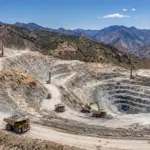
Although trucking flows were restored the following day, the brief stoppage served as a high-stakes demonstration of the logistical vulnerabilities facing the project. Oyu Tolgoi, which produced 345,000 metric tons of copper in 2025, is currently in a capital-intensive ramp-up phase aimed at reaching 500,000 tons annually.


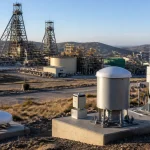
A large-scale mining facility in the Gobi region highlights the massive infrastructure required for copper extraction.
The 60% Demand: A Shift in Resource Nationalism
The core of the dispute lies in the Radical Reform Movement’s demand for a radical restructuring of the project’s financial framework. Activists are calling for the Mongolian government: which currently holds a 34% stake: to receive at least 60% of the project's total profits.

This demand exceeds the government’s previously stated target of a 53% benefit share, established in late 2025. The movement argues that the current arrangement leaves ordinary Mongolians burdened by national debt while the mine’s revenues primarily benefit foreign shareholders.
Specific demands submitted to project management include:
- Profit Share Increase: Raising the domestic share of revenues to 60%.
- Interest Rate Reduction: Lowering Rio Tinto’s shareholder loan interest rates from over 11% to under 6%.
- Revenue Transparency: Routing all export revenues through Mongolian banks to ensure greater oversight.
- Management Fees: A significant reduction in the management fees paid to Rio Tinto as the operator.
The Mongolian government, led by Prime Minister Luvsannamsrain Oyun-Erdene, has been under increasing pressure to deliver tangible economic benefits from the Oyu Tolgoi underground expansion, which saw its first production in 2023. In March 2026, government officials signaled their intent to reopen negotiations with Rio Tinto, citing a "new economic era" that requires fairer commodity pricing and profit-sharing models.
Market Snapshot: Oyu Tolgoi and Global Copper Supply
The disruption at Oyu Tolgoi comes at a sensitive time for the global copper market. As the energy transition accelerates, the demand for high-grade copper concentrate continues to outpace supply. Oyu Tolgoi is one of the few large-scale assets capable of significantly moving the needle on global availability.
| Metric | 2025 Actual | 2026 Forecast | Change |
|---|---|---|---|
| Copper Production (kt) | 345 | 415 | +20.3% |
| Government Revenue (Est. MNT Billion) | 1,850 | 2,100 | +13.5% |
| Export Volume (Trucks/Day) | ~140 | ~165 | +17.8% |
| Shareholder Loan Interest (%) | 11.2% | 9.5% (Negotiated) | -1.7% |
Data Source: Skillings Mining Intelligence & Oyu Tolgoi LLC Quarterly Reports.
For more on the long-term outlook for this commodity, see our analysis on copper demand and price drivers for 2026.
Geopolitical and Economic Implications
The Radical Reform Movement’s actions reflect a broader trend of resource nationalism across Central Asia. For Rio Tinto, the challenge is balancing the high cost of underground development with the political necessity of maintaining a social license to operate.
Analysts suggest that while the physical blockade was short-lived, the "political blockade" remains a significant hurdle. If negotiations in Ulaanbaatar sour, Rio Tinto could face new export taxes or more stringent environmental regulations as the government seeks to appease a restless electorate.

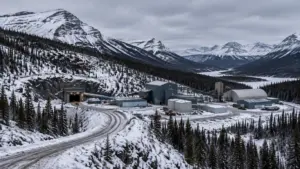
Continuous monitoring at the site is essential to manage operational risks during periods of industrial or political unrest.
"The brief outage is less concerning to investors than the precedent it sets," noted one senior commodities analyst. "The market is watching to see if Rio Tinto will yield on the 60% demand or if they will hold firm on the existing agreements. Any concession here could have ripple effects for other major mining contracts in the region."
Furthermore, the requirement to route revenues through Mongolian banks is a point of significant friction. Rio Tinto and its lending partners have historically preferred international financial hubs for revenue management to mitigate currency risk and ensure debt servicing. A shift toward domestic banking could complicate the project's complex financing structure, which involves multiple international lenders and the World Bank’s IFC.
Outlook: Navigating the 2026 Mining Landscape
The situation at Oyu Tolgoi remains fluid. While trucks are currently moving across the Gashuun Sukhait-Ganqimaodu border crossing, the underlying grievances of the Radical Reform Movement have not been resolved. The Mongolian government is expected to present a formal proposal to Rio Tinto’s board by the end of Q3 2026.
For operators and investors, the Oyu Tolgoi incident serves as a reminder of the volatility inherent in large-scale resource extraction in emerging markets. As the world becomes increasingly reliant on base metal mining for the green transition, the social and political cost of extraction is becoming as critical as the geological grade of the ore itself.

Massive grinding mills and processing infrastructure at Oyu Tolgoi are key to meeting the project's 500,000-ton annual production target.
Rio Tinto has expressed its commitment to ongoing dialogue, stating that it remains "focused on delivering value for all stakeholders, including the people of Mongolia." However, with the Radical Reform Movement promising further actions if their demands are not met, the road to 500,000 tons per year remains fraught with both physical and political obstacles.
Social Media Snippet (LinkedIn/X):
Protests in Mongolia have briefly halted exports from Rio Tinto’s Oyu Tolgoi mine. Activists are demanding a 60% profit share for the state and lower interest rates on project loans. While shipments have resumed, the incident highlights growing resource nationalism risks in the global #copper supply chain. Read the full analysis at Skillings.net. #MiningNews #RioTinto #OyuTolgoi #CopperMining #Mongolia