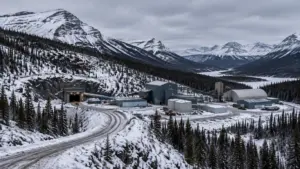
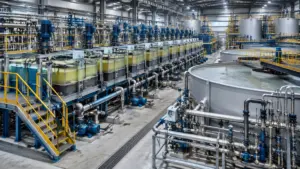
As the global energy transition accelerates, the mining industry is confronting a stark mathematical reality: the world is running out of "easy" copper just as demand is projected to hit record highs. By mid-2026, market analysts from Morgan Stanley and J.P. Morgan anticipate a refined copper deficit ranging between 330,000 and 600,000 tonnes: the most significant shortfall in over two decades.

While the "greenfield" projects of the future: massive, multi-billion-dollar developments in untapped regions: dominate headlines, the 2026 copper war is being fought and won in the "Invisible Mine." This refers to brownfield expansion: the systematic debottlenecking, deepening, and technological optimization of existing assets. For majors like Anglo American and Codelco, the strategy has shifted from finding the next great deposit to squeezing every incremental pound of metal from infrastructure already in place.
The 2026 copper deficit: A structural wall
The shift toward brownfield dominance is a direct response to a tightening supply-demand balance that has turned structural. The International Copper Study Group (ICSG), which as recently as late 2025 predicted a surplus, has revised its 2026 outlook to a deficit of 150,000 tonnes. More aggressive institutional forecasts suggest the gap could be even wider as AI data centers and power grid expansions outpace mine ramp-ups.
Unlike previous cycles where high prices quickly triggered new supply, the current environment is constrained by long lead times. A new greenfield copper mine today takes an average of 12 to 15 years from discovery to first production. This timeline effectively removes greenfield projects from the equation for the 2026–2030 window. Consequently, the path to $15,000 copper is paved with brownfield investments that can deliver incremental tonnage within 24 to 36 months.
Brownfield vs. Greenfield: The economics of 2026
The preference for brownfield expansion over greenfield development is driven by three primary factors: capital intensity, permitting speed, and existing infrastructure.
| Feature | Brownfield Expansion | Greenfield Development |
|---|---|---|
| Average Timeline | 2–5 years | 10–15+ years |
| Capital Intensity | Lower (uses existing mills/roads) | High (requires total build-out) |
| Permitting Risk | Moderate (existing footprint) | High (new environmental impact) |
| 2026 Impact | Immediate delivery of tonnes | Negligible impact |
| ESG Profile | Targeted (optimization) | Broad (new land disturbance) |
In theory, brownfield projects should offer higher Internal Rates of Return (IRR) because they leverage sunk costs in tailings facilities, power lines, and processing plants. However, as the industry enters 2026, this "theoretical" efficiency is being tested by declining ore grades and increasing technical complexity.


Anglo American: The "Asset Review" as a growth engine
Anglo American has become a poster child for the brownfield pivot. After a period of significant portfolio restructuring, the company has focused on maximizing its core Tier 1 copper assets. The strategy is less about massive new pits and more about "debottlenecking": identifying specific points in the processing circuit where throughput can be increased without building a new mill.
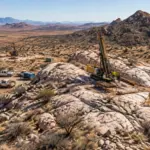
One key focus for Anglo has been the integration of bulk sensing and coarse particle recovery (CPR). By utilizing sensor-based sorting, Anglo can reject waste rock earlier in the process, ensuring that only high-grade ore enters the energy-intensive grinding circuit. This effectively creates an "invisible mine" by increasing metal output while maintaining the same throughput volume. Analysts monitoring the Top 50 mining companies in 2026 note that Anglo's ability to maintain guidance in the face of inflationary pressures is largely due to these brownfield efficiency gains.
Codelco: Fighting the grade cliff at El Teniente
For Codelco, the world's largest copper producer, brownfield expansion is not just a choice: it is a survival mechanism. The Chilean state miner is grappling with a steep decline in average copper grades, which fell from 1.02% in 2022 to an estimated 0.66% by 2025.
To combat this, Codelco has committed billions to "structural projects" like the El Teniente New Mine Level. This massive brownfield undertaking aims to extend the life of the world's largest underground copper mine by reaching deeper, untapped ore bodies beneath the existing workings. However, the project highlights the risks of brownfield reliance: a rock burst in 2025 resulted in a loss of 48,000 tonnes, with another 25,000-tonne reduction expected in 2026.
Despite these setbacks, Codelco’s strategy remains focused on maintaining its 1.3 Mt production floor. The company's struggles demonstrate that while brownfield is faster than greenfield, it is becoming increasingly capital-intensive just to hold production flat.

Technology: The invisible force multiplier
The success of the "Invisible Mine" depends heavily on a new suite of mining efficiency technologies. Beyond simple expansions, miners are using digital twins and fleet automation to squeeze more value from existing fleets.
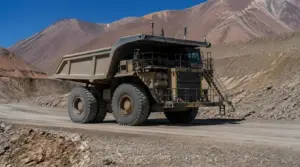
- Predictive Maintenance: Using AI to predict haul truck failures before they occur reduces unplanned downtime, which can cost operators upwards of $10,000 per hour in lost productivity.
- Remote Operations Centers (ROCs): By centralizing control of multiple mine sites, companies are improving fleet synchronization and reducing "hang time" at shovels.
- In-Pit Crushing and Conveying (IPCC): To offset the rising cost of diesel and the logistical complexity of deeper pits, many brownfield expansions are replacing traditional truck-and-shovel fleets with conveyor systems that move ore directly from the pit floor to the mill.
These technologies allow operators to explore extensions like the Mocoa porphyry with lower relative overheads, making marginal ore bodies economically viable in a high-price environment.
The copper supply deficit: 2026 outlook
The base case for 2026 remains a significant supply deficit. While brownfield expansions are coming online, they are largely offsetting disruptions elsewhere in the global portfolio.
- Bull Case for Supply: If Codelco successfully resolves its geotechnical issues and Anglo American’s CPR technology rolls out ahead of schedule, the 2026 deficit could narrow to under 200,000 tonnes. This would provide some relief to the refined market but likely keep prices above $4.50/lb.
- Bear Case for Supply: Continued operational disruptions in Chile and Peru: coupled with underperformance in the Zambian copper resurgence: could see the deficit swell toward 700,000 tonnes. In this scenario, the "Invisible Mine" will have failed to keep pace with the energy transition.

Conclusion: The limits of optimization
The 2026 copper war has proven that brownfield expansion is the industry’s most effective short-term weapon. It offers a faster, more predictable path to tonnage than the decade-long slog of greenfield development. By leveraging existing infrastructure and deploying advanced efficiency technologies, the world’s major miners are finding more copper without breaking entirely new ground.
However, the "Invisible Mine" has its limits. As grades continue to decline and pits grow deeper, the cost of incremental tonnes is rising. While brownfield will win the battle of 2026, the industry must eventually return to greenfield exploration to solve the massive structural shortfalls projected for the 2030s. For now, the focus remains on optimization: finding the copper that is already there, hidden within the footprints of the world's aging giants.