For decades, the global copper narrative has been dominated by the Central Andean giants of Chile and Peru. However, as 2026 unfolds, a structural shift is redirecting the industry’s gaze northward. The “Northern Andean Resurgence”: a term increasingly used by geologists and institutional investors: refers to the rapid emergence of Colombia and Ecuador as the world’s next significant copper cluster.

Driven by a combination of world-class porphyry discoveries, evolving regulatory frameworks, and a projected global supply deficit of 600,000 tonnes this year, these two nations are transitioning from exploration frontiers to essential components of the energy transition. While traditional jurisdictions grapple with declining grades and aging infrastructure, the Northern Andes offers a fresh, albeit complex, geological canvas.
By Penny Langford
The Geological Bridge: Unlocking the Porphyry Belt
The Northern Andes are not a new discovery; rather, they are a newly understood extension of the prolific copper-gold porphyry belts that run the length of South America. The geological continuity from the Central Andes into Ecuador and Colombia was historically overlooked due to dense vegetation, topographical challenges, and past geopolitical instability.
Today, advanced hyperspectral imaging and deep-penetrating geophysics have revealed that the same tectonic forces that created the Chuquicamata and Escondida deposits in Chile extend northward. In Ecuador, the focus is on the Cascabel and Warintza systems, which exhibit the massive scale required to justify the high capital expenditures associated with Andean mining. In Colombia, the Mocoa deposit stands as a prime example of a copper-molybdenum porphyry that could anchor a new industrial hub.
More Read
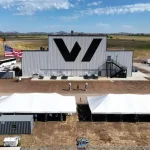

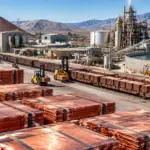
High-capacity haulage remains central to the economic viability of large-scale Andean copper projects.

Ecuador: From Frontier to Development Leader
Ecuador has emerged as the clear frontrunner in this regional resurgence. The government’s decision to reopen the mining registry in phases throughout 2025 and early 2026 has signaled a pro-investment pivot that few expected a decade ago.
The crown jewel of Ecuador’s portfolio is SolGold’s Cascabel/Alpala project. Having signed an exploitation contract in 2024, SolGold is now moving toward a Final Investment Decision (FID) targeted for late 2026. This project is notable not just for its size, but for its planned use of block-cave mining: a technically demanding method used in world-class mines like Grasberg.
More Read
Equally significant is the Warintza project, operated by Solaris Resources. Pre-feasibility results published this year outline an initial investment of approximately US$3.7 billion. With a total life-of-mine capital expenditure potentially exceeding US$5.4 billion, Warintza underscores the massive scale of the “new” copper frontier. These projects follow in the footsteps of the already operational Mirador copper mine, which has proven that large-scale extraction is operationally feasible in Ecuador’s rainforest-adjacent mountainous terrain.
Colombia: Rebranding for the Energy Transition
Colombia’s path to copper prominence is more nuanced. While the country is a veteran in coal and gold production, its copper output remains marginal. However, under the current administration’s focus on the “energy nexus,” copper has been elevated to a strategic mineral.
The flagship for Colombia is the Mocoa project, a Cu-Mo porphyry located in the southern Putumayo department. Managed by Copper Giant Resources, Mocoa is currently undergoing a Preliminary Economic Assessment (PEA) in mid-2026. This study is being watched closely as a barometer for how Colombia balances environmental sensitivity with industrial development.
For more context on the national strategy, see our deep dive on Colombia copper mining and the 2026 outlook. The government has also launched tenders for 14 “Strategic Copper Regions,” aiming to attract junior and mid-tier firms to unexplored belts. Unlike the established mines in Chile, many of these Colombian targets are greenfield, offering high-reward potential for those willing to navigate the permitting landscape.

Exploration core samples are the primary data points used to justify multi-billion dollar investment decisions in the region.
Market Pulse 2026: The Demand Super-Cycle
The timing of the Northern Andean Resurgence is not accidental. By June 2026, London Metal Exchange (LME) copper prices have sustained levels above US$6.00/lb, driven by a convergence of factors:
- AI Infrastructure: Massive power requirements for global data centers have surged, requiring tens of thousands of tonnes of additional copper for grid upgrades.
- Traditional Supply Constraints: Persistent operational hurdles at legacy mines like El Teniente and Kamoa-Kakula have squeezed the spot market.
- Low Inventories: Global stockpiles remain at historic lows, making the market highly sensitive to any supply disruptions.
In this environment, projects like Cascabel and Warintza are no longer viewed as “optional” exploration targets; they are seen as essential to global supply security. Institutional investors are shifting capital toward companies with exposure to these Northern Andean assets, recognizing that unlocking supply via the “invisible mine” strategy and other optimizations cannot fill the gap alone.
The Social License and Permitting Bottleneck
Despite the geological and economic promise, the Northern Andean Resurgence faces significant “above-ground” risks. Both Colombia and Ecuador are navigating complex social landscapes where Indigenous community consent and environmental protection are paramount.
In Ecuador, nationwide protests have previously led to calls for a moratorium on new mining activity. The government’s success in 2026 will depend on its ability to ensure that mining revenues translate into tangible local development. In Colombia, the permitting of projects like Mocoa must contend with high-altitude ecosystem protections (Páramos) and a shifting regulatory framework that seeks to modernize environmental oversight.

Operational transparency and real-time data monitoring are key to securing social license and regulatory approval.
Comparative Project Snapshot: Northern Andean Copper (2026)
| Project | Country | Operator | 2026 Status / Milestone | Estimated Initial Capex |
|---|---|---|---|---|
| Cascabel/Alpala | Ecuador | SolGold | Exploitation phase; FID late 2026 | US$3.0B+ |
| Warintza | Ecuador | Solaris Resources | Pre-feasibility / Resource expansion | US$3.7B |
| Mocoa | Colombia | Copper Giant Resources | PEA stage; Environmental baseline | TBD |
| Curipamba | Ecuador | Adventus/Salazar | Advanced exploitation / Construction prep | ~US$250M |
| Llurimagua | Ecuador | State/Partner TBD | 2026 Tender target | US$3.0B |
Data compiled by Skillings Mining Intelligence, June 2026.
Infrastructure and Technology: The Path Forward
The sheer topography of the Northern Andes necessitates innovative engineering solutions. We are seeing a rise in the use of high-efficiency conveyor systems and underground electrification to reduce the surface footprint of these projects. For example, Lundin Mining’s copper blueprint in neighboring regions highlights the importance of anchoring supply through 2028 with long-term infrastructure investments.
In the Northern Andes, the development of the “Copper Corridor” will require massive upgrades to road and power infrastructure. In Ecuador, the utilization of clean hydroelectric power for mining operations is a major selling point for ESG-conscious investors, potentially making Northern Andean copper some of the lowest-carbon metal on the market.

Technological adaptation to steep terrain and underground environments is a prerequisite for success in the Northern Andes.
2026-2030 Outlook: A New Copper Hub?
As we look toward the end of the decade, the Northern Andean Resurgence is poised to redefine the copper supply chain. If the projects in Ecuador successfully reach FID in 2026 and Colombia clarifies its regulatory path for Mocoa, the region could contribute over 1 million tonnes of copper per year by the early 2030s.
For operators and investors, the message is clear: the frontier has moved. While Chile and Peru remain the bedrock of the industry, the growth story is increasingly being written in the high, green ridges of Colombia and Ecuador. Success in this new frontier will require a blend of geological precision, diplomatic social engagement, and the patience to navigate the permitting cycles of a developing region.