By Penny Langford

The global race for resource sovereignty has shifted from a theoretical policy debate to a capital-intensive industrial reality as we move into the second half of 2026. For those tracking critical minerals stocks, the market landscape is no longer defined by the speculative frenzy of 2021 or the subsequent price corrections of 2024. Instead, a bifurcated market has emerged, driven by structural supply deficits in copper, a stabilized lithium sector, and a geopolitically charged rare earths industry.
As Western governments accelerate "friend-shoring" initiatives and the electrification of the global economy deepens, several core themes are now dictating valuations and project viability. From the implementation of the Inflation Reduction Act's final tiers to the emergence of the Lobito Corridor as a strategic logistics artery, these are the 10 essential factors defining the critical minerals sector in 2026.
1. Copper’s Structural Deficit Reaches an Inflection Point
Copper remains the undisputed bellwether for the energy transition. In 2026, the narrative of "copper as the new oil" has solidified as supply-side constraints hit a critical ceiling. Despite major producers like Anglo American and Codelco attempting to unlock "invisible mines" through brownfield expansions, the market continues to face a persistent structural gap. Analysts now view the $12,000 to $15,000 per tonne price range as a baseline for incentivizing the next generation of high-altitude and complex-metallurgy projects. For investors, this means the focus has shifted toward companies with proven reserves in stable jurisdictions, as permitting timelines for new greenfield sites continue to exceed 15 years globally.
2. Lithium’s Post-Boom Reset and Recovery
The lithium market has officially exited its "reset phase." After the 2023-2024 price collapse, 2026 has seen lithium carbonate and hydroxide prices stabilize at levels that allow for sustainable margins for low-cost producers while flushing out marginal, high-cost supply. The industry is now looking toward a medium-term deficit as EV penetration rates in the US and Europe catch up to battery manufacturing capacity.



3. Geopolitical Policy as a Valuation Multiplier
In 2026, a mining company’s jurisdiction and its eligibility for government subsidies are as important as its ore grade. The US Inflation Reduction Act (IRA) and the EU Critical Raw Materials Act have created a "geopolitical premium" for stocks operating within allied trade blocs. Companies that can provide domestic, traceable supply chains are receiving direct debt and equity investments from state agencies, effectively lowering their weighted average cost of capital (WACC) and making them more attractive compared to peers operating in high-risk zones of resource nationalism.
4. Rare Earths and the Magnet-Focused Growth Model
Rare earth stocks have experienced a remarkable upswing in early 2026, driven by a sharp focus on permanent magnet materials (NdPr). With China tightening export controls on processing technologies, Western juniors that possess integrated refining capabilities have seen significant re-ratings. The market is increasingly treating magnet-heavy rare earth stocks as strategic defense and technology proxies rather than standard commodity plays, embedding a volatility that responds more to trade headlines than to immediate spot pricing.

5. The M&A Supercycle: Major Producers Consolidating
The "Big Four" diversified miners: BHP, Rio Tinto, Vale, and Glencore: are aggressively repositioning their portfolios toward "forward-facing" metals. 2026 has been a year of strategic consolidation, with majors acquiring high-quality juniors to bypass the lengthy exploration and permitting cycle. We are seeing a trend where copper-gold and nickel-copper assets are being snatched up at significant premiums, as the majors find it more cost-effective to buy existing discoveries than to find new ones in an increasingly crowded exploration landscape.
6. ESG 2.0: The IRMA Standard and Social License
The "Social License to Operate" is no longer a corporate social responsibility (CSR) buzzword; it is a prerequisite for project financing. In 2026, institutional investors are demanding adherence to the Initiative for Responsible Mining Assurance (IRMA) standards. Stocks that fail to demonstrate rigorous carbon accounting and waste management (specifically tailings dam safety) are seeing their "valuation floor" drop as major automakers and technology firms refuse to sign off-take agreements with non-compliant producers.
7. Technology: The Rise of Direct Lithium Extraction (DLE)
A technological shift is currently underway in the lithium brine sector. Direct Lithium Extraction (DLE) has moved from pilot testing to commercial-scale implementation in 2026. This technology allows for faster production cycles and a smaller environmental footprint compared to traditional evaporation ponds. Companies successfully deploying DLE are being rewarded with higher ESG scores and faster pathways to production, although execution risk remains high for first-movers in this space.

8. Strategic Logistics: The Lobito Corridor and African Supply
Logistics is the new bottleneck for critical minerals. The development of the Lobito Corridor has transformed the investment case for copper and cobalt assets in the Democratic Republic of Congo and Zambia. By significantly reducing the time and cost required to move minerals to Western markets via the Atlantic, companies along this corridor have seen improved project economics. Investors are now paying closer attention to infrastructure-linked mining stocks that benefit from these multi-national logistical breakthroughs.
9. Financing: The Shift from Public Equity to Strategic Debt
While the junior mining sector traditionally relied on equity raisings, 2026 is seeing a shift toward strategic debt and streaming agreements. Large-scale projects are being funded by battery manufacturers and OEMs (Original Equipment Manufacturers) looking to secure 10-year off-take agreements. This trend provides a non-dilutive financing path for developers but also ties their fortunes closely to the creditworthiness and production targets of their downstream partners.
10. AI and Exploration: Data-Driven Discoveries
Exploration efficiency has taken a leap forward with the integration of AI-driven geological modeling. In 2026, companies that have partnered with tech firms to process legacy geophysical data are reporting higher discovery rates in mature basins. This "digital exploration" allows companies to identify "blind" deposits that were previously invisible to traditional methods, providing a new avenue for growth in critical minerals stocks that lean heavily into technical innovation.
2026 Market Snapshot: Critical Minerals
| Commodity | 2026 Outlook | Key Driver | Market Sentiment |
|---|---|---|---|
| Copper | Bullish | Data Center & Grid Demand | High Conviction |
| Lithium | Neutral-Positive | Inventory Re-stocking | Recovering |
| Rare Earths | Volatile | Geopolitical Trade Policy | Strategic |
| Nickel | Bearish-Neutral | Indonesian Oversupply | Cost-Sensitive |
| Uranium | Bullish | SMR Deployment | Structural |
Operational Reality: Scale and Efficiency
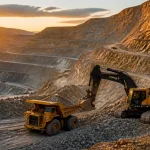
The theme of 2026 is operational scale. As grades decline globally, the industry has turned to ultra-class machinery and autonomous hauling to maintain margins. The visual of massive pits and autonomous trucks is no longer just a futuristic concept but the standard operating procedure for the stocks leading the critical minerals charge.

For operators and investors, the 2026 landscape requires a nuanced understanding of how policy, technology, and geology intersect. The "easy wins" in the critical minerals sector are gone; what remains is a market that rewards technical excellence and strategic geopolitical positioning.
LinkedIn/X Snippet for Featured Lead:
The critical minerals race is no longer a sprint: it’s a marathon of industrial logistics and geopolitical positioning. In 2026, copper deficits are structural, lithium has found its floor, and rare earths are acting as strategic defense proxies. Are you tracking the right factors? Check out our latest deep dive on the 10 things you must know for the 2026 critical minerals outlook. #MiningNews #CriticalMinerals #Copper #Lithium #EnergyTransition #SkillingsMining