The global energy landscape is undergoing a structural shift as the world’s largest technology firms move to secure decades of firm, carbon-free power. Driven by the "power hunger" of generative AI and hyperscale cloud computing, Microsoft, Amazon, and Google have pivoted from intermittent renewables toward nuclear energy. This transition is not merely a sustainability gesture; it is a strategic maneuver to de-risk the massive energy requirements of future data centers.

As of July 2026, the "AI-Energy Nexus" has become the primary driver for a new wave of nuclear investment, particularly in Small Modular Reactors (SMRs) and the revitalization of mothballed conventional plants. For the uranium market, these multi-decade contracts represent a fundamental change in the demand floor, transitioning the sector from a cycle of opportunistic spot-buying to one of long-term strategic contracting.
The Hyperscale Nuclear Pivot: Microsoft and Three Mile Island
The most visible signal of this pivot came with the agreement between Microsoft and Constellation Energy to restart Unit 1 of the Three Mile Island nuclear plant in Pennsylvania. Rebranded as the Crane Clean Energy Center, the facility will provide 835 MW of carbon-free capacity exclusively to Microsoft under a 20-year power purchase agreement (PPA).
The scale of this deal is significant for the uranium supply chain. To operate an 835 MW pressurized water reactor (PWR) at the high capacity factors required for data centers (typically 90% or higher), the plant will require approximately 150 to 180 tonnes of natural uranium per year. Over the 20-year term, this single contract represents a locked-in demand of roughly 3,000 to 3,600 tonnes of U3O8.
With Constellation seeking a license extension through 2054, the total strategic demand from this one site could exceed 4,900 tonnes. This move by Microsoft demonstrates that "Big Tech" is now willing to pay a premium for firm baseload power, effectively backstopping the capital-intensive costs of nuclear restarts.

Amazon’s Strategic Equity and SMR Rollout
Amazon has taken a more diverse approach, combining direct project participation with equity investments in reactor technology. The company recently led a $500 million Series C-1 financing round for X-energy, a leading developer of SMRs and TRISO fuel.

Amazon’s nuclear strategy currently spans three major pillars:
- X-energy Equity: Funding the completion of the Xe-100 SMR design and the first phase of the TRISO-X fuel fabrication facility.
- Energy Northwest Partnership: A project in Washington state to deploy four Xe-100 units (320 MW total), with an option to expand to 960 MW.
- Dominion Energy MOU: Exploring at least 300 MW of SMR capacity near the North Anna nuclear station in Virginia.
By targeting more than 5 GW of new nuclear capacity by 2039, Amazon is positioning itself as a primary architect of the next-generation grid. For uranium producers, the Amazon-X-energy alliance is particularly noteworthy because it focuses on advanced reactor designs that require specialized fuel forms, further diversifying the demand profile beyond conventional fuel rods.


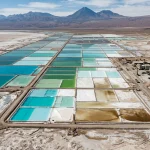
The scale of industrial infrastructure required to support the global energy transition.
Google and the HALEU Supply Chain
Google’s entry into the nuclear space focuses on Kairos Power and the deployment of up to 500 MW of advanced nuclear capacity by 2035. This agreement is structured as an "orderbook" of six to seven SMRs, designed to drive down costs through repeatable manufacturing.
A critical technical detail in the Google-Kairos deal is the use of High-Assay Low-Enriched Uranium (HALEU). Many SMR designs require uranium enriched to between 5% and 20%, significantly higher than the 3% to 5% used in the current fleet.
Google–Kairos Deployment Timeline:
- 2030: First 50 MW reactor online (Hermes 2 project).
- 2032–2035: Sequential rollout of remaining 450 MW.
- Fuel Requirement: TRISO annular pebble fuel utilizing HALEU.
While the absolute tonnage required for 500 MW is smaller than that of large-scale conventional plants, the Google deal provides a "bankable" offtake that justifies investment in the HALEU enrichment supply chain: a sector currently constrained by geopolitical tensions and limited Western capacity.
Uranium Market Snapshot: 2026 Outlook
The entry of Big Tech has arrived at a time of structural deficit in the uranium market. Primary mine supply remains unable to meet total demand, leaving a gap of roughly 20 million pounds per year that must be filled by secondary sources and inventory drawdowns.
2026 Uranium Price Forecast Scenarios
| Scenario | Spot Price Range (US$/lb) | Primary Drivers |
|---|---|---|
| Base Case | $85 – $105 | Steady utility contracting; AI demand priced into long-term expectations. |
| Bull Case | $105 – $150 | Utility inventory thinning; spot market rush; supply shocks in major mining jurisdictions. |
| Bear Case | $75 – $85 | Delayed SMR deployments; unexpected secondary supply entry; macro economic slowdown. |
Current market data indicates that uranium spot prices are testing a floor near $85/lb, while long-term contract prices have firmed toward the $90/lb mark. Institutional analysts, including those at Bank of America, have suggested that if utilities are forced into the spot market to cover 2026 and 2027 shortfalls, prices could escalate into the $135/lb range.

Uranium extraction remains under pressure to keep pace with the structural deficit projected through 2030.
Small Modular Reactors: The "Baseload of the Future"
Why are tech giants choosing SMRs over large-scale traditional reactors? The answer lies in modularity and colocation.
- Scale: SMRs can be sized to match the power requirements of a specific data center campus (e.g., 50 MW to 300 MW).
- Safety: Advanced cooling systems and passive safety features reduce the required "exclusion zone," making them easier to site.
- Speed: Factory-built modules aim to reduce the decade-long construction timelines associated with 1,000 MW+ units.
For the uranium industry, SMRs represent "sticky" demand. Unlike natural gas or coal, which can be swapped based on short-term price fluctuations, a nuclear reactor requires a committed, multi-year fuel cycle. Big Tech's willingness to sign 20-year PPAs effectively removes this capacity from the general market, further tightening the available supply for traditional utilities.
The Institutional Conclusion
The intersection of AI growth and nuclear energy has fundamentally re-rated the uranium sector. We are no longer looking at a purely cyclical market driven by inventory cycles. Instead, the market is entering a phase of strategic resource competition where some of the world's best-capitalized companies are competing for the same limited supply of U3O8.
As the uranium price forecast for 2026 suggests, the path toward triple-digit prices is increasingly supported by these high-stakes corporate contracts. For operators and investors, the message is clear: the energy transition is not just about "green" power, but about "firm" power, and nuclear is the only carbon-free solution capable of meeting the 24/7 demands of the digital age.
Social Media Snippet (LinkedIn/X):
Big Tech is going nuclear. ☢️ From Microsoft’s Three Mile Island restart to Amazon’s $500M SMR investment, the world’s tech giants are contracting decades of uranium supply to power the AI revolution. With a 20M lb annual deficit looming, the "AI-Energy Nexus" is rewriting the rules of the uranium market. Read our deep dive into the 2026 outlook and why SMRs are the new strategic asset for hyperscalers. #Uranium #SMR #AI #EnergyTransition #MiningNews