By Penny Langford

The global mining industry is facing a structural crisis in resource discovery. Despite exploration budgets reaching multi-decade highs, the rate of "Tier-1" discoveries: deposits with the scale and grade to meaningfully impact global supply: has steadily declined. Traditional exploration remains a high-stakes gamble, with the industry average cost for a major discovery now hovering near $3 billion.
However, a shift in methodology is underway. Termed "Exploration 2.0," a new generation of AI-native companies is leveraging predictive modeling and multi-source data fusion to dismantle the traditional risk-reward profile of mineral hunting. By moving from a "drill-and-hope" model to a "data-driven" precision strategy, these players are reducing mineral discovery costs by an average of 40%, with outliers targeting order-of-magnitude improvements in capital efficiency.
The Economics of Discovery: Why 40% Matters
To understand the impact of AI, one must look at the baseline economics of a junior explorer. Currently, only about 1 in 1,000 projects results in a commercial mine. The timeline from initial discovery to first production has stretched to an average of 15.7 years, heavily weighted by the need for extensive, often fruitless, "blind" drilling.
By integrating machine learning into the earliest stages of the exploration lifecycle, companies are addressing three primary cost levers:
- Reduction in "Dead" Metres: AI identifies high-probability targets, allowing geologists to bypass low-potential zones. This reduces the total drilling budget by 30-50% while maintaining or increasing discovery odds.
- Compressed Timelines: Automated data ingestion from core scanners and satellite imagery allows for real-time model updates. What once took months of laboratory analysis can now be processed in hours, accelerating the decision to scale up or walk away from a project.
- Tier-1 Identification: Predictive algorithms can detect subtle geophysical and geochemical signatures that suggest the presence of massive, deep-seated deposits often missed by traditional manual interpretation.
Case Study: KoBold Metals and the Mingomba Breakthrough
KoBold Metals has emerged as the standard-bearer for the Exploration 2.0 movement. Backed by Breakthrough Energy Ventures and heavyweights like Bill Gates and Jeff Bezos, KoBold utilizes its proprietary AI platforms: TerraShed and Machine Prospector: to hunt for critical battery minerals.

Their most significant success to date is the Mingomba deposit in Zambia. By ingesting over a century’s worth of historical geological data, academic papers, and new geophysical surveys, KoBold’s AI identified a massive copper-cobalt resource that had been overlooked for decades.
The KoBold Metric: The company’s stated goal is to reduce the cost per major discovery from the industry average of $3 billion to less than $75 million. This represents not just a 40% saving, but a structural 40-fold reduction in discovery expenditure. For investors, this shifts exploration from a value-destructive lottery to a high-ROI industrial process.

Verne Analytics: The Asset Generator Model
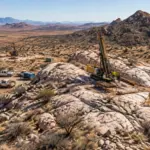
Another rising force in this space is Verne Analytics (often associated with the VerAI Discoveries model), which represents a strategic pivot in how AI companies capture value. Unlike SaaS providers that sell software licenses to existing miners, Verne Analytics acts as an "AI-first explorer."
Their model focuses on:
- AI-Staking: Using predictive models to identify high-potential mineral targets in "under-explored" or "blind" terrains (areas covered by sediment where traditional tools fail).
- Equity Participation: Rather than just providing data, Verne stakes the mineral rights to these targets. This allows them to hold a portfolio of high-probability assets, capturing the exponential value uplift that occurs when a drill bit confirms a discovery.
- Lower Capital Intensity: Because their AI can identify targets with 9x higher mapping accuracy at the earliest stages, Verne can advance a portfolio of 20 projects for the same capital cost a traditional junior might spend on two.
ROI for Junior Explorers: Capital Efficiency in a High-Rate Environment
For junior explorers, who often operate with limited treasury and high dilutive risk, the "Exploration 2.0" toolkit is a survival mechanism. In the 2026 market, where capital for "grassroots" exploration is increasingly discerning, the ability to demonstrate a data-backed targeting methodology is becoming a prerequisite for institutional funding.
Comparative Exploration Metrics: Traditional vs. AI-Driven
| Metric | Traditional Exploration | Exploration 2.0 (AI-Driven) |
|---|---|---|
| Average Discovery Cost | ~$3 Billion | ~$1.8 Billion (avg) / <$100M (target) |
| Drilling Success Rate | <1% (New discovery) | ~15-20% (Target hit rate) |
| Time to Decision | 12-24 Months | 3-6 Months |
| Data Utilization | <10% of legacy data | 90%+ of multi-source data |
| Target Accuracy | Manual Interpretation | 9x to 51x Higher Accuracy |
Predictive Modeling for Tier-1 Deposits
The true "holy grail" of Exploration 2.0 is the discovery of Tier-1 deposits under cover. As surface-level deposits are exhausted, the next generation of mines will be found at depths of 500 to 1,000 metres. Human geologists struggle to visualize these complex, multi-dimensional structures.
AI systems like those developed by Earth AI and GeologicAI excel in this environment. Earth AI, for instance, has demonstrated a discovery success rate of nearly 75% in certain campaigns by combining proprietary drilling hardware with machine learning trained on decades of regional data. GeologicAI utilizes automated core scanning to create a "digital twin" of the subsurface, allowing for instant geochemical analysis that guides the next day's drilling plan.

The 2026 Outlook: A Mandatory Tech Stack
As we move into the second half of 2026, the adoption of AI in exploration is shifting from an "innovation" to a "mandatory" component of the mining tech stack. The Copper price forecast 2026 and the looming deficit in critical minerals like lithium and rare earths are driving a sense of urgency.
The companies that succeed will not be those with the largest drill fleets, but those with the most refined data-ingestion pipelines. For the junior sector, this means a likely consolidation: explorers who lack the capital or expertise to integrate AI will find themselves unable to compete for the dwindling number of high-quality permits.
Featured Lead: The Future of Junior Discovery
The integration of AI is not merely about saving costs; it is about de-risking the entire mining value chain. When the discovery cost is slashed by 40%, the net present value (NPV) of a project increases before the first shovel ever hits the ground. For the professionals and investors tracking M&A activity, AI-backed juniors represent the most attractive acquisition targets for majors looking to replenish their pipelines without the multi-billion-dollar price tag of traditional discovery.
Social Media Snippet (LinkedIn/X)
Exploration is no longer a lottery. ⛏️ AI is officially reducing mineral discovery costs by 40%, with leaders like KoBold Metals targeting even steeper reductions. The shift to "Exploration 2.0" is transforming junior explorers into data-science powerhouses, slashing "dead" drill metres and accelerating the hunt for critical minerals.
Is your exploration strategy still built on 20th-century models? Read our latest deep dive on why data is the new drill bit.
#MiningTech #MineralExploration #AI #CriticalMinerals #SkillingsMining #JuniorMining