By Penny Langford

The juxtaposition of a $15 billion capital influx against a backdrop of federal bribery indictments defines the current state of the Adani Group. As of mid-2026, the Indian conglomerate has orchestrated one of the most aggressive financial recoveries in recent corporate history, pivoting from the defensive posture necessitated by the Hindenburg Research fallout to a multi-trillion-rupee expansion program.
For mining operators and global investors, the Adani trajectory is more than a story of corporate resilience; it is a case study in how critical infrastructure: specifically coal, power, and ports: can provide a "moat" even when faced with significant legal and regulatory scrutiny from the United States Department of Justice (DOJ) and the Securities and Exchange Commission (SEC).
The $15 Billion Rebuild: Strategic Capital and Sovereigns
The $15 billion capital raise reported by the group represents a "rebuild" phase that many analysts thought impossible in the wake of the 2023 short-seller report. This fresh liquidity has been secured through a combination of equity sales to institutional giants like GQG Partners and deep-pocketed sovereign wealth funds from the Middle East.
According to the group’s 2026 strategic updates, a significant portion of this capital is earmarked for a ₹1.5 trillion (approximately $18 billion) capital expenditure program. This investment is not merely about maintaining existing assets but is a fundamental bet on what Gautam Adani describes as "infrastructure and intelligence." This dual-engine strategy links hard physical assets: such as the massive open-pit mining operations and port terminals: with a new layer of digital infrastructure, including a $5 billion partnership for AI-driven data centers in India.
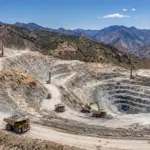
For the mining sector, this capital infusion ensures that the group’s thermal coal supply chain remains liquid. While much of the global focus has shifted toward the energy transition, Adani’s thermal coal portfolio remains the bedrock of its cash flow, supporting the ambitious expansion into green hydrogen and renewables.

US Legal Scrutiny: Bribery Allegations and the FCPA Shadow
Despite the financial momentum, the group remains under a persistent legal shadow originating in Washington. The DOJ indictment, which surfaced in late 2024 and continues to influence financing terms in 2026, alleges that the group orchestrated approximately $265 million in bribes to secure lucrative power contracts across various Indian states.
The SEC’s parallel securities-fraud lawsuit targets the alleged misrepresentation of these practices to US-based investors. In the world of mining finance, these charges are high-stakes. While the Adani Group has largely managed to ring-fence its Indian operations from these US legal actions, the reputational "tax" is evident in its international dealings.


For instance, the group's expansion into Africa has hit significant friction. Proposed deals to upgrade Kenya’s Jomo Kenyatta International Airport and manage power transmission lines faced fierce local opposition and legal challenges, partly fueled by the visibility of the US bribery charges. While a port deal in Tanzania has proceeded, the "Adani risk" is now a standard line item in the due diligence processes of government counterparties outside of India.
Coal and Infrastructure: The Project Timelines
The impact of the $15 billion raise on specific project timelines is most visible in the group’s thermal coal and logistics vertical. Critics have long pointed to pricing opacity in Adani’s coal trading: specifically allegations of over-invoicing and under-invoicing: which they claim inflates power tariffs for Indian consumers.
Operationally, however, the group’s dominance in the coal supply chain remains unchallenged. The massive Khavda renewable energy park: now touted as the world's largest: is being built in parallel with continued investment in coal import terminals and thermal plants. The logic is clear: the revenue from the "old energy" assets provides the necessary runway for the "new energy" 2026 outlook.
- Ports & Logistics: Adani continues to consolidate its position as the "port king" of India, with increased automation and capacity at Mundra and other key hubs.
- Green Hydrogen: A committed $100 billion investment over the next decade aims to make Adani a global leader in low-cost green hydrogen production, leveraging its integrated wind-and-solar supply chain.
- Thermal Coal: Mining operations in the Godda and Carmichael projects remain central to the group's ability to feed India’s growing baseload power demand.
2026 Outlook: Drivers and Case Scenarios
The 2026 outlook for Adani Group is a study in contrasting forces. On one hand, the domestic legal environment in India has provided a major reprieve, with the Supreme Court essentially clearing the path for the group by limiting further SEBI probes. On the other, the global financial community remains split on how to price the group's residual legal risk.
The Bull Case
In this scenario, Adani successfully refinances its remaining high-cost debt using the $15 billion war chest. The Google AI data-center partnership yields high margins, and the US legal issues are resolved via a settlement (a common outcome for Foreign Corrupt Practices Act cases). This would see Adani’s market capitalization exceed its pre-Hindenburg peaks as it becomes the primary vehicle for India's infrastructure boom.
The Base Case
The group continues to expand but at a more measured pace. US legal clouds persist, keeping international borrowing costs slightly higher than peers. Domestic growth remains strong, but global expansion into the West remains stalled due to ESG and compliance hurdles. The ₹1.5 trillion capex plan proceeds, but with occasional delays in projects requiring international consortiums.
The Bear Case
A fresh round of regulatory findings: either from the remaining SEBI probes or new revelations in the US DOJ case: triggers another round of volatility. Government counterparties in key growth markets (like the critical minerals sectors) pull back from Adani-led ventures, forcing the group to rely more heavily on domestic state-backed financing and slowing the pace of its green energy transition.

Conclusion: Infrastructure as a Hedge
By July 2026, Adani Group has demonstrated that in the world of hard assets, "too big to fail" often translates to "too integrated to ignore." The $15 billion capital raise is a testament to the fact that institutional capital will follow cash-flow-positive infrastructure, even amidst a legal firestorm.
For decision-makers in the mining and power sectors, the Adani story underscores a critical reality of the 2026 market: the transition to green energy is being funded by the very coal assets it seeks to eventually replace. Whether the group can fully outrun its legal headwinds remains the most significant variable for its long-term valuation.