By Mo Shine and Penny Langford

The global iron ore market is entering a period of heightened volatility as a July 16 strike deadline at Port Hedland looms over BHP’s Western Australian operations. This planned eight-hour work stoppage by the Combined Ports Unions marks the most significant industrial action in the Pilbara in nearly two decades, sending shockwaves through the seaborne trade route that feeds China’s steel mills.
As of early July 2026, iron ore prices have rallied to their highest levels since May, driven primarily by the threat of supply disruptions at the world’s largest iron ore export hub. For BHP, which exported approximately 280 million tonnes (Mt) in 2025, even a minor operational hiccup at its Port Hedland terminal has the potential to tighten global supply significantly. While an eight-hour stoppage might seem manageable on paper, the market is pricing in the risk of escalation: a scenario where a one-off protest evolves into a protracted industrial campaign.
The Pilbara’s Changing Labor Landscape
The tension at Port Hedland is not an isolated incident but the culmination of months of stalled enterprise agreement negotiations. The Combined Ports Unions: comprising the Western Mine Workers Alliance, the Australian Manufacturing Workers’ Union (AMWU), and the Electrical Trades Union (ETU): represent a critical segment of the workforce responsible for port operations and maintenance.
Current estimates suggest that between 150 and 250 workers out of a total staff of roughly 450 will participate in the July 16 action. The union’s claim centers on a pay increase of approximately A$25,000 per worker. Proponents of the strike argue that this figure is negligible compared to BHP’s revenue; a union spokesperson recently noted that the total cost of the claim could be covered by roughly 9 cents on a US$100/tonne iron ore price.
More Read

However, for BHP and the broader mining industry, the dispute represents a shift in the labor dynamics of Western Australia. The Pilbara has long been characterized by a relatively stable, non-disruptive industrial environment. The move toward coordinated strike action at a vital chokepoint like Port Hedland suggests a more assertive stance by labor groups in the face of persistent inflation and high commodity valuations.


Port Hedland: A Global Supply Chokepoint
To understand why an eight-hour strike is driving prices to May highs, one must look at the scale of Port Hedland. It is the primary exit point for the majority of Australia’s iron ore, serving not just BHP but also Fortescue and Hancock Prospecting.
More Read
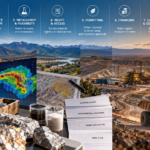
BHP’s terminal operations are highly integrated. The company operates a complex network of rail and port infrastructure designed to move millions of tonnes of ore from inland mines to waiting bulk carriers. A full 24-hour shutdown of the BHP terminal could result in upwards of A$120 million in lost daily revenue. Even a localized eight-hour stoppage is estimated to cost between A$40 million and A$50 million in deferred or lost productivity.
From a logistics perspective, the "ripple effect" of a port stoppage is often more damaging than the stoppage itself. Port Hedland operates on tight tidal windows for the largest ships. Any delay in loading can cause a backlog of vessels in the outer harbor, leading to increased demurrage costs and scheduling conflicts that can take weeks to resolve. This logistical fragility is exactly what speculative traders are eyeing as they bid up iron ore futures.
Market Reaction: Iron Ore Prices Reclaim May Highs
The immediate consequence of the strike notice has been a sharp reversal in iron ore's downward trend seen earlier in the quarter. Benchmark 62% Fe fines (CFR China) have surged back toward the US$110/t mark, levels not sustained since the middle of Q2.
The market’s reaction is a classic case of supply-side risk premium being added to a base of steady, if uninspired, demand. While Kamoa-Kakula’s copper performance and other critical minerals have dominated headlines, iron ore remains the bedrock of global industrial commodity trade.
| Metric | Current Status (July 2026) | Comparison to Q2 Average |
|---|---|---|
| Iron Ore Price (62% Fe) | US$108.50 / tonne | +8.2% |
| BHP Port Hedland Output | 280Mt (2025 Annualized) | Neutral (Pre-strike) |
| Vessel Queue (Port Hedland) | 14 Ships | +3 (Weekly Increase) |
| China Port Stocks | 142Mt | -2% (Monthly Change) |
Investors are particularly wary because current Chinese port inventories are slightly below historical averages for this time of year. If the July 16 strike leads to further industrial action in August, the "just-in-time" supply chain that services Chinese steel mills could face a genuine deficit.

The China Variable: Demand vs. Supply Shocks
While the strike threat provides the "spark" for the current price rally, the "fuel" comes from the underlying demand fundamentals in China. Despite ongoing shifts in the property sector, China’s infrastructure spending and manufacturing exports have remained resilient in 2026.
Steel mill margins in Tangshan and other major hubs have improved slightly over the last month, encouraging higher blast furnace utilization rates. When mills are running at high capacity, they are more sensitive to supply disruptions. The prospect of BHP: a provider of high-quality, consistent blending ores: facing export delays forces mills to seek alternative supplies, often at a premium in the spot market.
We are also seeing a divergence in how the market views different grades of ore. High-grade (65% Fe) concentrates and pellets are seeing even stronger premiums as mills prioritize efficiency to offset rising energy costs. Any disruption at BHP’s Port Hedland berths disproportionately affects the supply of these premium products.
Iron Ore Price Forecast: Q3 2026 Outlook
The trajectory of iron ore prices for the remainder of Q3 2026 depends almost entirely on the outcome of the July 16 stoppage and the subsequent negotiations. We have identified three primary scenarios for the quarter:
1. Base Case: The One-Off Stoppage (US$95 – US$105/t)
In this scenario, the July 16 strike goes ahead as planned but acts as a "pressure release valve" for the unions. BHP and the labor groups return to the table and reach a tentative agreement by late July. The physical impact on shipments is limited to a few delayed cargoes, and the risk premium evaporates. Prices would likely settle back into a range supported by Chinese demand fundamentals rather than supply fears.
2. Bull Case: Escalation and Rolling Strikes (US$110 – US$130/t)
If the July 16 action is followed by notices for 24-hour or 48-hour stoppages, the market will enter a period of sustained volatility. Port Hedland could see significant vessel backlogs, and BHP might be forced to declare force majeure on some spot contracts. In this environment, we could see prices test the US$130/t level, especially if Chinese steel production remains robust.
3. Bear Case: Demand Slump Overrides Supply Fears (US$80 – US$95/t)
This scenario assumes that while the strike occurs, it is overshadowed by a significant slowdown in Chinese industrial activity or a sudden increase in supply from Brazilian producers like Vale. In this case, the strike-related rally would be short-lived, and prices would trend lower as the market refocuses on oversupply in the Atlantic basin.

Conclusion
The July 16 strike at Port Hedland is a reminder of the inherent risks in the highly concentrated iron ore supply chain. For operators and investors, the key will be monitoring the rhetoric following the eight-hour stoppage. If both sides remain dug in, the "May Highs" we are seeing today might only be the beginning of a larger summer rally.
As the industry looks toward the energy transition, the role of iron ore in producing the steel necessary for wind turbines and electric vehicle infrastructure remains paramount. Whether the Pilbara can maintain its reputation for operational reliability will be a defining theme for the remainder of 2026.
Shareable Social Media Snippet (LinkedIn/X)
Title: Port Hedland Tension: BHP Strike Threat Drives Iron Ore Rally ?
The Lead: A planned 8-hour strike on July 16 is putting 280Mt of annual export capacity at risk. Iron ore prices have already hit May highs as the market prices in the "Pilbara Risk Premium."
Key Insight: While the stoppage is short, the threat of escalation into a multi-week campaign is forcing Chinese steel mills to scramble for spot cargoes.
Read the full Deep Dive by Mo Shine and Penny Langford: [Link to Post]
#IronOre #MiningNews #BHP #PortHedland #SteelIndustry #Commodities #SkillingsMining