By Penny Langford

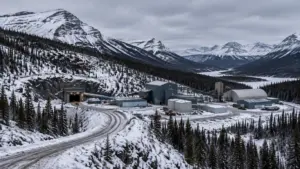
The resurgence of the historic Bunker Hill Mine in Idaho’s Coeur d’Alene District has reached a technical milestone with the expansion of the Cate-8 target. Recent underground exploration results released in July 2026 have confirmed exceptionally high-grade silver-lead-zinc intercepts, fundamentally altering the project’s immediate resource potential. For operators and investors tracking the North American critical minerals supply chain, these results represent more than just high-grade assays; they signal a potential shift in the mine’s 2027 production profile.
Since the mine’s closure in the early 1980s, much of the remaining mineral endowment was thought to be well-understood. However, the discovery and subsequent expansion of the Cate-8 target suggests that significant, unmined high-grade mineralization remains accessible near existing underground infrastructure. The latest drill campaign has not only doubled the target’s modeled size but also encountered silver-rich tetrahedrite mineralization, a hallmark of the district's most prolific historical producers.
Expansion of the Cate-8 Target Model
The July 2026 update centers on a dramatic increase in the Cate-8 exploration target. Originally modeled as a relatively localized occurrence, the target has now been expanded to an estimated 337,000 tons at a grade of 6.17 oz/ton silver-equivalent (AgEq). This reflects a substantial increase from earlier June 2026 estimates, which pegged the target between 50,000 and 168,000 tons.
The geological model indicates that the Cate-8 vein system contains approximately 2.08 million ounces of silver-equivalent metal when applying a 50 g/t AgEq cut-off. What makes this expansion particularly significant is the location: the mineralization remains open and appears to be distinct from previously exploited targets in the upper levels of the mine.
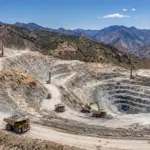
High-Grade Assay Highlights (Mid-2026)
The drilling program, conducted from the 7 and 8 Levels of the mine, has yielded some of the highest silver and lead grades seen in the modern era of the project. The following table summarizes the key intercepts that are driving the current resource expansion.

| Hole ID | Interval (ft) | Silver (oz/ton) | Lead (%) | Zinc (%) | AgEq (oz/ton) |
|---|---|---|---|---|---|
| BHE26-13 | 1.2 | 27.3 | 1.06 | 0.36 | 28.5 |
| BHE26-15 | 6.3 | 2.74 | 5.90 | 0.07 | 4.14 |
| BHE26-15 | 5.3* | 20.4 | 1.77 | 0.14 | 21.6 |
| Peak Sample | – | 27.3 | 35.7 | 15.7 | 32.9 |
*Poorly recovered interval associated with silver-rich tetrahedrite.
The peak sample grade of 32.9 oz/ton AgEq (approximately 1,128 g/t AgEq) underscores the "high-nugget" potential of the Cate-8 veins. While individual high-grade samples are common in the Coeur d'Alene district, the consistency of the vein structures across multiple holes suggests a robust mineralized system rather than isolated pockets.
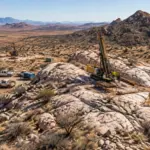

Geological Breakthrough: The Cate Fault Factor
One of the most critical findings in the recent campaign is the relationship between the mineralization and the Cate Fault. Historically, faults in this district have been viewed as "cut-off" points where mineralization either terminates or is significantly displaced.
The 2026 drilling suggests that the Cate-8 target is not cut off by the Cate Fault as previously feared. Instead, the mineralization appears to persist, suggesting a much larger tonnage potential than the legacy mine maps indicated. This structural continuity allows for more efficient mine planning, as the technical team can now project the vein extensions across areas previously thought to be barren.
The presence of silver-rich, copper-antimony bearing tetrahedrite in holes BHE26-13 and BHE26-15 is also a major geological "tell." Tetrahedrite was the primary silver-bearing mineral in many of the district's legendary mines, such as the Sunshine and Galena mines. Finding this mineralogy at Bunker Hill indicates that the Cate-8 zone may be tapping into the same deep-seated plumbing system that fueled the district's billion-ounce silver production history.
Operational Timeline and NI 43-101 Integration
Bunker Hill Mining is moving rapidly to convert these exploration successes into a formal Mineral Resource Estimate (MRE). The company has outlined a focused drill program to complete this transition by the end of 2026.
- Phase 1 (Completed): Initial discovery and scout drilling from Level 7.
- Phase 2 (In Progress): Infill and expansion drilling. Approximately 12 holes are planned from the 7 Level and 10 holes from the 8 Level to provide the density required for an "Indicated" resource classification.
- Phase 3 (Q4 2026): Compilation of data for a new NI 43-101 compliant MRE.
- Phase 4 (2027): Integration of the Cate-8 resource into the mine plan and production guidance.
The speed of this program is enabled by the existing underground access. Unlike greenfield projects that require years of permitting and development to reach these depths, Bunker Hill is leveraging a century of existing shafts and drifts, allowing drill rigs to be positioned directly adjacent to the target zones.

Strategic Context: The Silver-Lead Nexus
The resurgence of Bunker Hill comes at a time of increasing scrutiny on domestic supply chains for base and precious metals. While silver often steals the headlines due to its role in photovoltaics and electronics, the lead and zinc components of the Cate-8 target are equally vital for industrial applications and battery technologies.
By expanding the Cate-8 target, Bunker Hill is positioning itself as a diversified producer. The high lead grades (peaking at over 35%) provide a significant "by-product" credit that can lower the all-in sustaining costs (AISC) of silver production. This makes the project more resilient to commodity price volatility: a key metric for institutional investors and mining finance analysts.
Key Risks and Mitigation
Despite the positive drill results, the project faces several risks common to re-starting legacy operations:
- Recovery and Metallurgy: The presence of tetrahedrite, while silver-rich, can sometimes complicate processing due to its antimony and copper content. The company will need to ensure that the existing mill flowsheets are optimized for this specific mineralogy to maximize recoveries.
- Geotechnical Stability: Operating in a historic mine requires constant vigilance regarding ground conditions. While the 7 and 8 Levels are reported to be in good condition, the expansion of mining into previously unmined zones like Cate-8 requires rigorous geotechnical modeling.
- Execution Timeline: Bringing a mine back into production on a tight schedule (aiming for 2027 integration) leaves little room for equipment delays or labor shortages.
Bunker Hill has mitigated some of these risks through its technology-first approach, employing modern fleet management and real-time data monitoring to oversee underground operations.

Conclusion and Outlook
The expansion of the Cate-8 target is a pivotal moment for Bunker Hill Mining. It validates the hypothesis that the Coeur d'Alene District still holds significant "brownfield" discovery potential. With grades reaching up to 32.9 oz/ton AgEq and a tonnage model that has doubled in just months, the path toward a 2027 production restart looks increasingly robust.
For the broader mining industry, Bunker Hill serves as a case study in how legacy assets can be revitalized through modern geological modeling and targeted exploration. As the company moves toward its year-end MRE, the focus will remain on whether the Cate-8 target can continue to grow and how it will eventually impact the mine’s long-term economic profile.
Shareable Social Media Snippet (LinkedIn/X)
Bunker Hill Mining ($BNKR) expands Cate-8 target! ⛏️ Latest drill results from the Idaho-based mine show high-grade silver-lead-zinc intercepts, including peak samples of 27.3 oz/ton Ag and 35.7% Pb. The target model has doubled to 337k tons at 6.17 oz/ton AgEq. With a new MRE expected by year-end 2026, Bunker Hill is eyeing 2027 for production integration. Read the full analysis on Skillings Mining Intelligence. #MiningNews #Silver #IdahoMining #BunkerHill #CriticalMinerals