By Penny Langford

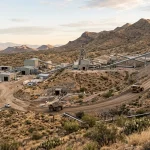
The fragile stability of the global copper market is facing a new geopolitical stress test in the arid highlands of Balochistan. In late June 2026, reports emerged that the Saindak copper-gold mine: Pakistan's largest producing mining asset: was on the brink of an operational halt. While government officials have since moved to downplay the severity of the situation, the underlying cause of the disruption is a calculated "economic blockade" by regional insurgents.
For global investors and operators already navigating a structural copper deficit impact 2026, the potential loss of Saindak is more than a regional footnote. It represents a direct threat to $750 million in annual exports, a critical supply line to Chinese smelters, and a darkening shadow over the multi-billion-dollar Reko Diq project nearby.
The Saindak Shutdown: A Logistics Crisis
The alarm was first raised when a letter from Saindak Metals Limited (SML) to Pakistan’s Ministry of Energy warned that the project had become "unsustainable" due to security-driven logistics failures. The mine, operated by the Metallurgical Corporation of China (MCC) under a lease extending to 2037, relies on the N-40 highway and other critical corridors to transport furnace oil, spare parts, and copper-gold concentrate.
The Baloch Liberation Army (BLA), an insurgent group seeking independence for the province, has shifted its tactics from sporadic attacks to a systematic blockade. By destroying bridges and ambushing convoys, the BLA has effectively cut the umbilical cord between the remote Chagai district and the national infrastructure.
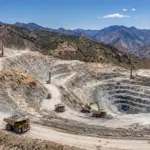
While the Managing Director of SML has publicly clarified that the mine remains operational for now, the warning highlights a critical vulnerability: in modern mining, security is not just about defending the pit: it is about securing the miles of road that connect the ore to the market.


The China-Pakistan Copper Nexus
The Saindak project is a cornerstone of the China-Pakistan Economic Corridor (CPEC). Since 2001, MCC has managed the site, shipping almost 100% of the output to Chinese refineries. In 2025, Pakistan’s copper exports reached approximately $750 million, the vast majority of which originated from Saindak.
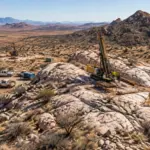
A sustained shutdown would have immediate fiscal consequences for Islamabad, which is already struggling with a debt-laden economy. For China, the loss of Saindak feedstock: while a small percentage of its total imports: adds pressure during a year when global concentrate supplies are already tight.
The Reko Diq Factor: A $9 Billion Question
The true weight of the Saindak crisis lies 50 kilometers to the west at Reko Diq. Managed by Barrick Gold, Reko Diq is one of the world's largest undeveloped copper-gold deposits. It is the linchpin of Pakistan's strategy to become a Tier-1 mining jurisdiction and a key pillar in the global effort to bridge the copper supply gap.
The BLA has explicitly named Reko Diq as a primary target of its economic blockade. If a long-established, Chinese-protected site like Saindak is struggling to maintain its supply chain, the development timeline for Reko Diq: initially targeting first production by 2028: faces significant risk.
Security costs for such a project are already immense. Any further escalation in Balochistan could lead to:
- Increased Capital Expenditure (CAPEX): Higher insurance premiums and the need for private security details.
- Delayed Commissioning: Difficulty in transporting massive grinding mills and heavy machinery to the site.
- Investor Hesitancy: Despite a $1.25 billion U.S. investment in the region's minerals, sustained conflict may deter secondary financiers and contractors.

Global Mining News: The 2026 Supply Context
The instability in Pakistan arrives as the broader mining news landscape is dominated by supply constraints. Global producers are struggling to keep pace with demand driven by the energy transition and AI data centers.
- Codelco’s Struggle: The Chilean state giant is navigating a $25 billion debt crisis and falling grades at its flagship mines.
- First Quantum’s Retrenchment: Following the closure of Cobre Panama, the company has been forced into stake sales, including its Taca Taca project, reducing the pipeline of new supply.
- Regional Risk Premiums: From the DRC to Panama, political risk is increasingly being priced into the copper market. Pakistan’s current situation is a textbook example of how "above-ground" risks can negate "below-ground" geological potential.
Copper Price Forecast 2026: Base, Bull, and Bear Cases
Market analysts are watching the Balochistan situation as a bellwether for sovereign risk in frontier mining. The copper price forecast 2026 currently reflects a market in deficit, but the severity of that deficit depends on projects like Reko Diq staying on schedule.
| Scenario | 2026 Forecast (USD/lb) | Primary Drivers |
|---|---|---|
| Base Case | $4.80 – $5.20 | Steady demand from EVs/AI; moderate delays in Balochistan and South America. |
| Bull Case | $5.50 – $6.00 | Total shutdown of Saindak; BLA blockade halts Reko Diq construction; Codelco production falls below 1.3M tons. |
| Bear Case | $4.20 – $4.50 | Rapid resolution of Pakistan security issues; global economic slowdown reduces industrial demand. |
Operational Resilience in Balochistan
To counter the BLA threat, the Pakistani government has pledged to create "safe corridors" and increase the military presence along the N-40 highway. However, for an industry that thrives on predictable logistics, a militarized supply chain is a high-cost, high-risk solution.
Operators in the region are increasingly looking toward autonomous technology and hardened logistics to mitigate human risk. As seen in other high-risk jurisdictions, the "island" model of mining: where a site is self-sufficient and heavily fortified: may become the standard for Balochistan's copper and gold sectors.

Conclusion: A Strategic Warning
The threat to Saindak is a reminder that the 2026 copper supply squeeze is as much about geopolitics and security as it is about geology. While the volume of copper lost from a Saindak shutdown might be manageable for the global market in isolation, the message it sends to the investors of Reko Diq is profound.
If Pakistan cannot secure the roads for its existing Chinese partners, the road to becoming a global copper powerhouse will remain fraught with delays. For the global market, this instability reinforces the "higher-for-longer" price narrative, as the search for secure, stable, and conflict-free copper continues to drive capital toward more established jurisdictions: often at a significant premium.
Share this Analysis
LinkedIn: ? Pakistan's copper powerhouse Saindak is under threat from an "economic blockade." What does this mean for the $9B Reko Diq project and the global 2026 copper deficit? Penny Langford breaks down the logistics crisis in Balochistan. #MiningNews #Copper #EnergyTransition #Pakistan
X (Twitter): ? Saindak mine shutdown threat: BLA blockades are strangling Pakistan's copper exports. With a global deficit looming in 2026, could Balochistan's security crisis push copper prices to new highs? Read the full analysis on Skillings. #CopperPrice #Mining #Geopolitics