By Penny Langford

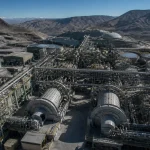
The global mining industry in 2026 has reached a definitive pivot point. For decades, the sector relied on "brute force" exploration and traditional processing methods that changed little in principle. However, as the energy transition accelerates and the "AI energy nexus" creates unprecedented demand for copper, lithium, and rare earths, the industry is undergoing a digital and robotic overhaul.
From the depths of the ocean to the center of AI-driven control rooms, the narrative of 2026 is one of breakthroughs. This year, we are seeing the convergence of hardware that is "AI-ready" by design, autonomous systems capable of exploring previously unreachable frontiers, and a fundamental shift in how exploration budgets are allocated.
AI-Ready Processing: The Jameson Cell Feedback Loop
One of the most significant shifts in mineral processing this year is the movement toward hardware designed specifically for digital optimization. Glencore Technology’s Jameson Cell has emerged as a prime example of "AI-ready" flotation technology.
Traditional flotation circuits: the massive tanks used to separate valuable minerals from waste rock: often suffer from a "data lag." In a conventional circuit, it can take several hours for a process adjustment to manifest as a measurable change in mineral recovery. For an AI system trying to optimize a plant in real-time, this multi-hour residence time is an eternity.

The Jameson Cell addresses this bottleneck through a compact circuit design that achieves residence times of just 5 to 10 minutes. This rapid feedback loop allows AI and advanced process control (APC) systems to receive data, analyze the result of a change, and adjust again with high precision.


"Simplicity in the physical circuit is the prerequisite for complexity in the digital circuit," notes the recent Skillings Mining Intelligence report on copper price forecasts for 2026. By reducing the physical footprint and the time it takes for chemicals to react, operators can now deploy machine-learning models that actually manage the grade and recovery of the circuit with minimal human intervention.

Autonomous Exploration: The Pittsburgh Robotics Hub
While processing becomes more intelligent, exploration is moving into entirely new environments. In early 2026, Impossible Metals opened its Advanced Marine Robotics Hub in Pittsburgh, Pennsylvania. The facility is a dedicated center for the development of autonomous underwater mining (AUM) systems.
The hub focuses on refining the "Eureka" autonomous platform, a fleet of AI-guided robots designed to harvest polymetallic nodules from the seabed. Unlike traditional dredging methods that can devastate marine ecosystems, these robots use machine vision to selectively pick up individual nodules, leaving the surrounding environment largely intact.
This move toward seabed minerals is driven by the need for a "China-free" supply chain for nickel, cobalt, and manganese: metals that are critical to the defense and EV sectors. The Pittsburgh hub places Impossible Metals at the center of the world's robotics capital, allowing for rapid iteration of the sensors and AI algorithms required for deep-sea navigation.
S&P Global 2026: The Rise of Minesite Exploration
The 2026 World Exploration Trends report from S&P Global highlights a concerning but logical trend: while global exploration budgets are rising, the focus has shifted heavily toward lower-risk assets.
According to the 2026 data:
- Minesite Exploration: Now commands a record ~45% share of total budgets. Companies are focusing on finding more ore within the footprints of existing operations where infrastructure already exists.
- Grassroots Exploration: Has fallen to a historic low of ~21%. The difficulty of permitting new "greenfield" projects has driven investors to prefer the relative safety of brownfield expansions.

This shift underscores the importance of technological breakthroughs. If the industry is to rely on existing mines for the bulk of its new supply, it must get better at finding hidden pockets of mineralization. This is where AI-driven target identification comes into play.
Case Studies: Data Integration and Mineral Frontiers
Several companies are leading the way in integrating AI into their exploration workflows. In Chile, Montero has deployed AI/ML-assisted data integration at the Elvira Gold Project. By feeding historical geological, geophysical, and geochemical data into a central model, Montero has been able to identify subtle structural controls that previous explorers missed.
In Nevada, Spartan Metals has demonstrated the power of aggressive expansion combined with modern targeting, increasing its Tungstonia mine footprint 13-fold. This expansion targets tungsten, a critical mineral that is increasingly vital for high-tech and military applications.
Furthermore, the search for "cleaner" commodities has led to the emergence of natural hydrogen. MAX Power recently launched a commercial validation program for natural hydrogen at the Lawson Complex in Saskatchewan. If successful, this could unlock a "white hydrogen" resource that provides zero-carbon energy directly from the earth, potentially powering the very mines that extract the metals for the energy transition.
PDAC 2026: Seeing Beyond the Assays
The Prospectors & Developers Association of Canada (PDAC) 2026 convention served as a showcase for the "next-gen" exploration toolkit. The overarching theme this year was "Seeing Beyond the Assays": a push to understand not just how much mineral is in the ground, but how it is hosted and how it will behave during processing.
Key technology trends highlighted at PDAC 2026 include:
- Drone-Based Geophysics: High-resolution sensors mounted on autonomous drones are now capable of mapping magnetism and conductivity over rugged terrain with centimeter-level precision.
- Hyperspectral Imaging: Used on drill cores and satellite data, hyperspectral sensors can "see" mineral signatures that are invisible to the naked eye, allowing for instant mineral mapping.
- AI-Driven Target Identification: Platforms that can ingest thousands of layers of data to predict where a discovery is most likely to occur, significantly reducing the "discovery cost" per ounce or pound.

The AI Energy Nexus and Mining Stocks
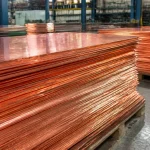
For investors, the most critical takeaway for 2026 is the "AI energy nexus." AI requires massive data centers, which in turn require massive amounts of electricity and copper. However, AI is also the tool that allows the mining industry to produce that copper more efficiently.
Mining stocks that successfully integrate these technologies are being re-rated by the market. We are seeing a divergence between "legacy" operators who are slow to adopt automation and "tech-forward" companies that are utilizing Jameson Cells for better recoveries and AI for lower discovery costs.
As we look toward the remainder of 2026, the success of a mining project is no longer just about the grade of the ore in the ground. It is about the intelligence of the systems used to find, extract, and process it. The breakthroughs of this year: from the robotics labs of Pittsburgh to the hydrogen fields of Saskatchewan: are the foundation of the 21st-century resource economy.
LinkedIn/X Social Snippet:
Mining Technology 2026 is here: From Glencore's AI-ready Jameson Cell to Impossible Metals’ marine robotics hub in Pittsburgh, the industry is shifting from brute force to intelligence. S&P Global reports minesite exploration at a record 45% share. Are your investments ready for the AI energy nexus? #MiningTech #CriticalMinerals #AI #Mining2026 #SkillingsMining