The convergence of artificial intelligence and the global energy transition has placed a renewed spotlight on the domestic nuclear supply chain. As hyperscale data centers search for carbon-free, baseload power, the role of Small Modular Reactors (SMRs) has transitioned from theoretical to a central pillar of energy policy. At the center of this pivot is Eagle Nuclear Energy Corp (NASDAQ: NUCL), which is currently executing a dual-track strategy to address both the fuel supply and the reactor technology required to meet this rising tide of demand.

By advancing its Aurora Uranium Project in Oregon while simultaneously developing AI-ready SMR designs, Eagle Nuclear is attempting to solve the most critical bottleneck in the nuclear renaissance: a secure, domestic supply of uranium to fuel the next generation of reactors.
SMR uranium demand 2026: The strategic pivot
While the vast majority of current uranium consumption originates from large-scale conventional reactors, smr uranium demand 2026 represents the industry's most significant forward-looking catalyst. The market is increasingly pricing in a "pre-loading" phase where utilities and reactor developers secure long-term fuel contracts ahead of widespread SMR deployment.
Current projections for 2026 indicate a global reactor demand of approximately 185 million pounds of U₃O₈, while primary mine production is expected to trail at 164 million pounds. This structural deficit of roughly 21 million pounds is being exacerbated by the rapid growth of the AI energy nexus. Hyperscalers, including Amazon, Microsoft, and Google, have recently signaled a preference for behind-the-meter nuclear solutions to power their expanding data center fleets.
This surge in interest is not just about the volume of uranium consumed in 2026: which remains dominated by the existing fleet: but about the signal it sends to the mining sector. SMRs require a reliable, geographically secure fuel source. For US operators, this means a total re-evaluation of the domestic supply chain, moving away from reliance on Central Asian and Russian exports and toward projects like Eagle Nuclear’s Aurora deposit.



Rebuilding the US supply chain: The Aurora Uranium Project
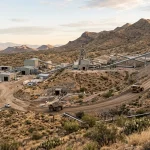
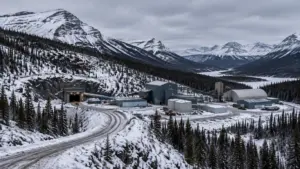
Eagle Nuclear’s primary focus on the supply side is the Aurora Uranium Project, located within the McDermott Caldera on the Oregon–Nevada border. The site is recognized as one of the largest conventional uranium deposits in the United States, positioning it as a strategic asset for the onshoring of the energy transition.
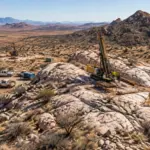
In early 2026, the company launched a comprehensive Pre-Feasibility Study (PFS) drill program. This $4.7 million initiative is fully funded from the company's $30 million cash position and marks a critical step toward production.
Key contractors and technical execution
To manage the technical complexity of the Aurora Project, Eagle Nuclear has assembled a team of top-tier industry contractors:
- Harris Exploration Drilling: Serving as the primary drilling contractor, Harris has deployed track-mounted core drill rigs to execute a 27,000-foot program consisting of 47 diamond drill holes.
- Yukuskokon Professional Services: Providing turnkey project management and geological support to ensure the program meets rigorous PFS standards.
- BBA USA Inc.: Tasked with resource and technical consulting, BBA performed the initial gap analysis and is responsible for real-time geological modeling and drill-hole targeting.
- SLR International Corporation: Spearheading the permitting and environmental baseline studies. SLR is also managing the hydrogeology and geochemistry programs, including the installation of groundwater monitoring wells.
The drill program is designed to address resource expansion, metallurgical testing, and geotechnical data required to finalize the mine plan. By targeting a PFS completion in late 2027, Eagle Nuclear is moving at an accelerated pace to align with the expected 2028-2030 window of peak SMR commercialization.

AI-ready SMRs: Bridging the energy gap for hyperscalers
Beyond mining, Eagle Nuclear is leveraging its "NUCL" platform to develop a next-generation SMR program. The company’s vision is to build reactors that are "AI-ready": specifically designed to handle the variable and high-intensity loads of modern data centers.
To accelerate this development, Eagle Nuclear has entered into a strategic partnership with a leading AI firm to conduct advanced reactor simulations. This partnership utilizes high-performance computing to model fluid dynamics, thermal heat maps, and predictive maintenance schedules for their SMR designs.
The goal is to create a digital twin of the reactor core that can simulate decades of operation in months. This approach reduces the time required for regulatory approval and ensures that the physical hardware is optimized for the specific cooling and power requirements of AI infrastructure. By integrating the reactor design with the fuel supply chain, Eagle Nuclear aims to offer a "full-stack" nuclear solution to industrial partners.

Uranium price forecast 2026: The road to $150/lb
The financial backdrop for Eagle Nuclear’s operations is one of the most bullish periods for the commodity in decades. The uranium price forecast 2026 remains defined by a multi-year supply squeeze and a strategic shift in how utilities procure fuel.
As of mid-2026, the market has stabilized following a spike above $100/lb earlier in the year. However, analysts point to several scenarios that could drive prices significantly higher by year-end:
- Base Case ($90–$110/lb): Sustained demand from the existing fleet and steady contracting by US and European utilities to cover gap years through 2030.
- Bull Case ($120–$150/lb): Accelerated procurement by SMR developers and potential supply disruptions from traditional export regions. In this scenario, the "scarcity premium" for domestic US uranium becomes a dominant market driver.
- Bear Case ($75–$85/lb): A potential slowdown in reactor restarts or a broader economic contraction that reduces industrial electricity demand, though the structural deficit makes this case less likely.
Utilities are increasingly moving toward term contracts over spot purchases to ensure long-term security. With term prices frequently trading at a premium to spot, companies like Eagle Nuclear with significant unhedged resources are well-positioned to benefit from this "flight to quality."
Uranium market outlook 2026: Navigating the structural deficit
The uranium market outlook 2026 is characterized by a transition from a buyer’s market to a seller’s market. The 20 million pound deficit between supply and demand is no longer just a statistical anomaly; it is a reality that is forcing a re-evaluation of mine economics.
For investors and operators, the key takeaway for 2026 is the convergence of policy and technology. Uranium was designated a Critical Mineral in 2025, and Section 232 national security measures have effectively created a protected environment for domestic production. This policy support, combined with the technological push from SMRs and AI, has created a "perfect storm" for the US nuclear sector.
Eagle Nuclear’s dual play reflects this reality. By securing the largest uranium deposit in Oregon and developing the technology to consume it, the company is attempting to capture the entire value chain of the nuclear renaissance. As the Aurora PFS progresses and the AI-driven simulation program yields data, Eagle Nuclear will remain a central figure in the conversation about American energy independence.
Shared Social Media Snippet (LinkedIn/X)
Eagle Nuclear (NASDAQ: NUCL) Dual Play: Supply + Technology
As AI data centers demand 24/7 carbon-free power, Eagle Nuclear is moving to solve the two biggest hurdles:
- Supply: PFS drilling at the Aurora Uranium Project in Oregon (one of the largest US deposits).
- Tech: AI-ready SMR simulations designed for hyperscale loads.
With a 20M lb uranium deficit looming in 2026, the race for domestic fuel security is on. #Mining #NuclearEnergy #SMR #Uranium #AI #EnergyTransition #NUCL