By Penny Langford

The Meghalaya state government has moved to formally block uranium mining across the region, codifying decades of grassroots opposition into a cabinet-backed Assembly resolution. This decision effectively seals off the Domiasiat deposits: India’s largest near-surface sandstone-type uranium ore body: at a time when the global uranium market outlook 2026 is characterized by a structural supply deficit and surging prices.
Chief Minister Conrad K. Sangma announced the resolution in early 2026, framing it as a direct response to federal attempts to bypass local consent. The move has been welcomed by powerful community organizations, including the Khasi Students’ Union (KSU), which has long cited health and environmental risks as grounds for total opposition. For India’s Department of Atomic Energy (DAE), the formal ban represents a significant strategic setback, as the Meghalaya deposits represent roughly 16% of the country’s total identified uranium resources.
The Domiasiat Resource: High Grade, Zero Access
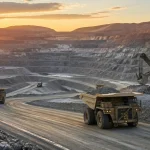
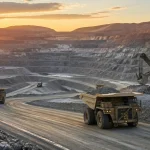
The Domiasiat-Wahkaji-Mawthabah belt in the West Khasi Hills is geographically and geologically unique in the Indian context. Unlike the deep-seated, lower-grade deposits found in Jharkhand, the uranium at Domiasiat is remarkably accessible.
According to data from the Atomic Minerals Directorate (AMD), the Domiasiat deposit alone holds approximately 9,500 tonnes of uranium oxide ($U_3O_8$). The ore is found at depths ranging from just 8 to 47 meters, making it ideal for low-cost, open-cast mining. Furthermore, the average grade of approximately 0.1% $U_3O_8$ is significantly higher than the domestic average, providing a fuel-to-ore ratio that few other Indian sites can match.

Despite these technical advantages, the Kyelleng-Pyndeng-Sohiong Mawthabah (KPM) project has remained in a state of suspended animation for over a decade. The Uranium Corporation of India Ltd (UCIL) has repeatedly failed to secure the necessary social license to operate, as local matrilineal societies and village heads view the project as a threat to their ancestral lands and public health.

Political Friction and the 2026 Trigger
The timing of the Meghalaya resolution was precipitated by a policy shift at the federal level. In late 2025, the Ministry of Environment, Forest and Climate Change (MoEFCC) issued a memorandum exempting atomic and critical minerals from mandatory public hearings under certain conditions. This was perceived by Meghalaya’s leadership and local activists as a "backdoor entry" for UCIL to revive the KPM project without community consultation.
"The government’s position has always been to prioritize the concerns of our people," Chief Minister Sangma stated during the cabinet briefing. "By passing this formal resolution, we are ensuring that the state's stance is legally and politically clear: mining cannot proceed without a total consensus that currently does not exist."

Even the BJP in Meghalaya, which is part of the ruling coalition, has signaled its support for the ban, reflecting the high political cost of supporting uranium extraction in the Khasi Hills. This local alignment against central interests highlights the growing jurisdictional tension over strategic minerals in India's federal structure.

Supply Chain Impact: The "Grade Gap" and Import Reliance
The decision to keep Meghalaya’s uranium in the ground forces India to accelerate its reliance on other domestic mines and international suppliers. While projects in Tummalapalle (Andhra Pradesh), Rajasthan, and Karnataka remain operational or under development, they face significant hurdles that Meghalaya’s sandstone deposits do not.
- Tummalapalle (Andhra Pradesh): While vast, this deposit is carbonate-hosted and involves complex, high-pressure leaching processes. The grade is lower than Domiasiat, and the extraction costs are significantly higher.
- Jharkhand (Jaduguda/Narwapahar): These are mature mines. While they have provided the backbone of India's supply for decades, they are underground operations with increasing depths and declining grades.
- Rajasthan and Karnataka: These exploration targets are still in early stages and lack the proven resource scale of the Khasi Hills.
The result is a widening "grade gap." Without high-grade, open-cast domestic supply, India’s domestic nuclear fuel cycle: specifically for its unsafeguarded Pressurized Heavy Water Reactors (PHWRs): faces a tightening bottleneck. This strengthens the case for long-term import contracts with countries like Kazakhstan, Canada, and Uzbekistan, though such imports are often restricted to safeguarded civil reactors under international oversight.
Global Uranium Market Outlook 2026: A Tightening Noose
The ban in Meghalaya coincides with a period of historic volatility and upward pressure in the global uranium market. The uranium price forecast 2026 suggests that the $90 to $120 per pound range will become the "new normal" for spot prices, with spikes toward $150 possible if supply disruptions persist.
Key Market Drivers in 2026:
- AI and Data Center Demand: The massive expansion of hyperscale data centers has created a new, urgent need for 24/7 baseload power. Tech giants are increasingly looking toward nuclear energy to meet carbon-neutral goals, driving a resurgence in nuclear investment.
- SMR Commercialization: Small Modular Reactors (SMRs) are moving from concept to final investment decisions (FIDs). The initial core load for an SMR requires a significant volume of uranium, creating "lumpy" demand that can catch the spot market off guard.
- Kazakhstan Supply Constraints: Operational hurdles, including sulfuric acid shortages and leaching challenges at Kazatomprom facilities, have capped output from the world’s largest producer, preventing a supply-side "vent" for rising prices.
- Enrichment Overfeeding: To maximize output, enrichers are increasingly using "overfeeding" techniques, which require more natural uranium feed material, further tightening the primary $U_3O_8$ market.

Market Snapshot: Uranium Price Scenarios (2026)
| Scenario | Spot Price Range ($/lb) | Key Trigger |
|---|---|---|
| Base Case | $85 – $110 | Orderly utility contracting; Kazakhstan production stabilizes. |
| Bull Case | $115 – $135 | Major SMR project FIDs; continued acid shortages in Central Asia. |
| Panic Spike | $140 – $155 | Geopolitical disruption of Trans-Caspian transport routes or sudden Russian export bans. |
| Bear Case | $70 – $85 | Delayed nuclear build-outs in China/India; unexpected release of secondary inventories. |
Strategic Risks and Long-Term Fallout
For investors and operators, the Meghalaya ban serves as a case study in "social license risk." Even as uranium prices climb and the strategic necessity for nuclear fuel grows, local opposition can permanently sideline Tier-1 assets. This risk is not unique to India; we have seen similar dynamics affect mining permits reform 2026 in North America and Europe.
Furthermore, the loss of domestic supply options like Domiasiat may force the DAE to reconsider its technological roadmap. If domestic natural uranium remains scarce, the shift toward thorium-based cycles or advanced fast breeder reactors becomes even more critical, though these technologies remain years away from large-scale commercial viability.
The industry is also looking at how mine electrification benefits 2026 can lower operating expenses at more complex sites like Tummalapalle, potentially making lower-grade deposits more economically resilient in a high-price environment.

Conclusion
Meghalaya’s formal exit from India’s uranium production map for the foreseeable future simplifies the political landscape for the state but complicates the strategic energy security of the nation. As public pressure mounts and the state Assembly resolution takes effect, the Domiasiat deposits will remain a "stranded asset" of immense value.
In the broader context of mining news, this development reinforces the reality that geology is only half the battle. In 2026, the ability to navigate local sentiment and federal-state friction is just as critical to the global energy transition as the minerals themselves. For the uranium market, the exclusion of Meghalaya’s 20,000 tonnes of resources is one more factor ensuring that the 2026 supply-demand balance remains precariously tight.
Social Media Snippet:
Meghalaya’s formal ban on uranium mining at the high-grade Domiasiat deposits creates a long-term strategic bottleneck for India’s nuclear fuel autonomy. With the global uranium market outlook for 2026 pointing toward a structural deficit and prices potentially testing $120/lb, the loss of these domestic resources deepens reliance on imports. Read the full analysis on Skillings Mining Intelligence. #Uranium #MiningNews #EnergySecurity #IndiaMining