By Penny Langford

LONDON : Copper prices surged toward the $14,000-per-ton threshold on Monday as a unprecedented convergence of supply shocks: ranging from geopolitical shipping disruptions to a Category 5 storm in Chile: rattled global metal markets.
The London Metal Exchange (LME) three-month copper contract hit an intraday high of $14,230 per ton, a move driven by a critical shortage of sulfuric acid and deteriorating operational conditions in the world’s largest producing regions. Analysts warn that the current rally is not merely speculative but reflects a structural tightening that could leave the market in a sustained deficit through the end of the decade.
The Sulfuric Acid Bottleneck
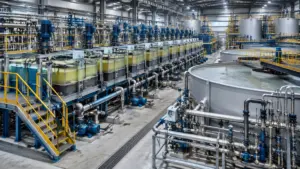
A primary driver of the immediate price spike is a global shortage of sulfuric acid, a vital reagent in the solvent extraction-electrowinning (SX-EW) process. SX-EW accounts for approximately 15% of global copper cathode production, and the current supply crunch is threatening to idle significant capacity.
The shortage stems from two geopolitical flashpoints. Disruptions in the Strait of Hormuz have halted seaborne acid shipments from the Middle East, a key regional supplier. Simultaneously, China has implemented a stringent export ban on sulfuric acid to prioritize its domestic industrial requirements.



"The seaborne sulfuric acid trade has effectively ground to a halt," said one senior metals analyst. "Because the material is highly corrosive and difficult to transport over land, there are few alternatives for miners in remote regions who rely on ocean freight. This is a direct hit to the cost curve and production volumes."
The International Energy Agency (IEA) recently issued a report stating that the copper supply outlook has worsened considerably due to these midstream bottlenecks. The agency noted that the energy transition's reliance on copper is now at risk unless chemical supply chains are secured.
Storm Clouds Over Chile
Compounding the chemical shortage is extreme weather in the Andes. A Category 5 storm is currently bearing down on central and northern Chile, home to some of the world's largest copper mines.
Early reports indicate widespread power outages and logistics delays at major operations. Antofagasta and BHP have already signaled potential production downgrades, with BHP warning that its Chilean output could decline through 2027. This follows a monster storm that previously rattled metals markets during the current seasonal cycle.
"When you combine the physical disruption of a Category 5 storm with a pre-existing shortage of leaching agents, you have a perfect storm for supply," said a trader on the LME floor. "We are seeing force majeure declarations becoming a real possibility if the weather doesn't break and the acid shipments don't resume."

Long-Term Structural Deficit
While the acid crisis and Chilean weather are immediate triggers, the long-term fundamentals of the copper market reveal a deeper crisis. BMI, a unit of Fitch Solutions, has forecasted a structural deficit that could widen to 1.5 million tons by 2035.
The industry is battling a relentless decline in ore grades, which have fallen by an average of 40% since 1991. This means miners must process significantly more rock to produce the same amount of finished metal, increasing energy consumption and operating costs.
Furthermore, the pipeline for new "tier-one" discoveries has largely dried up. Data shows that only 5% of all copper deposits discovered in the past 35 years were found in the last decade. Permitting delays and rising ESG requirements have also extended the average time from discovery to production to nearly 16 years.
Market Snapshot: July 20, 2026
| Commodity | Price (USD/t) | Change (%) | Market Sentiment |
|---|---|---|---|
| LME Copper | $14,150 | +4.2% | Bullish / Supply Squeeze |
| LME Aluminum | $2,780 | +0.8% | Neutral |
| LME Nickel | $21,450 | -0.5% | Mixed |
| Gold (oz) | $2,420 | +1.1% | Bullish |
| Iron Ore (62%) | $112 | -1.2% | Bearish |
Technological Responses and Risks
Mining companies are increasingly turning to advanced technology to mitigate these challenges. Investment in autonomous drilling and AI-ready processing is accelerating as operators attempt to squeeze efficiency from low-grade ores.

However, technology alone cannot bridge a 1.5-million-ton gap. As copper prices move toward $14,000 and beyond, the pressure on the global energy transition intensifies. Electric vehicle (EV) manufacturers and renewable energy developers, who are already seeing their margins compressed by high raw material costs, face the prospect of a prolonged era of "expensive copper."
For investors and operators, the focus has shifted from "if" a deficit will occur to "how deep" it will go. With the current supply shocks showing no signs of immediate resolution, the $14,000 level may become the new floor rather than the ceiling.

Social Media Snippet (LinkedIn/X)
Headline: Copper hits $14,000/ton as supply chain "Perfect Storm" hits.
Context: A critical sulfuric acid shortage triggered by Strait of Hormuz tensions and a Category 5 storm in Chile are crushing copper output. With ore grades down 40% since 1991 and discoveries at record lows, the structural deficit is no longer a future threat; it’s here.
#Copper #MiningNews #EnergyTransition #Commodities #SkillingsMining