By Penny Langford

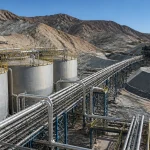
PERTH, July 22, 2026 : Wesfarmers Ltd and its joint venture partner SQM have greenlit a US$1.4 billion expansion of the Mount Holland lithium project in Western Australia, a move set to double the site's production capacity as the global battery metals market enters a significant recovery phase.
The decision, announced on Wednesday, clears the way for the construction of a second concentrator at the Earl Grey hard-rock deposit. The expansion will increase nameplate spodumene concentrate output from 380,000 tonnes per year to 760,000 tonnes. With construction slated to begin in the second half of 2027, the partners expect first production from the expanded facility to hit the market in early 2030.
This final investment decision (FID) marks a pivot for the Perth-based conglomerate and the Chilean lithium giant, signaling confidence in the long-term fundamentals of the electric vehicle (EV) supply chain despite the price volatility that gripped the sector over the previous 24 months.
A strategic bet on lithium market recovery
The expansion comes as the lithium sector emerges from a prolonged slump. In late 2025, spodumene prices hovered near US$690 per tonne, a collapse of more than 90% from the record highs seen in 2022. However, the market landscape in mid-2026 has shifted dramatically. Current spot prices for 6% spodumene concentrate have rallied to approximately US$2,890 per tonne, a two-year high driven by an acceleration in the adoption of battery energy storage systems (BESS) and a tightening supply-demand balance.

Wesfarmers CEO Rob Scott emphasized that the expansion is not a reaction to current spot prices but a strategic commitment to a multi-decade asset. "For a project of this scale and duration, what matters is the price trajectory over the next 30 to 50 years, not the next quarter," Scott said in a briefing following the announcement.

The investment split for the expansion is expected to see each partner contribute between US$450 million and US$715 million, depending on final engineering contingencies and currency fluctuations. SQM’s share is currently pegged at roughly US$500 million in nominal terms.


Lithium price forecast 2026: Drivers and risks
Industry analysts view the Mount Holland FID as a bellwether for the broader lithium price forecast 2026. While the extreme highs of 2022 are unlikely to return in the near term, the consensus suggests a structural "floor" has formed.
Several factors are supporting a constructive outlook for the remainder of 2026 and into 2027:
- Inventory Depletion: Battery manufacturers have largely worked through the excess inventories built up during 2024, leading to more consistent spot market activity.
- BESS Growth: While EV sales growth has moderated in some regions, the demand for stationary storage: essential for balancing renewable energy grids: has surpassed expectations, creating a new and massive vertical for lithium demand.
- Supply Discipline: High-cost producers, particularly lepidolite miners in China and certain junior explorers, were forced offline during the 2025 price trough. This supply-side rationalization has helped stabilize the market.
Macquarie research indicates that diversified miners like Wesfarmers are well-positioned to capture this upside. The bank expects Wesfarmers’ chemicals, energy, and fertilisers division (WesCEF) to report a significant boost in earnings for the 2026 financial year, marking the first full year of profitable lithium contributions.
Integrated supply chain: Mine to refinery
The Mount Holland project, operated through the Covalent Lithium joint venture, is not just a mining play. It is a key component of an integrated "mine-to-refinery" strategy. While the mine produces spodumene concentrate, the partners are also developing the Kwinana refinery south of Perth.
The refinery is currently designed to produce 50,000 tonnes per annum of battery-grade lithium hydroxide. However, following the approval of the mine expansion, the JV partners have indicated they are evaluating plans to double the refinery’s capacity to 100,000 tonnes to match the increased spodumene output.
This integration is critical as global OEMs (Original Equipment Manufacturers) increasingly seek transparency and sustainability in their supply chains. Western Australia’s Tier-1 jurisdiction status and the proximity of Mount Holland to the industrial hub of Kwinana provide a competitive advantage over more geographically fragmented operations.

Operational outlook and technical milestones
The Mount Holland expansion involves significant technical scaling. The Earl Grey deposit is one of the largest and highest-grade hard-rock lithium deposits in the world, with approximately 186 million tonnes of resources.
The timeline for the expansion is structured to minimize disruption to existing operations while maximizing the use of shared infrastructure:
- H2 2027: Commencement of site works and long-lead item procurement for the second concentrator.
- 2028-2029: Major construction phase, including the installation of additional crushing, grinding, and flotation circuits.
- H1 2030: Commissioning and first production of expanded spodumene concentrate.
The JV is also incorporating advanced automation and energy-efficient technologies into the new facility. This aligns with broader industry trends toward autonomous drilling and AI-ready processing, as highlighted in recent mining technology updates.
Comparative Production Data (2026-2030)
The following table outlines the projected production ramp-up for the Covalent Lithium joint venture based on current approvals and market guidance.
| Year | Spodumene Concentrate (tpa) | Lithium Hydroxide (tpa) | Market Context / Status |
|---|---|---|---|
| 2025 | 380,000 | Phase 1 Ramp-up | Low price environment; inventory build |
| 2026 | 380,000 | 50,000 (Target) | Price recovery; spot ~$2,890/t |
| 2027 | 380,000 | 50,000 | Construction start on Expansion |
| 2028 | 380,000 | 50,000 | Peak construction phase |
| 2029 | 380,000 | 50,000 | Pre-commissioning phase |
| 2030 | 760,000 | 100,000 (Potential) | First expanded production |
Geopolitical and regional impact
The expansion reinforces Western Australia’s dominance as a global lithium hub. While other regions have seen significant delays: such as the Codelco Maricunga project in Chile: the Australian regulatory and operational environment remains a magnet for capital.
The Western Australian government has welcomed the $1.4 billion investment, noting it will support hundreds of construction jobs and dozens of permanent operational roles in the Yilgarn region. Furthermore, the decision comes amidst a broader wave of M&A activity in the state, with major players looking to consolidate high-quality assets to secure future supply, a trend seen in recent mining M&A updates.

For investors, the Mount Holland expansion represents a lower-risk entry into the lithium space compared to pure-play juniors. Wesfarmers’ diversified retail and industrial portfolio provides a buffer against commodity price swings, while SQM brings unparalleled technical expertise in lithium processing.
As the industry looks toward 2030, the doubling of Mount Holland’s output ensures that Western Australia will remain at the center of the global transition to clean energy, providing the critical minerals necessary for the next generation of battery technology.
LinkedIn/Social Snippet:
Wesfarmers and SQM have officially greenlit a US$1.4 billion expansion of the Mount Holland lithium project in Western Australia. The move will double spodumene output to 760,000 tpa by 2030. With prices rebounding to two-year highs of US$2,890/t, the JV is betting big on the long-term fundamentals of the EV and storage battery supply chain. #Lithium #MiningNews #EnergyTransition #Wesfarmers #CriticalMinerals #WesternAustralia