By Charles Pitts

The global uranium market is entering 2026 in the midst of a structural transformation that has moved beyond the speculative hype of previous years into a phase of fundamental scarcity. As the “nuclear renaissance” accelerates, driven by a convergence of decarbonization goals and the massive power requirements of AI data centers, the supply-demand imbalance is reaching a critical inflection point.
For much of the last decade, the uranium sector was defined by oversupply and secondary inventory drawdowns. Today, that narrative has flipped. A combination of persistent production hurdles at the world’s largest mines and the sudden, aggressive entry of Big Tech into the nuclear power procurement space has set the stage for a volatile and high-priced 2026.
The SMR Catalyst: From Prototype to Power Grid
Small Modular Reactors (SMRs) are no longer a fringe technology. In 2026, they have become the centerpiece of the energy strategy for major technology firms and industrial operators. The shift is driven by the need for 24/7 carbon-free “baseload” power that wind and solar alone cannot provide, especially as global power demand from AI and data centers continues to scale exponentially.
Unlike traditional large-scale reactors that take a decade or more to build, SMRs offer a more modular, rapid deployment path. This has led to a flurry of long-term contracting. We are seeing utilities and tech giants alike moving to secure fuel supplies years in advance, effectively pulling forward demand that the market is struggling to meet. This “dual strategy” of securing both traditional and advanced reactor fuel is a primary driver behind the price support we see today.
More Read


For more on how these reactors are reshaping the landscape, see our analysis on SMR uranium demand and the strategic shift toward advanced nuclear technology.
Supply Constraints: The “Big Two” Face Headwinds
While demand is surging, the supply side remains constrained by operational and geopolitical bottlenecks. The world’s two largest producers, Kazatomprom (Kazakhstan) and Cameco (Canada), have both encountered significant hurdles in their efforts to ramp up production to meet the new demand environment.
More Read
Kazatomprom: The Sulphuric Acid Crisis
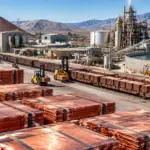
Kazatomprom, which accounts for roughly 40% of global uranium output, has been forced to reset its production expectations. The primary bottleneck is a global shortage of sulphuric acid: a critical component in the In-Situ Recovery (ISR) mining process used across the Kazakh steppes.
For 2026, Kazatomprom has revised its nominal (subsoil) capacity downward from approximately 85.2 million pounds to 77.2 million pounds: a 10% cut that removes nearly 5% of the world’s primary uranium supply in one stroke. Their formal operational guidance for 2026 is currently set at 27,500–29,000 tU (71.5–75.4 Mlbs), a range that remains subject to acid availability and logistical constraints.
Cameco: Operational Delays at Flagship Sites
In Canada, Cameco has faced its own set of challenges. At the McArthur River mine, development delays and slower-than-anticipated ground freezing have hampered the ramp-up. Furthermore, the company has had to navigate the complexities of its JV Inkai operations in Kazakhstan, which face the same acid and transport issues as Kazatomprom.
The impact of these delays is substantial. When the world’s most reliable and lowest-cost producers cannot meet their own expansion targets, the market has no choice but to look toward higher-cost greenfield projects that require significant time and capital to bring online.

Uranium Price Forecast 2026: Scenario Analysis
Based on the current structural deficit: projected at roughly 20 million pounds annually for 2026: we have modeled three price scenarios for the year. These scenarios account for utility contracting behavior, the speed of SMR rollout, and production execution.
| Scenario (2026) | Indicative Spot Range (U₃O₈) | Primary Drivers |
|---|---|---|
| Base Case | $90 – $110/lb | Orderly market; Kazatomprom meets revised (lower) guidance; utilities continue steady multi-year contracting; SMR demand stays consistent with current roadmaps. |
| Bull Case | $125 – $150/lb | Further supply failures in Kazakhstan or Africa; HALEU fuel cycle bottlenecks worsen; tech companies aggressively outbid utilities for long-term supply. |
| Bear Case | $70 – $80/lb | Global economic slowdown reduces power demand growth; rapid ramp-up of idled mines in Australia/Africa; secondary supply (re-enrichment) exceeds expectations. |
The consensus among market analysts is that the floor for uranium has shifted. The days of $50 uranium are over, as the “incentive price” required to bring on new, technically challenging deposits in 2026 is now widely viewed to be above $90/lb.
The Fuel Cycle Bottleneck and the HALEU Gap
A significant but often overlooked factor in the 2026 outlook is the “Two-Market” divide in the nuclear fuel cycle. It isn’t just about raw uranium ore (yellowcake); it is about the capacity to enrich and fabricate that ore into usable fuel.
Many advanced SMR designs require HALEU (High-Assay Low-Enriched Uranium), which is enriched to between 5% and 20%. Historically, Russia was the primary commercial supplier of this material. With the ongoing geopolitical fragmentation, Western nations are racing to build domestic HALEU enrichment capacity. This bottleneck means that even if raw uranium production increases, the lack of conversion and enrichment capacity could keep the price of finished fuel: and by extension, the underlying commodity: at a premium.

Conclusion: A New Era of Pricing
As we look toward the remainder of 2026, the uranium market is no longer just a proxy for the traditional power utility sector. It has become a strategic commodity for the future of global computing and the energy transition. The structural deficit is real, and the “easy” supply has already been accounted for.
Investors and operators should watch for two key triggers:
- The volume of “uncovered” demand in utility reports, which suggests how much fuel utilities still need to buy for the 2027–2030 window.
- Sulphuric acid pricing and availability, which remains the single biggest risk to the world’s uranium supply from Kazakhstan.
The nuclear renaissance is being built on a foundation of tight supply and surging demand. For 2026, the uranium price forecast suggests that the era of scarcity is only just beginning.