By Penny Langford

The global push for decarbonization has a shadow that stretches deep into the jungles of northern Myanmar. As Western automakers and defense contractors scramble to secure the rare earths supply chain in 2026, the primary source of the world’s heavy rare earths has become a volatile front line in a brutal civil war.
Myanmar’s role in the global electronics and energy transition is both vital and invisible. The country currently supplies approximately 90% of China’s heavy rare earth imports, specifically the "magnetic" elements like dysprosium and terbium. These minerals are the critical ingredients for the high-performance permanent magnets used in electric vehicle (EV) motors, wind turbines, and advanced missile guidance systems.
However, a recent surge in fighting between the Myanmar military junta and ethnic armed groups, such as the Kachin Independence Army (KIA), has turned the rare earth sector into a high-stakes geopolitical bottleneck. For investors and policymakers tracking mining news, the unfolding crisis in Myanmar is no longer a localized conflict: it is a systemic risk to global technology sovereignty.
The Kachin Nexus: Financing Conflict Through Critical Minerals
The heart of the rare earth boom lies in Kachin State, a region bordering China that has seen some of the heaviest fighting since the 2021 military coup. Mining operations here are rarely governed by state law; instead, they exist in a "gray zone" of shifting allegiances between the junta, pro-military militias, and resistance forces.
In late 2024 and early 2025, a series of KIA offensives seized control of key mining hubs near the town of Pangwa. The disruption was immediate. According to Chinese customs data, imports of rare earth compounds from Myanmar plummeted by nearly 50% in early 2025. By February 2025, the volume of rare earth oxides arriving at the Chinese border had dropped by 89% year-on-year.

This volatility has contributed to the eightfold price surge in dysprosium and terbium observed over the last 18 months. Because China controls nearly 98% of heavy rare earth processing globally, any disruption at the Myanmar source ripples instantly through the entire midstream, forcing manufacturers in Europe and North America to face a stark reality: their "green" supply chain begins in a war zone.

Environmental and Humanitarian Costs of the Boom
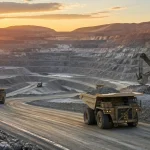
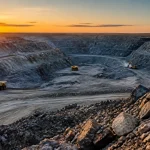
The method used to extract these minerals in Myanmar is as devastating as the conflict itself. Unlike the massive open-pit mines seen in Australia or the United States, Myanmar’s rare earth extraction relies heavily on in-situ leaching. This involves drilling holes into mountain slopes and pumping in thousands of tons of toxic chemicals: primarily ammonium sulfate and oxalic acid: to dissolve the minerals.
The environmental fallout is catastrophic:
- Water Contamination: Toxic runoff has poisoned the N’Mai Kha and Irrawaddy river systems, rendering water undrinkable and decimating local fisheries.
- "Scarred Mountains": Satellite imagery reveals a landscape pocked with thousands of leaching pools, often located on steep, unstable slopes prone to landslides. In 2024, a single landslide at a mine site in Pangwa killed at least 50 people.
- Forced Labor: Rights groups have documented cases of "slave labor" in mines controlled by armed factions. Displaced civilians, fleeing the war, are often forced into dangerous, low-paid work with minimal protective gear.
For Western companies, the ethical exposure is significant. As the IEA mineral risk report 2026 highlights, midstream bottlenecks are no longer just economic threats; they are ESG (Environmental, Social, and Governance) landmines.
Global Supply Chain Risks and the 2026 Outlook
The fundamental issue for the rare earths supply chain 2026 is the lack of diversification. While countries are racing to build separation plants, the feedstock remains concentrated in a few hands.
China has effectively outsourced the environmental "dirty work" of extraction to Myanmar, while maintaining its monopoly on the high-value refining and magnet manufacturing. This allows Beijing to manage its domestic environmental footprint while keeping global competitors dependent on minerals that have been "laundered" through Chinese refineries.
However, the civil war in Myanmar has made this arrangement increasingly fragile. If rebel forces continue to hold the mines or if the Chinese border remains closed to minerals from junta-controlled areas, the global shortage of heavy rare earths will likely intensify. Analysts suggest this could lead to a permanent bifurcation of the market, where non-Chinese material commands a significant price premium due to its clearer provenance and relative stability.

Critical Minerals: Stocks to Watch in 2026
Given the instability in Myanmar, institutional investors are increasingly looking toward ex-China producers that offer a more transparent and secure supply. While the following are not direct investment recommendations, they represent the key players being monitored for their strategic role in the 2026 market:
- MP Materials (NYSE: MP): As the owner of the Mountain Pass mine in California, MP Materials is the vanguard of Western rare earth production. The company is currently scaling its downstream processing and magnet manufacturing, aiming to close the "mine-to-magnet" gap.
- Lynas Rare Earths (ASX: LYC): Operating the Mount Weld mine in Australia and a separation facility in Malaysia, Lynas remains the largest producer of rare earths outside of China. Its recent expansions are critical for providing a non-Chinese source of NdPr (Neodymium-Praseodymium).
- Sprott Rare Earths Ex-China ETF (Ticker: REXC): For those seeking broader exposure without single-asset risk, this ETF focuses specifically on companies across the supply chain that operate outside of mainland China.
The race to secure these minerals is not just about profit; it is about the critical minerals supply chain 2026 risk that could stall the energy transition if not addressed.
The Strategic Pivot
As the conflict in Myanmar persists, the "business as usual" approach to rare earth sourcing is ending. The combination of ethical mandates and the need for supply security is forcing a strategic pivot toward domestic and allied-nation mining.
The 2026 outlook for rare earths will be defined by how quickly the West can decouple its high-tech industries from the volatility of conflict-affected regions. Myanmar’s rare earth boom, fueled by war and ecological ruin, has served as a wake-up call for the global industry. Transparency is no longer a luxury; it is a prerequisite for survival in the modern resource economy.

Social Media Snippet (LinkedIn/X):
Myanmar’s civil war has become a "single-point-of-failure" for the global #RareEarths supply chain. With 90% of China’s heavy rare earth imports at risk, how will the West secure its 2026 energy transition? From toxic leaching to conflict financing, the cost of critical minerals has never been higher. Read our deep dive into the Kachin nexus and what it means for #CriticalMinerals investors. #MiningNews #EnergyTransition #SupplyChain