By Penny Langford

The lithium market is entering the second half of 2026 facing a significant technical and fundamental test. As of late July, battery-grade lithium carbonate prices have retreated to a five-month low, hovering precariously near the $18,000 per tonne mark. This level is widely considered by analysts to be the "psychological floor" for the current cycle, representing the marginal cost of production for many higher-cost Chinese lepidolite operations.
The recent price softening follows a period of relative stability in early 2026, but the return of major supply assets and shifting regulatory landscapes in China have reintroduced volatility. Operators and investors are now weighing the impact of CATL’s massive Jianxiawo mine restart against a looming consumption tax in China and the persistent fear of a structural glut extending into 2027.
The Jianxiawo Factor: Supply Side Pressure Re-emerges
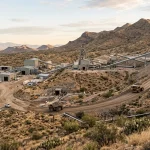
The most immediate catalyst for the current price decline is the full operational return of CATL’s Jianxiawo lepidolite mine in Jiangxi province. After being offline for nearly a year due to maintenance and strategic production adjustments, the facility resumed activity in late June 2026.
Jianxiawo is not a standard mining asset; it is a "swing producer" with a nameplate capacity of approximately 100,000 tonnes of lithium carbonate equivalent (LCE) per year. In previous years, this single project accounted for nearly 10% of China’s domestic lithium output. Its return to the market adds roughly 45,000 tonnes of incremental supply in the second half of 2026 alone, effectively neutralizing many of the production cuts announced by Western miners earlier in the year.



For the global lithium price forecast 2026, the Jianxiawo restart signals that the "scarcity premium" is unlikely to return this year. While projects like the Wesfarmers and SQM Mt Holland expansion are moving forward to secure long-term Western supply chains, the immediate spot market remains heavily influenced by Chinese domestic production costs.
China’s September 1 Tax: A New Headwind for Battery Makers
Compounding the supply-side pressure is a looming policy change from Beijing. Starting September 1, 2026, China will impose a new 2% consumption tax on lithium-ion batteries. This tax is scheduled to double to 4% by September 2027.
The timing of this tax is critical. By targeting the cell level, the Chinese government is putting immediate pressure on the margins of battery manufacturers. While 2% may seem marginal, in an industry where cell prices have stabilized near 0.5 yuan/Wh, the cumulative tax burden on a 1,000 GWh annual market is estimated at over 10 billion yuan ($1.4 billion USD).
Analysts suggest this tax serves a dual purpose:
- Fiscal Revenue: Capturing value from a mature high-growth sector.
- Technology Steering: Since sodium-ion and solid-state batteries are exempt from this tax until at least 2028, the policy effectively incentivizes a shift away from traditional lithium-ion chemistries for low-end vehicles and stationary storage.
In the short term, this tax is expected to cause a "pre-buying" surge in August, followed by a potential demand vacuum in October, further testing the $18,000 floor.

Lithium price forecast 2026: The Base Case for $18,000–$25,000
Despite the bearish news, the market is not in a freefall. The lithium price forecast 2026 remains anchored by a fundamental cost floor. Below $18,000/tonne, a significant portion of Chinese lepidolite production becomes loss-making. Historically, when prices dip below this level, Jiangxi producers throttle output, providing a natural brake on price declines.
| Scenario | Price Range (LCE) | Key Drivers |
|---|---|---|
| Bear Case | $12,000 – $15,000 | Aggressive Chinese ramp-up, EV growth below 15%, rapid sodium-ion adoption. |
| Base Case | $18,000 – $25,000 | Steady ESS growth, marginal cost support at $18k, balanced supply/demand. |
| Bull Case | $26,000 – $32,000 | Geopolitical disruptions, faster-than-expected US/EU refinery build-outs. |
The IEA's recent mineral risk report highlights that while raw material supply is currently adequate, midstream bottlenecks remain a risk. This structural reality supports the base case that prices will likely "baseline" in the high teens rather than returning to the sub-$10,000 levels seen in previous decades.
Demand Pivot: The Rise of Energy Storage Systems (ESS)
One of the most significant shifts in 2026 has been the decoupling of lithium demand from the electric vehicle (EV) market. While EV sales growth has moderated in North America and Europe, the Energy Storage Systems (ESS) sector has surged.
Utility-scale battery installations are currently the fastest-growing segment of lithium demand. In 2026, ESS is expected to account for nearly 25% of total lithium consumption, up from just 12% in 2023. This "second pillar" of demand provides a crucial buffer. Unlike EVs, which are sensitive to consumer sentiment and interest rates, ESS projects are driven by long-term grid decarbonization mandates and the falling cost of renewable energy integration.

Looking Toward 2027: The Shadow of a Continued Glut
The primary reason the market remains hesitant to rally is the "2027 Glut" narrative. Significant new capacity is slated to come online next year from projects in South America and Africa. If CATL continues to run Jianxiawo at full tilt, and Western projects like the Novagold/Donlin Gold scale transitions (while not lithium-focused, they signal the scale of CAPEX entering the mining sector) continue, the market may see a persistent surplus.
Inventory management has become the primary tool for price defense. Major producers like Albemarle and SQM have refined their "value over volume" strategies, but in a fragmented market with rising Chinese domestic production, coordinated supply discipline is difficult to maintain.
Strategic Implications for the Mining Sector
For operators, the 2026 environment dictates a focus on cost-curve positioning. Projects with an All-In Sustaining Cost (AISC) above $15,000/tonne are currently in a high-risk zone. We are seeing a trend toward vertical integration, where miners are looking to partner directly with OEMs to bypass the volatile spot market.
As noted in the July 22 edition of Skillings Mining Intelligence, the "investment edge" in the current lithium market lies in identifying low-cost brine operations and tier-one spodumene assets that can withstand a multi-year period of sub-$25,000 pricing.

Conclusion
The lithium market in mid-2026 is a study in industrial maturity. The wild price swings of the 2021-2023 era have been replaced by a grueling battle for margin. The $18,000 floor represents the front line of this battle. While the CATL restart and the new Chinese battery tax provide clear downward pressure, the surging demand from the energy storage sector and the reality of production costs suggest that the bottom is near.
The lithium price forecast 2026 suggests a year of consolidation. Until the market can clear the inventory overhang and see clear evidence of 2027 demand exceeding current bearish expectations, the $18,000–$25,000 range will likely define the new normal for the global lithium industry.