By Charles Pitts

HONIARA : At least 10 informal miners are feared dead following a massive ground collapse and landslide at the Gold Ridge gold mine on Guadalcanal in the Solomon Islands, according to local reports and regional disaster officials.
The incident struck Open Pit 1 in the early hours of Monday morning, around 1:00 a.m. local time. The disaster has triggered an urgent search and recovery operation, while official government bodies and the mine's operator offer divergent accounts regarding casualties within the active mining lease.
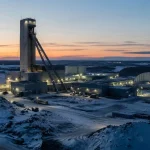
The Gold Ridge mine, situated approximately 25 kilometers southeast of the capital Honiara, is one of the South Pacific nation's most prominent mineral assets. Currently operated by Gold Ridge Mining Limited (GRML), a subsidiary of China-based Wan Guo Gold Group, the site has experienced renewed commercial activity alongside persistent issues with unauthorized access by artisanal gold panners.
Conflicting Reports on Casualties and Scope
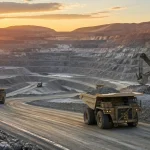
Regional media networks and local radio outlets, citing eyewitness accounts and emergency responders on the scene, report that approximately 10 bodies have been recovered from the debris. Search and recovery teams equipped with heavy machinery have been deployed to the base of Open Pit 1 to sift through tons of unstable rock and mud.



However, official confirmation from government authorities remains cautious. The Royal Solomon Islands Police Force (RSIPF) and the National Disaster Management Office confirmed that a localized landslide occurred at the mine site but declined to verify specific casualty numbers while rescue operations remain ongoing.
In a formal statement released Monday afternoon, mine operator Gold Ridge Mining Limited maintained that no employees or contractors sustained injuries or fatalities. The company described the event as a "localized slope movement" restricted to the northwest edge of Open Pit 1.

"The affected section was within a cordoned-off exclusion zone designated for geotechnical monitoring," GRML stated. "Mining operations, processing facilities, and infrastructure outside the immediate perimeter continue without disruption, and no company-owned property or equipment was damaged."
The Challenge of Informal Mining
The divergence in reporting highlights a persistent operational hazard facing commercial resource projects across the Pacific: the presence of informal, non-formal artisanal miners operating inside commercial tenements.

Local officials and security analysts note that despite fencing, warning signage, and security patrols, high global gold prices have continually drawn informal panners into abandoned or restricted benches of the open pit during overnight hours. Artisanal miners frequently target loose residual ore along highwalls and non-operational benches, exposing themselves to severe geotechnical risks during heavy tropical weather or unstable ground conditions.
Community leaders in Guadalcanal have called for an independent inquiry into the slope failure and urged both the operator and national authorities to clarify safety protocols surrounding perimeter enforcement.
Operational History and Safety Context
The Gold Ridge deposit has a complex history spanning multiple decades of ownership changes, environmental challenges, and intermittent closures. Discovered and developed through various mining syndicates since the late 20th century, the project was previously halted following severe flooding and political friction before being acquired by Wan Guo Gold Group, which resumed large-scale commercial extraction.

While Monday's incident is classified as a geotechnical slope failure rather than a structural tailings breach, it underscores the intense operational and humanitarian risks associated with managing large open-pit assets in regions prone to heavy seasonal rainfall and seismic activity.
As search and recovery teams continue their work at the base of Open Pit 1 under difficult conditions, pressure is mounting on the RSIPF and the National Disaster Management Office to release a definitive assessment of the disaster. Further updates from GRML and government regulators are expected as daylight facilitates a more thorough inspection of the northwest highwall.