By Penny Langford

The nickel market outlook 2026 is defined by a profound structural pivot: Jakarta’s aggressive clampdown on mining quotas has abruptly halted years of debilitating oversupply, transforming the global $18 billion market into an arena of managed scarcity. For years, Indonesia's unfettered expansion of nickel pig iron (NPI) and high-pressure acid leach (HPAL) capacity flooded international exchanges, driving prices down and straining producer margins worldwide. Today, stringent enforcement of the government’s annual production work plan (RKAB) framework has reset the baseline, establishing a firm price floor that is reshaping supply chains, processing economics, and investment strategies across the resources sector.
The Quota Squeeze: From 379 Million to 250 Million Tonnes
At the heart of this market transformation lies a decisive reduction in official mining allowances. Following a transitional period of multi-year allocations, Indonesia’s Ministry of Energy and Mineral Resources (ESDM) reinstated strict one-year RKAB quotas. Official figures confirm that the national nickel ore production cap for 2026 has been constrained to a band of 250 to 270 million tonnes, representing a sharp contraction from the 379 million tonnes authorized in 2025.

This policy shift was designed explicitly to curb domestic overproduction, stabilize state revenues, and enforce stricter mine rehabilitation standards. However, the operational reality on the ground highlights a stark divergence between government targets and industrial demand. According to the Indonesian Nickel Smelter Association (FINI), domestic processing facilities require roughly 340 to 350 million tonnes of ore annually to run at full nameplate capacity. Independent analyses from consultancy groups similarly position total domestic ore demand near 327 million tonnes, leaving a projected feedstock deficit exceeding 50 million tonnes when accounting for maximum supplementary imports from the Philippines.
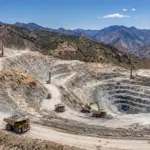
While state officials have maintained that broad, economy-wide quota increases are off the table, selective adjustments for individual operators experiencing acute shortages have done little to bridge the macro deficit. Actual mined volumes are tracking closer to 209 million tonnes due to partial approval delays and compliance audits, reinforcing a tight supply environment that reverberates through every tier of the global battery and stainless steel supply chains.

LME Price Dynamics and Cost Curve Pressures
The immediate consequence of Jakarta's quota throttling has been visible on the London Metal Exchange (LME). Having languished amid excessive inventories during previous years, LME three-month nickel prices found consistent downside support, trading within a resilient range of $15,500 to $18,000 per tonne, with periodic geopolitical spikes pushing past $18,800 per tonne.
| Metric / Indicator | 2025 Baseline | 2026 Projected / Actual | Directional Impact |
|---|---|---|---|
| Indonesian RKAB Ore Quota | 379 Million Tonnes | 250–270 Million Tonnes | Sharp Contraction (~30% cut) |
| Domestic Smelter Ore Demand | ~320 Million Tonnes | 340–350 Million Tonnes | Structural Feedstock Deficit |
| LME Three-Month Price Range | $16,000 – $17,500 /t | $15,500 – $18,000 /t | Firm Support / Elevated Floor |
| Marginal C1 Cash Costs (P75–P90) | $17,000 – $18,000 /t | $17,870 – $18,650 /t | High-Cost Margin Pressure |
Despite this price recovery, market participants note that current valuations sit precariously close to the upper echelons of the global cost curve. Industry cost intelligence indicates that C1 cash costs for the 75th to 90th percentile of global producers range between $17,870 and $18,650 per tonne. Consequently, while Indonesian quota controls have successfully established a resilient price floor, high-cost Western producers and aging laterite operations outside Southeast Asia continue to navigate acute margin compression.
Furthermore, broader macroeconomic headwinds: including persistent currency fluctuations, shifting monetary policy in major economies, and lingering structural oversupply in refined Class 1 metal: prevent sustained breakouts above the $19,000 threshold. For a deeper examination of how these macroeconomic shifts intersect with broader resource trends, review our Daily Mining Market Wrap.
Energy Costs, Sulphur Pressures, and Processing Economics
Beyond raw ore availability, processing economics have been heavily influenced by rising reagent costs, specifically concerning sulphur and sulphuric acid. Essential for HPAL facilities converting low-grade laterite ore into battery-grade nickel sulfate, sulphuric acid prices have experienced significant upward volatility.

Geopolitical tensions across the Middle East have disrupted regional sulphur trade flows and maritime freight logistics, driving up input costs for HPAL operators in Sulawesi and Halmahera. Because sulphuric acid represents a major operational expenditure for HPAL plants, these elevated reagent expenses erode the cost advantages previously enjoyed by Indonesian hydrometallurgical projects. Operators are forced to optimize acid recovery circuits and secure long-term supply agreements to protect operating margins against unforeseen energy and chemical cost spikes.
These operational constraints compound the regulatory burden of the renewed one-year RKAB permitting cycle. Mining enterprises must allocate guaranteed capital for environmental monitoring and tailings management before receiving production sign-offs, aligning with global standards observed across modern critical minerals supply chain developments.
Battery-Grade Demand Rebound and LFP Competition
On the demand side, the market narrative is increasingly dictated by the nuanced competition between chemistry segments within the electric vehicle (EV) sector. While lithium iron phosphate (LFP) batteries dominated entry-level and standard-range vehicle architectures through 2024 and 2025 due to cost advantages, technological breakthroughs in high-nickel cathode chemistries: such as NMC 811 and upcoming solid-state designs: have triggered a robust rebound in battery-grade nickel sulfate consumption.

Automakers and battery cell manufacturers require high-purity nickel to achieve the energy density and fast-charging capabilities demanded by long-range commercial and passenger fleets. As EV adoption curves mature in North America, Europe, and emerging Asian markets, the demand trajectory for Class 1 nickel is decoupling from stainless steel production growth, carving out a specialized consumption channel that is less sensitive to traditional industrial cycles.
This shifting demand profile interacts directly with Indonesia's production caps. With domestic smelters prioritizing high-grade nickel matte and mixed hydroxide precipitate (MHP) for export to precursor and cathode manufacturers, the structural deficit in ore allocation disproportionately threatens high-margin battery material supply lines unless secondary recycling and non-Indonesian primary projects accelerate development.
Strategic Outlook: Navigating Managed Scarcity
The transition from unchecked volume expansion to a state-managed quota regime marks a permanent maturation of the global nickel industry. Indonesia's willingness to subordinate short-term export volumes to long-term resource preservation and price defense has fundamentally altered risk assessments for operators, financiers, and downstream industrial consumers.

For mining executives and project developers, strategic planning must now account for rigid regulatory ceilings, heightened ESG compliance, and volatile reagent input costs. The $15,500 to $18,000 per tonne trading corridor provides a stable operational runway, but it leaves zero room for operational inefficiency or unexpected supply chain bottlenecks.
As the industry looks toward the next decade: where long-term forecasting models anticipate a deeper structural deficit materializing closer to the early 2030s: market participants must treat Indonesia's RKAB framework not as a temporary regulatory hurdle, but as the permanent foundation of a new commodity era. Surviving and thriving in this environment requires disciplined capital allocation, rigorous cost control, and agile supply chain logistics designed to withstand the realities of managed scarcity.