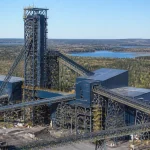
STOCKHOLM/SÃO PAULO : Nordic mining major Boliden AB has confirmed that it is engaged in advanced discussions with Brazilian industrial conglomerate Votorantim S.A. regarding the potential acquisition of its controlling stake in zinc and lead producer Nexa Resources. The prospective transaction, which centers on Votorantim’s approximately 64.7% equity holding in Nexa, carries an estimated market valuation hovering around US$1.4 billion (approximately 7 billion Brazilian reais), according to financial disclosures and market reports.

The talks mark a significant development in global mining M&A deals 2026, signaling a renewed wave of cross-border consolidation among mid-to-large-cap base metal producers. Both Boliden and Nexa have issued formal statements acknowledging the ongoing negotiations, though each party emphasized that no binding agreement has been finalized and that talks remain subject to ongoing due diligence and regulatory evaluation.
For industry observers and institutional investors tracking mining news, a successful transaction would dramatically reshape the international zinc supply chain, cementing Boliden’s operational footprint across the Americas while providing Votorantim with a strategic exit from its primary metal mining vehicle.
Unpacking the Transaction Structure and Valuation
The focal point of the discussions is Votorantim S.A.’s majority shareholding, which represents roughly 64.68% of Nexa Resources' total issued and outstanding common shares. Nexa is dual-listed on the New York Stock Exchange and the Toronto Stock Exchange, meaning any change-of-control transaction involving the controlling bloc will trigger mandatory governance reviews, minority shareholder protections, and potentially public tender offer requirements under applicable securities regulations.
Financial advisory circles have pegged the potential valuation of the stake at approximately US$1.4 billion, a figure initially flagged during preliminary consultations and reported by financial media outlets citing sources close to Votorantim. However, official negotiators from both corporate camps have cautioned against premature certainty.

In concurrent public filings released to the market, Boliden reiterated its rigorous approach to capital allocation.

"Boliden confirms that it is in discussions with Nexa Resources and Votorantim S.A. regarding a potential acquisition of Votorantim's shares in Nexa," the Swedish company stated in a brief press release. "However, there is no certainty that any transaction will take place, nor has any agreement been reached regarding structure, pricing, or terms."
Nexa Resources echoed this cautious stance, confirming its awareness of the talks between its majority shareholder and the prospective Nordic buyer, while noting that management remains focused on maintaining operational continuity across its existing portfolio.

Nexa's Asset Base in Brazil and Peru

To understand why Boliden is pursuing the asset, one must examine Nexa’s formidable operational footprint in Latin America. Nexa ranks among the world’s leading producers of mined zinc, alongside significant production outputs of copper, lead, silver, and gold. Its industrial portfolio comprises a balanced mix of underground and open-pit mining operations coupled with advanced smelting facilities located in mining-jurisdictional strongholds across Brazil and Peru.
In Peru, Nexa operates the Cerro Lindo underground polymetallic mine, alongside the Mara Rosa and Atacocha operations, which collectively anchor its Andean production network. In Brazil, the company manages the Vazante and Aripuanã mines, the latter of which represents a major modern underground installation targeting zinc, copper, and lead in Mato Grosso.
Furthermore, Nexa’s downstream smelting division: featuring facilities such as Três Marias in Minas Gerais and Cajamarquilla in Peru: gives the company a fully integrated operational pipeline from raw ore extraction to refined metal output. This vertically integrated model is precisely what makes Nexa an attractive target for global mining majors seeking stable, cash-generating assets outside of high-risk geopolitical zones.
Boliden’s Strategic Shift Toward the Americas

For decades, Boliden’s operational identity has been firmly rooted in Europe. The company operates major mining and smelting complexes in Sweden, Finland, Norway, and Ireland, specializing in copper, zinc, lead, gold, and nickel. Boliden’s European operations are renowned for their technological efficiency, strict environmental compliance, and high degree of automation.
However, acquiring a controlling interest in Nexa Resources would represent a bold geographic diversification strategy, thrusting Boliden directly into the South American mining arena. While Boliden has historically evaluated international expansion opportunities with extreme financial conservatism, management has increasingly faced pressure to secure long-term feed sources for its European smelting operations amid tightening global concentrate markets.
Zinc concentrates have experienced recurring tightness globally as aging mines deplete and permitting bottlenecks delay new greenfield developments. By integrating Nexa’s Latin American production network, Boliden would secure direct control over captive zinc and lead concentrate supply, insulating its refining network against third-party supply shocks and market volatility.
Market Dynamics Driving Mining M&A in 2026
The Boliden-Nexa talks highlight several broader trends defining mining M&A deals 2026. Chief among these is the race for critical and base metals required for the global energy transition, industrial manufacturing, and infrastructure modernization. While copper and lithium have dominated capital expenditures in recent years, zinc remains an indispensable industrial metal: crucial for galvanizing steel used in renewable energy installations, electric vehicle charging infrastructure, and architectural framing.
At the same time, major mining houses are sitting on robust balance sheets following years of disciplined capital allocation, debt reduction, and strong commodity price realizations. With organic exploration pipelines becoming costlier and more protracted due to permitting delays and community opposition, corporate acquirers increasingly view large-scale M&A as the most efficient route to reserve replacement and production growth.
Financial analysts note that cross-border consolidation between European operators and Latin American asset owners also reflects changing risk appetites. While Peru and Brazil present distinct regulatory, labor, and community relations challenges, major mining corporations with advanced environmental, social, and governance (ESG) frameworks increasingly believe they can apply standardized operational excellence to maximize value in these mature mining jurisdictions.
Operational Integration and Technology Horizons

Should the transaction successfully clear regulatory hurdles and proceed to a binding agreement, the integration process will likely focus heavily on digital transformation and operational optimization. Boliden is a recognized pioneer in underground automation, tele-remote drilling, and real-time fleet management.
Applying Boliden’s proprietary digital mining systems: such as automated ventilation control, advanced grade control modeling, and centralized dispatch automation: to Nexa’s complex polymetallic underground mines in Peru and Brazil could unlock substantial operational synergies. Such technological upgrades are increasingly vital for maintaining margin resilience amid rising labor costs, energy price fluctuations, and stringent environmental standards.
Industry observers also point to potential portfolio rationalization. While Boliden’s primary focus is expected to remain on core zinc and copper assets, large conglomerates frequently evaluate non-core holdings or development-stage exploration tenements during major corporate takeovers to optimize capital deployment.
Regulatory Hurdles and Antitrust Considerations
As negotiations progress, any proposed transaction will face meticulous scrutiny from antitrust authorities and mining regulators in multiple jurisdictions. Because Boliden and Nexa both hold prominent positions in the global zinc supply chain, competition regulators in the European Union, Brazil, and Peru will evaluate whether the merger creates market concentration issues in refined zinc distribution or concentrate purchasing.
Furthermore, foreign investment regulations in both Brazil and Peru require thorough reviews of major infrastructure and natural resource assets changing hands. Votorantim, as a storied Brazilian industrial institution, and Nexa, as a major regional employer and taxpayer, will navigate domestic stakeholder expectations carefully alongside the commercial terms of the deal.
Outlook for Stakeholders and Upcoming Disclosures
As the market awaits further updates, corporate communication teams have urged patience. With Boliden’s upcoming quarterly financial reporting cycle approaching, market analysts and institutional shareholders will be monitoring official corporate disclosures for any indication of whether exploratory talks have matured into a formal binding offer.
For operators, investors, and policymakers, the Boliden-Nexa dialogue serves as a bellwether for the current state of resource sector consolidation. As the industry navigates a complex macroeconomic landscape defined by critical mineral demand, shifting trade flows, and capital discipline, large-scale cross-border transactions remain the primary vehicle for reshaping global mining leadership.