By Charles Pitts

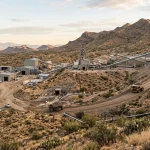
The Mesabi Metallics iron ore project in Nashwauk, Minnesota, has officially reached its pivotal third-quarter commissioning milestone, marking a major turning point for North American high-grade iron ore supply and regional decarbonization initiatives. According to recent regulatory filings and operational updates, the facility: designed to produce Direct Reduction (DR)-grade iron pellets: achieved 95.5% completion ahead of its initial Line 1 commissioning phase.
Following a successful inaugural production blast on the Iron Range, project operators and financing partners confirmed that the multi-billion-dollar complex remains on schedule to initiate commercial operations and first pellet output. Backed by a $520 million senior secured credit facility and fully cleared environmental permits, the Nashwauk complex represents one of the most significant industrial developments in the United States taconite sector in decades.
Iron Ore Data and Market Context
Global steelmakers are facing an acute structural deficit of high-grade DR-grade iron ore pellets, which are required for Electric Arc Furnace (EAF) steelmaking and hydrogen-based Direct Reduction Iron (DRI) processes. Traditional blast furnace grade ores typically contain around 62% Fe with higher silica impurities, whereas DR-grade pellets demand iron content exceeding 67% Fe alongside ultra-low gangue levels.
| Parameter | Specification / Metric |
|---|---|
| Project Location | Nashwauk, Itasca County, Minnesota |
| Primary Product | Direct Reduction (DR)-Grade Iron Pellets (~67%+ Fe) |
| Design Capacity | ~7.0 million metric tons per annum (full operation) |
| Project Completion | 95.5% (May/June 2026 reporting) |
| Financing Facility | $520 Million Senior Secured Credit Facility |
| Estimated Employment | ~350 Permanent Operations Jobs |
The commissioning of the Mesabi Metallics facility arrives as global iron ore mining news 2026 highlights tightening margins for traditional blast furnace feedstock and surging demand for low-emission steelmaking inputs. North American steel producers have historically relied on imported DR-grade pellets from specialized Atlantic basin suppliers or captive domestic mines operating at capacity. The introduction of 7 million metric tons of annual domestic DR-grade capacity positions Mesabi Metallics as a critical strategic asset for North American manufacturing supply chains.

Fleet Electrification and Modern Operations
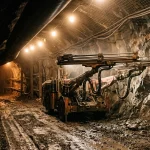
At the heart of the Nashwauk site’s operational efficiency is a transition toward advanced, low-emission extraction technology. The mine operates an ultra-class electric Komatsu haul truck fleet integrated with automated telemetry and real-time dispatch systems.


The deployment of electric-drive haulage equipment and high-capacity electric rope shovels significantly reduces diesel consumption and greenhouse gas emissions across the pit benches. Taconite extraction on the Mesabi Iron Range involves moving millions of tons of hard rock annually; optimizing haulage gradients and adopting electric fleets directly addresses carbon intensity at the primary extraction stage.

Operational logistics are monitored continuously from a centralized control room, where engineering teams oversee crushing, grinding, magnetic separation, and pelletizing circuits.

This digital integration ensures consistent pellet sizing and chemical uniformity: key parameters required by DRI reactors that cannot tolerate fluctuations in feed quality.
Decarbonization and the EAF Transition
The shift toward EAF-based steel production across North America and Europe has accelerated the urgency for domestic high-grade iron units. Traditional blast furnaces account for the vast majority of direct carbon emissions in global steelmaking. By feeding EAF units with high-purity DR pellets produced via energy-efficient pelletizing lines, steelmakers can reduce carbon dioxide emissions by up to 50% compared to integrated blast furnace routes.
Mesabi Metallics has engineered its processing facilities to incorporate state-of-the-art heat recovery systems, water recirculation networks, and emissions abatement technology. Minnesota state regulators issued the facility's final operational air permits, water quality certifications, and appropriation permits, confirming that the plant meets rigorous environmental compliance standards.
Industry analysts note that regional decarbonization in the mining sector is no longer driven solely by corporate ESG commitments, but by customer procurement mandates. Automakers and heavy infrastructure purchasers require certified low-carbon steel, creating downstream pull for facilities like Mesabi Metallics that can guarantee traceable, locally mined iron units.
Regional Economic Impact on the Iron Range
The commissioning milestone carries profound economic implications for Itasca County and the broader Iron Range community. Decades of mining heritage in northern Minnesota provide a skilled labor pool of heavy equipment operators, metallurgists, and maintenance technicians. The Nashwauk project is projected to support approximately 350 permanent, high-paying industrial jobs, alongside hundreds of indirect roles in logistics, rail transport, and equipment servicing.

Rail infrastructure connecting the Nashwauk site to upper Great Lakes shipping ports has undergone significant capacity upgrades to accommodate the projected 7 million metric tons of annual outbound pellet shipments. These logistics corridors ensure seamless integration with regional pellet terminals, facilitating year-round distribution to domestic steel mills in the Midwest and export markets via the St. Lawrence Seaway.
Outlook for North American Iron Supply
As Mesabi Metallics advances through its Q3 commissioning phases, attention will shift toward nameplate ramp-up schedules and long-term offtake agreements. The successful execution of the Nashwauk project serves as a bellwether for large-scale mining investments in the United States, demonstrating that complex industrial assets can navigate regulatory hurdles and financing milestones to reach commercial production.
For mining executives, investors, and policymakers monitoring the critical minerals landscape, the project underscores the strategic necessity of domestic supply security. By pairing advanced extraction fleets with world-class pelletizing infrastructure, Mesabi Metallics is reshaping the competitive dynamics of North American iron ore markets for the remainder of the decade.