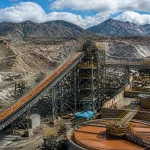
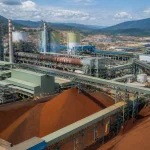
Lithium brine evaporation ponds and processing infrastructure in Chile’s Salar de Atacama.

By Mo Shine
Battery-grade lithium carbonate has moved back into the low-$20,000s per tonne in key Asian markets, but the recovery remains exposed to a narrow set of supply and demand variables. For operators, converters and investors, the central question is no longer whether lithium can recover from its previous cycle lows. It is whether prices can remain above the roughly $18,000 per tonne level without a fresh wave of supply arriving faster than battery demand.
Our 2026 framework puts the market in a wide but decision-useful range:
- Base case: $18,000–$25,000 per tonne
- Bull case: $28,000–$35,000 per tonne
- Bear case: $12,000–$15,000 per tonne
The base case assumes continued electric-vehicle adoption, strong battery-energy-storage demand and gradual supply growth. The bull case depends on further delays at CATL’s Jianxiawo mine and weaker-than-expected supply additions elsewhere. The bear case requires a sharper EV slowdown, lower battery restocking and faster supply expansion.

The $18,000 floor is a planning level, not a guarantee
The $18,000 threshold has become an important reference point because it sits near the level at which higher-cost projects and marginal conversion capacity begin to face sustained margin pressure. When prices fall materially below that level, producers can defer expansions, reduce operating rates or suspend assets. That response can eventually tighten the market.

However, a cost-curve floor is not the same as a permanent price floor. Lithium prices can trade below operating or incentive thresholds during periods of inventory liquidation, weak demand or aggressive supply growth. A bear-market average of $12,000–$15,000 per tonne would therefore represent a period in which the market temporarily overwhelms producer discipline.
The latest market evidence points to a tighter balance than the industry faced during the deepest part of the previous downturn. Skillings’ earlier lithium market analysis placed battery-grade carbonate in a roughly $21,000–$24,000 per tonne Asian spot range and identified a narrowing surplus as a key driver.

Other estimates remain divided. S&P Global’s 2026 lithium outlook has pointed to continued supply growth, while Fastmarkets’ market commentary has described a market moving toward tighter conditions. The disagreement is less about whether demand is growing than about the timing and reliability of new supply.
Scenario table: what could move lithium carbonate?
| Scenario | Battery-grade lithium carbonate range | Market balance | Main assumptions | Operating implication |
|---|---|---|---|---|
| Base | $18,000–$25,000/t | Balanced to mild deficit | EV sales continue growing; BESS demand remains strong; Chilean and Australian supply ramps gradually; Jianxiawo remains uncertain | Low-cost producers retain resilience; high-cost projects require careful capital timing |
| Bull | $28,000–$35,000/t | Material deficit | Jianxiawo restart is delayed further; project ramp-ups underperform; restocking accelerates; EV and storage demand exceed forecasts | Incentive prices rise; converters compete for feedstock; contract premiums may widen |
| Bear | $12,000–$15,000/t | Persistent surplus | EV growth slows sharply; battery inventories remain elevated; supply expansions arrive early; substitution and efficiency reduce lithium intensity | Curtailments, project deferrals and pressure on high-cost producers become likely |
This is a scenario framework rather than a precise point forecast. Lithium is traded through a mixture of spot transactions, bilateral contracts, hydroxide and carbonate agreements, futures and internal transfer arrangements. Realized prices can therefore vary significantly by product quality, delivery location, contract formula and customer.
CATL’s Jianxiawo mine remains the clearest near-term swing factor
The most visible supply variable is CATL’s Jianxiawo lithium mine in Jiangxi province, China. The lepidolite operation was suspended in 2025 after its mining licence expired. The market initially expected a relatively quick restart, but the timeline has repeatedly moved.
According to Reuters reporting, CATL secured a safety production permit in June, but the mine remained closed pending environmental approval. Local authorities said maintenance was continuing and that ore transportation and crushing had not resumed.
That distinction matters. A permit milestone can change market expectations before any material reaches a concentrator or converter. Traders may price in future supply as soon as a restart appears possible, while physical buyers still face the same near-term availability constraints.
Jianxiawo’s importance is therefore both physical and psychological:
- Physical supply: prolonged downtime removes expected lepidolite feedstock from the Chinese market.
- Forecast uncertainty: lost production in the first part of the year cannot be fully recovered even if the mine restarts later.
- Price volatility: each regulatory update can shift expectations between shortage and supply-surplus scenarios.
A further delay would support the bull case, particularly if other Chinese sources or imported spodumene cannot compensate. A confirmed restart, followed by a rapid production ramp, would reduce the probability of prices sustaining the upper-$20,000s.

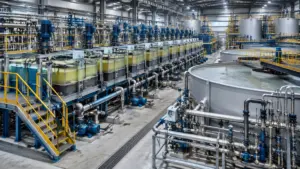
Lithium chemical conversion equipment in a modern battery-materials facility.
EV demand remains positive, but the market is watching the rate of growth
Electric vehicles remain the largest demand driver for lithium-ion batteries. The International Energy Agency’s Global EV Outlook expects global electric-car sales to approach 23 million in 2026, or roughly 28%–30% of new-car sales.
That outlook supports continued lithium demand growth, but it does not remove downside risk. The composition of EV sales matters as much as the headline total. Plug-in hybrids and range-extender vehicles generally use smaller batteries than battery-electric vehicles. A shift toward those formats could reduce lithium demand per vehicle even while total electrified sales increase.
Affordability is another variable. High interest rates, reduced purchase incentives, weak consumer confidence or slower charging-network deployment could delay EV purchases in some regions. A modest slowdown would probably not overturn the long-term demand trend, but it could create a temporary inventory overhang and push prices toward the bear case.
Battery energy storage provides an important counterweight. Grid-scale and behind-the-meter storage are expanding as power systems add renewable generation, transmission constraints and flexible capacity. S&P Global identifies energy storage as a major source of lithium-ion battery demand growth.
The key question for 2026 is whether storage demand can offset a slower passenger-EV market. In the base case, it does enough to keep the market near balance. In the bull case, procurement and restocking run ahead of supply. In the bear case, storage growth continues but fails to absorb expanded lithium output.
Chile adds supply, while Indonesia is more important as a battery hub
Chile’s role is primarily a supply-growth and market-structure question. Production remains concentrated in the Salar de Atacama, where SQM and Albemarle operate. The SQM–Codelco arrangement increases the state’s role while supporting the continuation of Atacama operations.
The Chilean Copper Commission outlook expects Chilean lithium production to increase, but the near-term growth profile is gradual rather than explosive. That makes Chile a stabilizing force in the base case, not necessarily a source of sudden oversupply.
The main risks are operational performance, water and environmental constraints, permitting for new projects and community negotiations. If Atacama output meets expectations, it helps cap prices. If expansions or operating plans are delayed, the market loses part of its expected supply buffer.
Indonesia requires a different interpretation. It is a major battery-materials jurisdiction, but its direct lithium contribution remains limited compared with its role in nickel. Indonesia’s policies on nickel mining, refining and battery manufacturing can influence the broader cost and supply-chain structure of batteries, but they are not expected to materially change global lithium carbonate availability in the near term.
For lithium analysts, the regional distinction is important:
| Region | 2026 lithium-market relevance | Main variable |
|---|---|---|
| Chile | Direct supply growth | Atacama output, SQM–Codelco operations and environmental constraints |
| Indonesia | Battery-materials and nickel hub | EV manufacturing, nickel refining and downstream investment |
| China | Key converter and demand centre | Jianxiawo restart, lepidolite supply and battery production |
| Australia | Major hard-rock feedstock source | Mine economics, ramp-ups and spodumene concentrate availability |
What decision-makers should monitor
The most useful indicators are not daily spot prices alone. A stronger 2026 lithium dashboard should track:
- Jianxiawo environmental approval and physical restart evidence
- Chinese carbonate inventories and converter operating rates
- EV sales by battery-electric, plug-in hybrid and range-extender format
- Grid-storage deployment and cell procurement
- Chilean production guidance and Atacama operating performance
- Australian spodumene shipments and project curtailments
- Contract premia, hydroxide-carbonate spreads and battery-grade conversion margins
The central case remains a market holding above the $18,000 level but trading below the extreme highs of the previous cycle. That supports a $18,000–$25,000 per tonne base range, with upside toward $28,000–$35,000 if supply delays coincide with strong EV and storage demand.
The downside is also clear. If EV growth slows, inventories build and new supply arrives on schedule, lithium can revisit $12,000–$15,000 despite the industry’s long-term electrification narrative.
For operators and buyers, the practical conclusion is to plan around a range rather than a single price. The $18,000 level is a useful stress-test assumption, but Jianxiawo, Chilean output and battery-storage demand will determine whether it becomes a market average, a downside boundary or merely a temporary reference point.
Sources
- International Energy Agency: Global EV Outlook 2026
- Reuters: CATL’s Jianxiawo mine remains closed pending environmental approval
- S&P Global: Lithium carbonate surplus to narrow as energy storage drives growth
- Fastmarkets: Lithium enters a new phase as demand outpaces supply
- Mining.com: Chile lithium output outlook
Shareable summary: Lithium carbonate’s 2026 outlook is defined by a $18,000–$25,000 base range, a $28,000–$35,000 bull case if CATL’s Jianxiawo restart is delayed, and a $12,000–$15,000 bear case if EV growth slows and supply expands faster than demand.