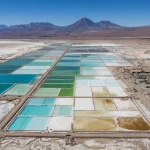
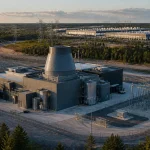
An Indonesian nickel processing complex reflects the growing importance of ore availability to the global market.

By Salini Krishnan
Indonesia’s decision to restrict nickel ore production to roughly 250 million to 260 million tonnes in 2026 is forcing a reassessment of a market that spent years defined by excess supply.
The quota is sharply below Indonesia’s approximately 379 million tonnes of production in 2025. It also sits below the feedstock requirements of the country’s rapidly expanding smelting industry, creating the prospect of a raw-material shortage even while global refined nickel inventories remain elevated.
That tension is central to the nickel market outlook 2026. The market may not move directly from surplus to shortage, but Indonesia’s policy has narrowed the margin for error. If mine output remains close to the new ceiling and stainless steel demand holds up, the refined market could shift toward balance or a modest deficit. In a tighter scenario, prices could average between $17,000 and $19,000 per tonne.

Indonesia’s quota is the market’s main swing factor
Indonesia has become the dominant force in nickel supply. Goldman Sachs estimates that the country accounts for more than 60% of global mined nickel, following a decade of investment in mines, processing plants and integrated industrial parks.

The annual RKAB approval system gives Jakarta direct influence over how much ore can be extracted. The move toward tighter annual approvals has increased the government’s ability to respond to prices, environmental concerns, domestic processing needs and resource-depletion risks.
The 2026 quota represents a potential reduction of approximately 31% to 34% from 2025’s production level. However, the quota is not the same as actual mine output. Weather, permitting, contractor availability, mine development and local infrastructure can all prevent producers from reaching their approved levels.

That distinction matters because Indonesian officials have also indicated that any additional approvals are likely to be selective. A recent report carried by Mining Weekly said extra production would be directed mainly to smelters facing immediate feedstock shortages rather than granted through a broad national increase.
Indonesia’s nickel miners’ association said domestic ore consumption reached about 142.96 million tonnes from January through July, while the country’s roughly 80 smelters could consume around 315 million tonnes annually if operating at full capacity. Other industry estimates place potential ore requirements as high as 340 million to 350 million tonnes when new capacity and nameplate utilization are included.
The result is a supply-chain mismatch: processing capacity has expanded faster than permitted mine supply.

Refining infrastructure is expanding, but its utilization increasingly depends on securing sufficient ore feed.
Market data: from large surplus to a narrow balance
The most important linkable data point for investors and operators is the scale of the expected change in the refined market balance.
The International Nickel Study Group forecasts global primary nickel production of 3.715 million tonnes in 2026, compared with usage of 3.747 million tonnes. That would produce a deficit of approximately 32,000 tonnes, following a reported surplus of 283,000 tonnes in 2025.
Other forecasts remain more cautious. Sumitomo Metal Mining expects the market to remain in surplus, with supply of around 3.78 million tonnes against demand of 3.52 million tonnes. That implies a surplus of approximately 256,000 tonnes.
The difference between these forecasts is substantial. It reflects uncertainty over how much Indonesian ore will actually be produced, how quickly smelters can adjust, and whether stainless steel and battery demand will meet expectations.
Nickel supply-demand tracker
| Indicator | 2025 reference | 2026 outlook | Market implication |
|---|---|---|---|
| Indonesia nickel ore production quota | ~379 Mt | ~250–260 Mt | Potential reduction of 31–34% |
| Indonesian smelter ore requirement | , | ~315–350 Mt | Feedstock shortage if quotas remain tight |
| INSG primary nickel production | 3.880 Mt | 3.715 Mt | Lower global refined supply |
| INSG nickel usage | , | 3.747 Mt | Forecast deficit of ~32,000 tonnes |
| Sumitomo supply estimate | , | 3.78 Mt | More conservative supply view |
| Sumitomo demand estimate | , | 3.52 Mt | Forecast surplus of ~256,000 tonnes |
| Goldman Sachs 2026 average price forecast | , | $17,200/t | Higher cost floor and tighter Indonesian ore |
| Tight-quota price scenario | , | $17,000–$19,000/t | Requires sustained ore shortages and firm demand |
Sources: INSG figures reported by Petromindo; Sumitomo forecast reported by Mining.com; Goldman Sachs Research; Indonesian industry estimates reported by Mining Weekly. Indonesian ore figures are wet metric tonnes and are not directly comparable with refined nickel tonnes.
This table also highlights why a headline “deficit” should be treated carefully. A deficit of refined nickel does not automatically mean that every smelter, stainless producer or battery manufacturer will face an immediate physical shortage. Existing inventories, exchange stocks, intermediate products and regional logistics can delay the effect on prices.
Still, the direction of change is significant. A market moving from a large surplus to near balance becomes more sensitive to disruptions.
Stainless steel remains the demand anchor
Stainless steel continues to account for roughly two-thirds of nickel consumption, according to Goldman Sachs Research. That makes industrial production, construction, capital spending and Chinese manufacturing more important to the near-term market than electric vehicles alone.
Stainless demand does not need to grow rapidly to tighten nickel fundamentals. Stable consumption combined with lower Indonesian supply could be enough to reduce the surplus. Conversely, a weak Chinese property sector, slower global manufacturing or rising substitution could limit price gains.
The stainless sector is also exposed to the cost and availability of nickel units in different forms. Producers may adjust melt recipes, increase the use of lower-nickel grades or draw on inventories when prices rise. Those responses can moderate demand, but they cannot fully offset a sustained reduction in primary supply.
The market’s 2026 outcome will therefore depend partly on whether stainless steel demand remains resilient while Indonesian smelters compete for a smaller pool of ore.
Batteries offer growth, but chemistry is changing
Battery demand remains the fastest-growing part of the nickel market, even though it is smaller than stainless steel. Some forecasts expect battery-related nickel consumption to rise by around 12% in 2026, reaching approximately 560,000 tonnes.
The main constraint is chemistry. Lithium iron phosphate, or LFP, batteries contain no nickel and have gained market share, particularly in China. Plug-in hybrid growth has also changed the mix of battery demand, while slower-than-expected electric-vehicle growth in some Western markets has reduced expectations for nickel-intensive batteries.
That does not eliminate the battery upside. High-nickel chemistries remain important for applications requiring greater energy density, including longer-range vehicles and some heavy-duty platforms. If automakers increase the use of nickel-rich cathodes, battery demand could exceed current forecasts.
For now, the battery market is better viewed as an upside risk than as the sole foundation of the 2026 nickel thesis. Stainless steel provides the volume base; batteries determine how quickly demand can accelerate.

Stainless steel remains the largest source of nickel demand, while battery consumption provides the faster-growing segment.
Price outlook: a wide range around a higher floor
Goldman Sachs raised its 2026 average nickel forecast to $17,200 per tonne, citing tighter Indonesian ore supply and a higher marginal cost floor. Its analysis expects Indonesia to produce around 260 million wet metric tonnes in the first half of the year, an 11% reduction in mine supply.
Other published forecasts remain lower. Several consensus estimates place the annual average around $15,500 to $16,000 per tonne, while surplus-oriented views see prices struggling to sustain levels above $16,000.
A practical scenario framework is therefore more useful than a single price target:
- Bear case: $14,000–$16,000 per tonne. Indonesia grants broader quota increases, smelters secure sufficient ore, inventories remain high and stainless steel demand weakens.
- Base case: $15,500–$17,500 per tonne. Quotas remain controlled, but existing inventories and slower battery growth prevent a sustained shortage.
- Bull case: $17,000–$19,000 per tonne. Effective Indonesian production falls below the quota, smelters compete for feedstock, inventories draw down and stainless or battery demand outperforms.
The upper range is not a baseline forecast. It requires several conditions to occur together, including disciplined Indonesian supply, limited quota revisions and firm demand. The price response would likely be most pronounced in periods when physical buyers need prompt units rather than simply when annual balances appear tight on paper.
Geopolitical risks extend beyond Indonesia
Indonesia’s policy has become a geopolitical issue because the country controls such a large share of mined nickel and much of the downstream processing growth is linked to Chinese capital, technology and equipment.
That concentration creates advantages for Indonesian industrial development but also increases exposure for manufacturers seeking diversified supply chains. Any change in export rules, tax treatment, environmental standards, local-content requirements or foreign-investment policy could affect the flow of nickel products.
The government’s revised benchmark pricing mechanism, which incorporates additional elements such as cobalt, iron and chromium, is another factor for miners and smelters to monitor. A more detailed pricing formula may improve resource value capture, but it can also change operating economics across the supply chain.
For buyers outside Indonesia, the risk is not simply that nickel becomes more expensive. It is that availability differs by product: ore, nickel pig iron, ferronickel, matte, mixed hydroxide precipitate and refined class-one nickel may not tighten at the same time.
What operators and investors should watch
The most useful 2026 indicators are operational rather than purely financial:
- Monthly Indonesian mine output versus approved quotas.
- The number and size of supplementary RKAB approvals.
- Ore premiums and smelter utilization rates.
- Indonesian nickel export and benchmark-pricing changes.
- LME and regional inventory movements.
- Chinese stainless steel production and battery-chemistry trends.
- Evidence of delayed, curtailed or consolidated smelter operations.
The central conclusion is that Indonesia has changed nickel’s risk profile. The market may still record a surplus under some forecasts, but the large cushion that previously absorbed disruptions is shrinking.
For a sector already shaped by energy costs, environmental scrutiny and geopolitical concentration, the shift from abundant ore to contested feedstock could be the defining feature of the nickel market outlook 2026.
Related reading: Skillings Mining Intelligence and autonomous mining technology and fleet-scale operations.