An autonomous haul truck follows a controlled route through a large open-pit mining operation.

By Salini Krishnan
Autonomous mining technology has moved beyond the pilot stage at the industry’s largest open-pit operations. In 2026, the central question for mine executives is no longer whether driverless haulage can work, but whether a site has the scale, infrastructure and operating discipline to capture a measurable return.
The answer is increasingly positive for tier-1 mines with large fleets, long haul cycles and high labor costs. Published operator and equipment-maker data point to 15% to 30% reductions in load-and-haul costs, 15% to 20% productivity gains from mature autonomous haulage systems, and materially lower exposure to vehicle-related incidents. Those figures are not universal benchmarks, but they show why automation is becoming part of expansion studies, fleet replacement plans and mine-wide digital strategies.
The economics of autonomous haulage
The financial case begins with utilization. Autonomous trucks can operate continuously through shift changes and avoid some of the variability associated with fatigue, inconsistent driving patterns and operator availability. That does not mean every autonomous fleet immediately delivers higher production. Sites must first address commissioning delays, mixed-fleet traffic and the learning curve for remote operators and maintenance teams.
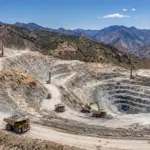
At mature operations, however, the gains can compound across thousands of haul cycles. Komatsu says its FrontRunner Autonomous Haulage System has now reached 1,000 commissioned ultra-class trucks and moved more than 11.5 billion metric tonnes of material across customer operations. The company reports productivity improvements of up to 15% and load-and-haul cost reductions of more than 15% compared with conventional operations.

Rio Tinto has also reported significant utilization benefits from its Pilbara autonomous fleet. In company case material, autonomous trucks were estimated to operate about 700 additional hours per year compared with conventional trucks, while delivering approximately 15% lower haulage costs. These are operator-specific historical estimates rather than a guarantee for every mine, but they illustrate the value of consistent cycles at high-volume assets.
A representative cost framework for a mature fleet is shown below.
| Value driver | Typical reported effect at mature tier-1 sites | Why it matters |
|---|---|---|
| Load-and-haul cost per tonne | 15%–30% reduction | Lowers unit costs across large production volumes |
| Truck utilization | 15%–30% improvement | Increases effective operating hours and fleet productivity |
| Fuel consumption | 10%–20% reduction in some deployments | Reduces energy costs and Scope 1 emissions |
| Tire and component life | 8%–40% improvement, depending on system and asset | Reduces replacement frequency and mechanical stress |
| Maintenance cost | Approximately 10%–18% reduction in reported benchmarks | Supports higher availability and fewer unplanned stops |
| Payback period | About 3–6 years in high-labor-cost regions | Depends on fleet size, capex and site readiness |
The wide ranges matter. A 40-truck operation moving 90 million tonnes per year has a very different investment case from a 10-truck fleet at a lower-volume mine. A reduction of $0.50 per tonne would represent approximately $45 million in annual operating savings at 90 million tonnes. Against an illustrative $100 million deployment cost, the simple payback would be about 2.2 years before financing, tax, ramp-up losses and sustaining capital.
That calculation should be treated as a sensitivity case, not a forecast. The realized return depends on haul distance, fuel prices, labor structure, maintenance practices, ore movement, fleet age and the cost of upgrading communications and mine infrastructure.

Control-room personnel monitor equipment status, production performance and safety conditions.
Safety is both an operating and financial benefit
Safety remains one of the strongest reasons to deploy autonomous equipment. Removing drivers from haul-truck cabs reduces their exposure to collisions, vehicle rollovers, highwall failures, dust and other hazards in active pit areas.
Komatsu reports zero system-induced personal injuries since the commercial introduction of FrontRunner in 2008. Caterpillar likewise states in its Command for hauling materials that it has recorded no reported injuries resulting from autonomous truck operations over more than 11 years.
These are manufacturer-reported figures and should be read alongside broader operational evidence. A technical assessment using Rio Tinto data found approximately 0.27 collision near misses per million truck hours at autonomous sites, compared with 2.76 per million hours at manual sites. That represents an order-of-magnitude difference in the reported near-miss rate, although site conditions and reporting practices can affect comparisons.
The safety benefit does not come from software alone. Autonomous trucks operate inside a controlled system of geofenced areas, defined routes, traffic rules, obstacle detection and emergency-stop procedures. Light vehicles, maintenance crews and manually operated equipment must also follow site protocols for the system to work safely.
Autonomy therefore changes the nature of risk rather than eliminating it. New risks include sensor failure, incorrect mapping, network disruption, unsafe human-machine interaction and cyberattack. Operators need clear safe-state procedures, redundant communications, regular validation of operating zones and trained personnel capable of intervening when conditions fall outside the system’s design envelope.
The financial value of safety is difficult to model precisely, but the components are visible: fewer production interruptions, lower exposure to major incidents, reduced equipment damage and potentially lower insurance costs. The business case is strongest when safety improvements are measured together with availability and production, rather than treated as a separate intangible benefit.
Operational efficiency depends on the whole mine
Autonomous haulage is most effective when it is connected to loading, drilling, dispatch and processing. A driverless fleet can move more tonnes, but that does not create value if trucks queue at the shovel, the crusher is constrained or the operation is producing material that cannot be processed on schedule.
Rio Tinto’s Pilbara model shows the direction of travel. The company operates more than 130 autonomous haul trucks and 40 autonomous drills across multiple sites, linking equipment activity with centralized operational control. The value lies in coordinating the production chain: drilling accuracy affects blasting; blasting affects fragmentation; fragmentation affects loading and crushing; and all of those variables influence haulage productivity.
Autonomous drilling also provides a potential quality benefit. Consistent hole placement and depth can improve blast design and reduce downstream variability. In practice, the return will depend on geology, mine planning and the ability to use the data produced by the equipment.
For copper producers, this systems approach is increasingly important. Longer haul distances, declining grades and rising energy requirements place pressure on unit costs. Skillings’ copper market coverage provides broader context on the supply and cost pressures facing producers.
Autonomy and electrification are converging
The next phase of deployment is likely to combine autonomous control with lower-emission powertrains. Autonomy can reduce fuel consumption through smoother acceleration, optimized speed profiles, reduced idling and more consistent routing. Electrification determines how much diesel use can ultimately be removed.
The Huaneng Yimin open-pit coal mine in Inner Mongolia illustrates this convergence. XCMG says the site is operating 100 cabless, battery-electric autonomous haul trucks, while Huawei describes a wider system based on 5G-Advanced connectivity, cloud dispatching, high-precision positioning and automated battery swapping.
The project’s reported emissions and diesel savings are company estimates, but the architecture is significant. Battery-electric trucks require charging or swapping infrastructure, grid capacity and energy-management software. Autonomy must coordinate those constraints with production targets. A truck that is technically capable of operating without a driver may still lose productivity if charging queues are not integrated into dispatch planning.

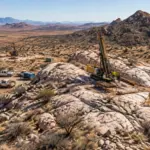
Autonomous drilling and haulage can connect mine preparation with material movement.
The implementation costs are substantial
Autonomy is not a software upgrade that can be applied without changing the mine around it. A successful conversion may require:
- New or upgraded private LTE or 5G communications;
- High-precision positioning and fleet-management systems;
- Road widening, traffic segregation and controlled access zones;
- A remote operations center;
- New maintenance, emergency-response and inspection procedures;
- Workforce retraining and redeployment;
- Cybersecurity controls and system redundancy.
The conversion of Freeport-McMoRan’s Bagdad mine in Arizona demonstrates the scale of that work. The operation converted a 33-truck fleet, established a command center, upgraded communications and separated autonomous operations from staffed equipment during the transition. Freeport also described redeploying and retraining more than 200 haul-truck drivers into other roles.
That workforce dimension is central to the ROI calculation. Direct in-cab labor may decline, but demand increases for automation technicians, controllers, network engineers, data analysts and maintenance specialists. Mines that underestimate the cost of training and organizational change risk extending the ramp-up period and weakening the expected return.
What investors and operators should measure
A credible autonomy business case should track more than the number of autonomous trucks commissioned. The most useful indicators are operational and site-specific:
- Cost per tonne before and after ramp-up, separated into labor, fuel, maintenance and tires.
- Truck availability and effective utilization, including delays caused by communications or system interventions.
- Cycle-time variability, not only average cycle time.
- Near misses, equipment interactions and exposure hours in autonomous zones.
- Production bottlenecks, including shovel, crusher, stockpile and charging constraints.
- Workforce transition costs and retention of technical skills.
- Cybersecurity and network reliability, including safe-state stoppages.
- Incremental capital required to expand from a pilot to a full fleet.
The strongest projects are likely to be large, repetitive operations where the mine plan is stable, haul routes are well defined and the fleet is sufficiently large to justify the infrastructure. Smaller or lower-labor-cost sites may still proceed, but the rationale will often be safety, access to labor and operational consistency rather than rapid cost payback.
Outlook
Autonomous mining technology is becoming a production-control strategy rather than a standalone equipment feature. The industry’s leading deployments show that the greatest value comes from connecting trucks, drills, dispatch, maintenance, energy and mine planning into one measurable operating system.
For tier-1 sites, the financial case can be compelling when high utilization and large tonnage amplify relatively small per-tonne improvements. The safety case is equally important, particularly where vehicle interactions remain a major source of serious risk.
The competitive divide in 2026 will not simply be between mines that use autonomous trucks and those that do not. It will be between operations that can integrate autonomy into daily production decisions and those that treat it as an isolated technology project. That distinction will determine whether the promised gains in ROI, safety and efficiency become sustained results.
Sources
- Komatsu: 1,000 ultra-class autonomous haul trucks
- Komatsu FrontRunner Autonomous Haulage System
- Caterpillar Command for hauling
- Rio Tinto automation program
- CDC technical assessment of autonomous haulage safety
- Skillings: Autonomous mining ROI case studies
- Skillings: Autonomous haulage ROI and per-tonne savings
- Skillings mining technology coverage