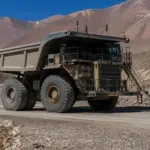
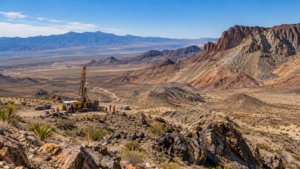
An Indonesian nickel processing complex in Sulawesi.

By Charles Pitts
Indonesia’s decision to tighten nickel ore approvals has shifted the market’s central question from how quickly processing capacity can expand to whether refineries can secure enough compliant feedstock to operate.
The country produced an estimated 2.6 million metric tons of mined nickel in 2025, according to the U.S. Geological Survey, or roughly two-thirds of global mine supply. At the same time, Indonesia’s nickel processing capacity is moving toward more than 3 million metric tons per year of contained nickel, based on industry estimates compiled by FINI and Mysteel.
That mismatch is the defining risk for the outlook. Nameplate capacity continues to rise, particularly in high-pressure acid leach, or HPAL, plants. But ore quotas, permitting, environmental compliance and technical ramp-up constraints could prevent the additional capacity from translating into equivalent refined output.
More Read

Indonesia’s supply position is becoming more concentrated
Indonesia’s role in nickel markets has expanded rapidly through a combination of laterite ore resources, export restrictions and large-scale investment in domestic processing.

The USGS estimates that global nickel mine production reached about 3.9 million metric tons in 2025, with Indonesia accounting for approximately 2.6 million metric tons. Indonesia also reported 62 million metric tons of nickel reserves, although reserve estimates vary by methodology and reporting year.
The International Energy Agency identifies the resulting concentration as a strategic vulnerability. Its 2025 outlook indicates that Indonesia supplied about 60% of global mined nickel and that the top three producing countries could account for more than 80% of supply in the longer term.
More Read

Demand is also expected to grow. The IEA estimates that global nickel demand could rise from approximately 2.8 million metric tons in 2021 to about 5.7 million metric tons by 2040, with batteries representing the fastest-growing end use. Stainless steel remains the largest market, but the expanding battery segment is increasing the importance of Class 1 nickel products such as mixed hydroxide precipitate, or MHP, nickel sulfate and matte.
That creates a structural tension: demand is becoming more dependent on battery-grade material, while supply growth remains heavily concentrated in Indonesia’s integrated mining and processing system.
The quota reset is the near-term supply trigger
The most important policy change is the reduction in Indonesia’s nickel ore mining quota, known as the RKAB system.
Industry and government-linked reports place the 2025 approved ceiling at roughly 379 million wet metric tons. Indonesian authorities have since indicated a 2026 range of approximately 260 million to 270 million wet metric tons, representing a potential reduction of about 29% to 31% from the 2025 reference point.
The precise figures have varied across reporting because some sources refer to initial approvals, others to revised ceilings and others to realized production. But the direction is clear: Jakarta is moving from a period of rapid downstream expansion toward more selective control of mining volumes.
A concrete milestone was the March 31, 2026, end of the temporary transition period that allowed some operators to draw on earlier quota approvals while waiting for new allocations. After that point, companies without current approvals faced greater exposure to feedstock interruptions.
Early reports indicated that only about 80 million wet metric tons of 2026 quota had been approved at one stage, leaving a large volume still to be allocated. The timing and distribution of those approvals matter as much as the national ceiling. A mine connected to an integrated smelter may receive priority, while an independent mine or toll-processing facility may face a more uncertain supply position.
For a fuller view of the policy dimension, see Skillings’ analysis of the critical minerals supply chain and project risk.
Refinery capacity is rising faster than secure ore supply

HPAL processing requires continuous feed, reliable utilities and complex process control.
Indonesia’s installed nickel processing capacity was estimated at about 2.7 million to 2.8 million metric tons per year in 2025, with projections rising to approximately 3.07 million metric tons per year as new projects come online.
The technology mix is changing:
- RKEF remains dominant, producing nickel pig iron, ferronickel and, in some cases, nickel matte.
- HPAL capacity is expanding rapidly, producing MHP and other Class 1 intermediates.
- Some RKEF lines can switch between NPI and matte, giving producers limited flexibility when stainless steel and battery markets diverge.
Mysteel has estimated that Indonesian MHP capacity could rise from approximately 445,000 metric tons per year of contained nickel in 2025 to about 922,000 metric tons per year as new lines ramp up. That would represent a near doubling of HPAL-related capacity.
However, capacity is not the same as production. HPAL facilities are technically complex and require consistent supplies of limonite ore, acid, water and power. The Institute for Energy Economics and Financial Analysis has also highlighted the sector’s dependence on carbon-intensive power and the need to manage environmental and energy risks.
New facilities can therefore experience lower utilization during ramp-up. A project may have a large nameplate capacity but produce below design levels because of commissioning delays, ore chemistry, maintenance, acid availability or grid constraints.
Ore logistics could become the next bottleneck

Ore stockpiles and port infrastructure connect Indonesian mines with domestic processing plants.
A lower national quota does not affect every refinery equally. The main dividing line will be access to captive mines or long-term ore contracts.
Integrated producers with their own mining operations are better positioned to protect utilization. Smaller or recently commissioned facilities may need to compete for third-party ore, increasing delivered costs and the risk of irregular supply.
A Kontan report cited estimates that Indonesia could need to import 40 million to 50 million wet metric tons of nickel ore to support domestic processing if mining quotas remain below refinery requirements. Imports would introduce additional risks involving shipping, ore quality, border controls and landed costs.
The pressure is especially significant for HPAL plants. New projects at Pomalaa and Bahodopi, for example, are designed to consume large volumes of limonite ore. If several projects ramp up simultaneously, competition for suitable feedstock could intensify even while overall nickel ore inventories appear adequate.
Scenario framework for operators and investors
The following framework separates Indonesia’s physical capacity from the amount of nickel that can realistically reach the market.
| Scenario | Indonesian ore policy and execution | Refinery utilization | Market implication |
|---|---|---|---|
| Base case | Quotas remain near 260 million to 270 million wmt; approvals are issued gradually and favor compliant, integrated operators | New HPAL and marginal RKEF plants run below nameplate | Global supply growth slows; MHP and matte remain more sensitive to disruptions than NPI |
| Tighter-supply case | Further quota restrictions, delayed approvals or environmental suspensions reduce available ore | Feedstock shortages force selective curtailments | Nickel volatility rises; battery-grade units face the greatest operational risk |
| High-output case | Quotas are expanded or revised upward; imports supplement domestic ore; new capacity ramps successfully | HPAL and RKEF utilization improves materially | Indonesia maintains surplus supply, keeping pressure on prices and high-cost producers |
The most important indicator is not the headline quota alone. Operators should track four linked variables:
- Approved quota versus realized mining. A large national ceiling has limited value if mines cannot achieve it.
- Ore allocation by refinery relationship. Captive supply is more resilient than spot-market dependence.
- HPAL ramp-up rates. Actual MHP production will show whether capacity additions are translating into units.
- Imported ore volumes and landed costs. Rising imports would confirm that domestic quota policy is constraining utilization.
This type of operational tracking complements broader Skillings coverage of ESG compliance, permitting and operating risk.
What the outlook means for nickel markets
Indonesia is unlikely to lose its position as the central source of incremental nickel supply. Its resource base, processing infrastructure and established relationships with Chinese equipment, technology and offtake partners give the country a significant cost and scale advantage.
The risk is that the market may increasingly distinguish between different forms of Indonesian supply.
For stainless steel, the key question is whether RKEF plants can secure enough ore to produce NPI and ferronickel at competitive utilization rates. For batteries, the focus is on whether HPAL facilities can deliver consistent MHP volumes while meeting environmental and technical requirements.
That distinction matters because a shortage of limonite feedstock can constrain MHP even if overall nickel production remains high. Conversely, successful quota expansion and HPAL ramp-up could extend the surplus that has weighed on nickel markets.
The result is a market with two competing narratives: long-term demand growth linked to electrification and near-term supply growth linked to Indonesian capacity. The balance between them will be determined less by announced projects than by permits, ore approvals, refinery uptime and the cost of moving material through the system.
Conclusion
Indonesia’s nickel outlook is no longer simply a story of relentless production growth. It is becoming a test of how a dominant producer manages the relationship between mining quotas, refinery capacity and environmental compliance.
The milestone to watch is the progression from national quota announcements to verified refinery throughput. If approvals remain below the ore required by the processing base, effective supply will tighten even as nameplate capacity expands. If imports and quota revisions fill the gap, Indonesia could preserve its surplus position.
For operators, the priority is feedstock security and utilization. For investors and policymakers, the central issue is concentration: a global nickel market increasingly dependent on one country’s regulatory decisions, logistics network and processing performance.