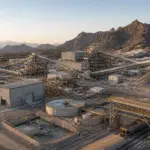
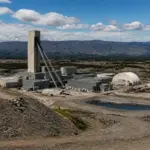
Brazilian critical minerals processing infrastructure and environmental monitoring systems.

A critical minerals project can have strong geology, credible technology and a signed offtake agreement and still fail to reach a final investment decision if its permitting pathway is uncertain.
That risk is becoming more visible as governments compete to attract investment in copper, lithium, nickel, rare earths and other energy-transition materials. Brazil is tightening scrutiny of critical-minerals transactions, according to Bloomberg, while the European Union is using its Critical Raw Materials Act to combine strategic-project status with defined permitting procedures.
Zimbabwe is using export controls to push local processing, and the Philippines continues to rely on a permitting system in which Indigenous consent, environmental approval and local government participation can determine whether a project advances.
The result is a shift in project economics. Permits are no longer treated as an administrative stage between exploration and construction. They are becoming a direct input into the cost of capital, construction timing, financing structure and eventual market access.

The policy comparison
The four jurisdictions do not offer a simple ranking from “fast” to “slow.” Each places risk in a different part of the project cycle.

| Jurisdiction | Policy direction | Permitting and timeline risk | Indigenous rights and water | Traceability and financing |
|---|---|---|---|---|
| Brazil | A dedicated critical and strategic minerals framework is being developed alongside tighter scrutiny of transactions and supply-chain control. | Priority treatment may improve administrative coordination, but project developers still need to navigate Brazil’s broader environmental licensing system. The practical clock will depend on implementing rules and agency capacity. | Consultation with Indigenous and traditional communities remains a material requirement where rights or territories may be affected. Water use and quality are addressed through environmental licensing and state-level rules. | Traceability and domestic value addition are becoming more important to regulators and buyers. Public-bank support, incentives and strategic partnerships may improve financing, but transaction scrutiny can add another approval layer. |
| Zimbabwe | Export restrictions on raw minerals and lithium concentrates are being used to encourage domestic beneficiation. | There is no unified critical-minerals fast track. Environmental impact assessments and other approvals can take variable periods, particularly where monitoring or agency capacity is limited. | Environmental approvals must address water, pollution and community impacts. Water-use controls are important for lithium projects, but enforcement risk remains significant. | National traceability is less developed. Financing is more dependent on foreign partners, offtake agreements, export permissions and project-specific government arrangements. |
| Philippines | Nickel, copper, cobalt and gold are strategically important, but projects remain governed principally by general mining, environmental and Indigenous-rights laws. | Environmental Compliance Certificates, local approvals and the Indigenous consent process can extend development schedules. A formal critical-minerals fast track is not yet the central mechanism. | Under the Indigenous Peoples’ Rights Act, projects affecting ancestral domains require Free, Prior and Informed Consent and an NCIP certification. Water, tailings and coastal impacts are central risks for nickel operations. | Corporate chain-of-custody systems and buyer due diligence are more developed than a single national traceability platform. Financing commonly relies on strategic investors, lenders and long-term offtake. |
| European Union | The Critical Raw Materials Act designates Strategic Projects and sets capacity, sustainability and supply-diversification objectives. | The general maximum permitting period is 27 months for extraction and 15 months for projects involving only processing or recycling. For projects already in permitting or extensions of existing projects, the limits are 24 and 12 months. | Water, mining waste, habitats and environmental-impact requirements remain in force. Strategic Project applications must address community engagement and, where relevant, Indigenous peoples’ rights. | The framework supports access to EU and national finance, including promotional banks, guarantees and other public instruments. Traceability and sustainability certification are increasingly important for market access. |
Table compiled from the EU regulation, Brazil’s official minerals-policy materials, Philippine Indigenous-rights guidance and reporting on Zimbabwe’s lithium-export measures. Timelines are statutory or policy benchmarks, not guaranteed construction schedules.
Brazil: faster coordination, closer scrutiny
Brazil’s policy shift illustrates why permitting and ownership risk increasingly need to be assessed together.

Bloomberg reported that Brazil passed legislation tightening scrutiny of critical-minerals deals. For project sponsors, that creates a potential two-track review: the operating project must satisfy mining and environmental authorities, while the transaction itself may face additional scrutiny over ownership, strategic control, processing location or supply-chain implications.
That distinction matters for mergers and acquisitions. A transaction can be commercially agreed but remain unable to close on the expected schedule if regulators require additional information about control, domestic processing or the destination of production.
Brazil’s emerging policy architecture also gives critical and strategic minerals greater administrative visibility. The Brazilian Ministry of Mines and Energy’s investor materials describe the country’s interest in attracting capital into extraction, processing and industrial value chains.
For developers, the opportunity is a potentially more coordinated route through government. The constraint is that priority status does not remove environmental licensing, community consultation or water-management obligations. A project that reaches a priority list without a credible social and water plan may still encounter delays during licensing or litigation.
The financing impact is straightforward: lenders will increasingly want evidence that a project’s permitting schedule is based on a complete application, realistic consultation milestones and a defined path for transaction approval: not only on an exploration licence or government designation.
Zimbabwe: export policy becomes a financing variable
Zimbabwe’s approach is less about creating a dedicated critical-minerals permitting channel and more about controlling where value is captured.
The government has used restrictions on exports of raw minerals and lithium concentrates to encourage local processing. Reuters reported that export resumption has been linked to conditions including labour, safety and environmental standards, while a fuller ban on lithium-concentrate exports has been planned.
For producers, this changes the project model. A mine designed around concentrate exports may require additional investment in beneficiation, power, water treatment, logistics and technical labour. Those additions can materially alter capital expenditure and the timing of first revenue.
Environmental approval is another variable. Zimbabwe requires environmental impact assessments for mining projects, but external analysis has highlighted gaps in monitoring and enforcement. Water availability and pollution controls are particularly important for lithium operations, where local communities and regulators may focus on abstraction, discharge and the effects on surrounding agricultural or ecological systems.
Export permissions can therefore become a form of operating approval in practice. Even if the mine has the underlying right to operate, a failure to meet environmental or local-processing requirements may restrict its ability to sell output internationally.
That uncertainty tends to push financing toward strategic investors, project partners and offtake agreements. It can also increase the value of staged development, allowing a sponsor to prove compliance and processing capability before committing the full capital budget.

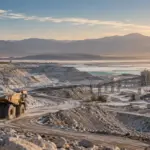
Lithium extraction and environmental monitoring infrastructure in Zimbabwe.
Philippines: consent can determine the critical path
The Philippines presents a different form of permitting risk. Its mining framework is established, but projects may need to satisfy several interlocking processes before construction can begin.
The Mining Act of 1995, environmental-impact rules and the Indigenous Peoples’ Rights Act operate together. Where a project overlaps an ancestral domain, the National Commission on Indigenous Peoples’ process can require FPIC. A Certification Precondition or Certificate of Non-Overlap is a critical documentary step before relevant permits can be issued.
This is not simply a consultation meeting added to a permitting checklist. A properly conducted FPIC process can affect project design, compensation, benefit-sharing arrangements, access roads and the location of processing facilities. It can also result in conditions that lenders will treat as binding social commitments.
Water risk is equally important, particularly for nickel laterite projects in tropical and coastal environments. Sediment control, tailings management, stormwater, acid-generating materials and downstream marine impacts can influence both the Environmental Compliance Certificate and the project’s social licence.
The commercial lesson is that Philippine developers need to sequence Indigenous engagement and environmental work early. Treating FPIC as a late-stage approval can produce a schedule that appears short on paper but becomes substantially longer once community negotiations, redesign or legal challenges begin.
European Union: clearer clocks, heavier documentation
The EU offers the most explicit permitting benchmarks of the four jurisdictions, but its system should not be mistaken for automatic approval.
Under the Critical Raw Materials Act, Strategic Projects receive access to a single point of contact and priority administrative treatment. The general permit-granting period is capped at 27 months for extraction projects and 15 months for projects involving only processing or recycling. A shorter 24-month extraction and 12-month processing or recycling limit applies in specified cases involving projects already in the permitting process or extensions of existing projects.
The clock also has boundaries. The time needed by a developer to prepare an environmental-impact assessment is excluded, and the regulation allows extensions for complex projects. Water, habitats, waste, pollution-control and public-participation requirements remain applicable.
The EU framework therefore trades some open-ended administrative uncertainty for a more structured evidence burden. A Strategic Project application must include a timetable, business plan, financing information, public-acceptance measures and, where relevant, a plan for consultation with Indigenous peoples.
That can improve financing because lenders receive a clearer framework for assessing completion risk. At the same time, the documentation required to qualify for strategic status may expose weaknesses in baseline water data, community engagement or supply-chain verification before debt is committed.
A report by Brussels Post said the law had been followed by increased applications in Sweden, Finland and Portugal. The report itself carries an AI-generated-content disclaimer, so the reported surge should be treated cautiously. The broader policy signal is nevertheless clear: governments and developers are trying to convert strategic designation into a more investable permitting pathway.
What lenders and operators should measure
Across all four jurisdictions, project teams should track more than the date of an exploration licence or environmental application.
A practical permitting risk register should include:
- Application completeness: When does the legal clock actually start?
- Community rights: Is consultation required, and can consent or litigation alter the project design?
- Water balance: Are abstraction, discharge, drought and downstream-use assumptions independently verified?
- Traceability: Can the operator document the origin, processing route and destination of each critical mineral?
- Transaction approvals: Could a change in ownership, foreign investment review or export authorisation delay closing?
- Financing conditions: Which permits, offtake contracts and environmental commitments must be completed before funds are drawn?
These factors increasingly flow into valuation. A project with a lower headline capital cost but an uncertain permit schedule may be less financeable than a higher-cost project with a defined approval route, credible community agreements and reliable water data.
The central change in critical minerals policy is not that governments are choosing between development and environmental protection. It is that they are embedding both objectives into the conditions for capital formation.
For operators and investors, permitting is now part of the orebody’s economic value.
Social snippets
LinkedIn:
Critical minerals projects are no longer valued on geology and commodity exposure alone. Brazil, Zimbabwe, the Philippines and the EU are placing permitting, Indigenous rights, water management and traceability closer to the centre of project finance. Our comparison shows where each jurisdiction concentrates risk: and why approval timelines now shape economics.
X:
Permits are becoming a core project-economics variable for critical minerals. Brazil is tightening scrutiny, Zimbabwe is linking exports to beneficiation, the Philippines places FPIC at the centre of approvals, and the EU offers defined: but demanding: Strategic Project timelines.