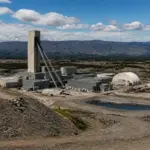
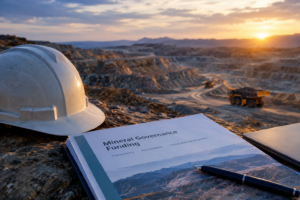
Copper and nickel processing infrastructure in Brazil’s Carajás region.

By Charles Pitts
Vale has indefinitely shelved plans to list its critical-minerals subsidiary Vale Base Metals, according to a report by The Globe and Mail citing people familiar with the matter, as political opposition grows in Brazil over the potential loss of control of strategic mining assets.
The listing could be revived at a later date, the sources said. The report, republished by Reuters through Mining Weekly, marks a setback for a transaction that had been viewed as a possible way to give outside investors direct exposure to Vale’s copper, nickel and cobalt portfolio.
The reported pushback in Brazil centers particularly on domestic copper operations. Political officials have raised concerns that a public listing, potentially involving international investors, could weaken Brazilian control over minerals considered important to the country’s industrial and economic position.
More Read

Vale did not directly confirm the shelving of the IPO. In a statement cited by Mining Weekly, the company said it does not comment on market rumors or speculation and added that its focus was on increasing productivity and competitiveness, optimizing its portfolio and advancing its growth pipeline.

IPO plans had remained an option, not a formal transaction
Vale Base Metals Chief Executive Shaun Usmar said in March that the business was working toward being ready for a potential IPO by midyear. Those comments prompted questions from Brazil’s securities regulator and the B3 exchange.
Vale subsequently said that no management decision had been made and that a potential listing was not under active assessment. The company’s position was that VBM was being prepared to operate as a more independent business, while a future capital-markets transaction remained an option.
More Read

The distinction is important. Preparing a subsidiary for a possible listing can involve separate reporting systems, operational controls, governance structures and financial information without creating a firm timetable for an offering.
The latest report suggests that political considerations have now made a near-term listing impractical, even as the unit continues to develop its assets and build a larger copper growth profile.
Vale Base Metals spans three major mining jurisdictions
VBM is Vale’s non-ferrous metals division and holds assets across Canada, Brazil, Indonesia, Japan and the United Kingdom. Vale owns 90% of the business, while Saudi Arabia’s Manara Minerals Investment Company owns the remaining 10%, according to VBM’s 2025 exploration and resources update.
Its main commodity exposure includes copper, nickel and cobalt, with additional production and resources involving gold, silver and platinum-group metals.
| Region | Principal exposure | Strategic role |
|---|---|---|
| Canada | Nickel, copper, cobalt and precious metals | Sudbury, Voisey’s Bay, Thompson and processing infrastructure |
| Brazil | Copper and nickel | Carajás copper district, Salobo, Sossego, Bacaba and Onça Puma |
| Indonesia | Nickel, cobalt and copper exposure | PT Vale Indonesia and long-term nickel-resource growth |
| Other jurisdictions | Copper exploration and downstream links | Portfolio diversification and customer access |
VBM says its geographic spread allows it to supply customers in Europe, the Americas and Asia. The company’s operating footprint includes Sudbury and Voisey’s Bay in Canada, the Carajás copper district and Onça Puma in Brazil, and PT Vale Indonesia.

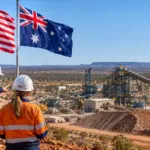
Underground nickel-copper mining infrastructure in Canada.
Canada provides the integrated nickel and copper base
Canada remains central to VBM’s operating platform. Its assets include the Sudbury mining complex in Ontario, the Voisey’s Bay operation in Newfoundland and Labrador, and the Thompson nickel district in Manitoba.
Sudbury is a polymetallic mining and processing camp producing nickel, copper, cobalt, gold, silver and platinum-group metals. Voisey’s Bay is transitioning to underground production through the Reid Brook and Eastern Deeps deposits.
VBM reported that its Canadian operations and Voisey’s Bay added contained copper and nickel resources during 2025. The company also plans continued brownfield drilling around existing infrastructure, a strategy intended to extend mine life and improve the economics of established operations.
The Canadian portfolio is also undergoing restructuring. Vale has been reviewing the Thompson operations and has agreed to bring in outside partners while retaining a minority position and an offtake relationship. The move illustrates the broader portfolio work taking place inside VBM, independent of the IPO question.
Brazil is the main copper-growth engine
The Brazilian portfolio is at the center of the political sensitivity surrounding a potential listing.
VBM’s Carajás district in Pará state contains a series of copper assets and exploration targets linked to existing infrastructure. The portfolio includes the Sossego complex, Salobo, Bacaba, Cristalino, Paulo Afonso and Alemão.
According to VBM, copper mineral resources rose 7% in 2025 to approximately 44.9 million tonnes of contained copper, while copper mineral reserves reached approximately 8.2 million tonnes. The company also said it plans more than 120,000 meters of exploration drilling across Carajás in 2026.
Bacaba is under construction after approximately 0.6 million tonnes of contained copper were converted to reserves in 2025. Other programs are testing extensions beneath existing open pits and potential underground mine developments.
VBM’s broader strategy is to roughly double copper production to about 700,000 tonnes annually by 2035. That growth plan depends largely on the development of Carajás projects, additional brownfield discoveries and the conversion of resources into mineable reserves.

Open-pit copper infrastructure and concentrator facilities in the Carajás district.
For Brazil, the issue is not only ownership of a corporate subsidiary. It is also the question of who controls future copper supply, processing decisions and capital allocation across assets that the government views as strategically important.
Indonesia adds nickel scale but also jurisdictional complexity
Indonesia is another important part of VBM’s resource base. The company holds exposure through PT Vale Indonesia and related projects in the country’s nickel-producing regions.
VBM’s 2025 update attributed much of its nickel-reserve growth to resource conversion in Indonesia and updated geological models in Canada. Total nickel mineral reserves increased to approximately 5.9 million tonnes of contained nickel, while total nickel resources reached approximately 7.7 million tonnes.
Indonesia has become the world’s dominant nickel-processing hub, supported by large investments in smelters and intermediate products. That growth has expanded available supply but has also increased market concentration and raised questions about processing technology, environmental performance and the long-term economics of high-cost producers.
For VBM, Indonesian assets provide scale and downstream potential. They also expose the company to a policy environment in which export rules, domestic-processing requirements and foreign investment conditions can change quickly.

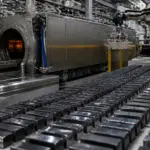
Nickel processing infrastructure in Indonesia.
What the shelved IPO means for critical-minerals supply
The immediate effect of the decision is financial rather than operational. VBM’s mines and projects will continue to operate under Vale’s existing ownership structure, and the company has not announced a change to its copper-growth targets.
However, an IPO could have provided the subsidiary with a separately valued equity currency and a broader investor base. A public listing might also have helped VBM raise capital for copper projects, fund exploration or pursue acquisitions and partnerships without relying solely on Vale’s balance sheet.
The decision therefore leaves Vale with greater control over the portfolio but reduces the number of near-term routes available to bring in outside capital.
For critical-minerals markets, the outcome also highlights a recurring tension. Governments want secure domestic supply and influence over strategic assets, while mining companies often seek international capital, technical partnerships and portfolio flexibility.
That tension is particularly visible in copper. New copper mines can take more than a decade to develop, while demand is rising from power grids, electric vehicles, renewable generation, data centers and industrial electrification. A project’s ownership structure can influence how quickly capital is committed and how development risks are shared.
Skillings’ analysis of critical-minerals supply gaps and mining M&A risk tracks the same issue from different angles: the market needs more supply, but projects are increasingly shaped by national-security concerns, processing concentration and regulatory scrutiny.
M&A implications
The decision could also affect how potential partners assess VBM.
A public listing would have created a transparent market valuation for the subsidiary and could have made minority investments, joint ventures or asset-level transactions easier to benchmark. Without an IPO, Vale retains more discretion over whether to sell stakes, form partnerships or pursue project-level financing.
That does not rule out M&A. VBM already has minority investment and partnership structures, including its 10% ownership by Manara Minerals and project relationships in Brazil and Canada. Its growth pipeline could still attract strategic investors seeking copper and nickel exposure.
The difference is that future transactions are more likely to be negotiated directly with Vale and VBM rather than through a public equity offering.
For potential partners, the principal risks will include:
- Brazilian political scrutiny of copper ownership and control.
- Permitting and community-relations requirements in Carajás.
- Capital intensity across new copper projects.
- Nickel-price volatility and Indonesian policy changes.
- Integration risk across a geographically diverse portfolio.
- The timing of resource conversion, construction and production ramp-up.
What comes next
Vale’s reported decision leaves the IPO open as a longer-term possibility but removes it from the near-term agenda.
The next markers for VBM will be operational: progress at Bacaba, the Carajás drilling program, underground studies beneath existing Brazilian pits, Canadian mine-life extensions and cost performance in the nickel business.
If VBM can demonstrate stronger copper production growth and improved portfolio returns, the case for a future listing could re-emerge. If political opposition remains strong, Vale may instead rely on joint ventures, minority investments, offtake agreements and project-level partnerships to fund expansion while retaining corporate control.
For now, the balance has shifted toward sovereignty and strategic control over capital-markets separation. Vale’s base-metals assets remain intact, but the path to outside ownership and a standalone public valuation has become considerably less certain.