Key Takeaways
- African governments are imposing mineral export bans to spur local processing.
- Thousands of Africa mining jobs are emerging from lithium, bauxite, and rare earth initiatives.
- Infrastructure and training gaps remain the largest barriers.
- China is adapting quickly; Western firms risk being left behind.
- Informal miners face disruption; formalization efforts underway.
Africa mining jobs are becoming the cornerstone of national growth strategies as countries across the continent impose export bans on raw mineral ores. From Zimbabwe to Ghana, governments are betting that processing critical minerals in-country will boost employment, diversify economies, and spark long-term industrialization.

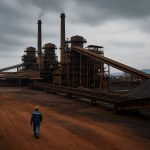
The change marks a significant pivot. Where trucks once carried raw ore to ports for shipment overseas, officials now want minerals processed into value-added products on African soil—alongside the creation of skilled labor and downstream industries.
Export Bans Aim to Spark Africa Mining Jobs
Zimbabwe’s recent lithium export ban is emblematic of a broader push. With its 2027 deadline for local processing, the country is forcing miners to build refining capacity or risk losing concessions. The impact is already visible at the Sabi Star lithium project, where more than 500 new positions have emerged in early-stage mineral processing.
“We used to just dig and load,” said Tendai Moyo, a shift supervisor. “Now we’re learning to run the plants. These are Africa mining jobs that didn’t exist before.”
Nearly half of the continent’s countries now impose some form of mineral export restriction, according to the African Development Bank. These Africa mineral export bans aim to accelerate domestic beneficiation and shift the continent’s role from resource supplier to industrial player.
Processing Push Faces Infrastructure, Training Hurdles
Still, scaling up mineral beneficiation in Africa is a tall order. Most countries lack stable power grids, logistics networks, and technical expertise.

“We need more than bans—we need investment in people and systems,” said George Boateng, a mining policy advisor in Ghana, which recently restricted bauxite exports to fuel its new aluminum strategy.
At the Sabi Star facility, power blackouts mean workers rely on diesel generators. “We’re adapting, but we can’t run an industry on generators,” Moyo noted.
Infrastructure gaps remain a central challenge to converting export bans into durable mining industry employment in Africa.
China Moves Fast, Western Firms Lag Behind
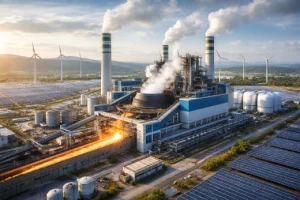
Chinese companies are moving quickly to adapt to the new rules. In Namibia and Congo, vertically integrated Chinese firms are building refining and separation plants tailored to Africa mineral export bans.
While these investments have generated thousands of Africa mining jobs, critics say they risk replicating past dependency patterns if local employment targets are not enforced.
“Foreign investment is needed, but so are labor guarantees,” said Celestine Ilunga, a labor rights advocate in Kinshasa. “Africa mining jobs must be local jobs.”
Western firms, meanwhile, remain hesitant. Some cite policy uncertainty, while others balk at the upfront costs of local processing.
“If the U.S. and EU want critical minerals Africa can offer, they need to partner with countries on their terms,” said Lauren Johnston of the China-Africa Initiative at Johns Hopkins SAIS.
Informal Miners Caught in Transition
Not everyone is benefiting from the shift. In Zimbabwe, lithium smuggling has surged as informal miners lose access to legal markets.
“We used to sell to buyers who came every week,” said Sandra Chigumba, a small-scale miner in Bikita. “Now we just sit on the ore.”
To mitigate backlash, Rwanda is offering artisanal miners a path to formal employment through its new centralized coltan refinery. But uptake has been slow.
Experts caution that unless informal sectors are integrated into national strategies, Africa mining jobs will remain elusive for millions.
African Leaders Eye Indonesia Model—With Caution
Many African governments are looking to Indonesia’s 2020 nickel ban as a blueprint. Jakarta forced in-country processing, resulting in over 25 battery precursor facilities and thousands of new jobs.
“There’s no reason Africa can’t do the same,” said Moses Gwaba, an advisor at the African Union. “We have the critical minerals. Africa mining jobs must follow.”
But analysts urge realism. “Indonesia had coastal access, stable power, and a consolidated government,” said Todd Moss of the Energy for Growth Hub. “Africa’s conditions are more fragmented.”
Still, leaders say the opportunity is historic. “This is about more than policy,” said Sheila Khama, former CEO of De Beers Botswana. “It’s about reshaping what mining means—jobs, not just royalties.”