By Charles Pitts

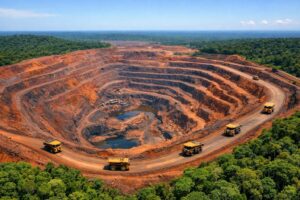
Agnico Eagle Mines Limited has officially entered a period of operational recalibration following a significant geotechnical event at its flagship Canadian Malartic complex. The suspension of mining activities at the Barnat open pit, triggered by a detected rock mass movement along the north wall, has prompted a technical review and a subsequent revision of the company’s near-term production expectations.
As of July 3, 2026, the company is prioritizing safety and geotechnical stability over immediate throughput at the site. While the mill continues to operate using low-grade stockpiles, the cessation of high-grade ore delivery from the Barnat pit is expected to weigh on the company’s second-half performance. This report analyzes the technical remediation steps, the updated 2026 guidance, and the accelerated strategic focus on the Odyssey underground project.
The Barnat Pit Event: Technical Context and Safety Response
The suspension follows a rock mass movement on the north wall of the Barnat pit, a critical component of the Canadian Malartic operation: one of the world’s largest gold mines. The movement was detected by the mine’s advanced geotechnical monitoring systems, which include real-time radar and seismic sensors designed to identify subtle shifts in wall stability before they manifest as large-scale failures.
Agnico Eagle’s technical teams are currently engaged in a detailed geotechnical assessment. The primary objective is to confirm the stability of the affected area and determine the extent of remediation required. Historically, open-pit wall instabilities at such a scale necessitate a combination of slope re-profiling, the installation of additional buttressing, or improved drainage systems to manage pore pressure within the rock mass.
More Read
Immediate Operational Pivot
To mitigate the impact of the suspension, Agnico Eagle has redirected its mining fleet to other areas while utilizing its extensive low-grade stockpile inventory to feed the Canadian Malartic processing plant. This strategy ensures the mill remains operational, though the resulting gold production will be lower due to the grade profile of the stockpile material compared to the primary Barnat ore.


Revised 2026 Guidance: H2 Production and Cost Implications
The geotechnical interruption has forced a revision of the 2026 production outlook. While Agnico Eagle reported a strong second quarter, with production estimated at approximately 845,000 ounces: slightly ahead of internal forecasts: the second half of the year faces significant headwinds.
More Read

Based on preliminary assessments, the company expects the Barnat suspension to reduce Canadian Malartic’s production in the second half of 2026 by between 60,000 and 80,000 ounces of gold. Consequently, Agnico Eagle’s full-year consolidated production is now tracking toward the lower end of its previously issued 3.3 million to 3.5 million ounce guidance range.
Production Guidance Impact Summary (2026)
| Metric | Original Guidance (Annual) | Revised 2026 Outlook | Impact |
|---|---|---|---|
| Total Gold Production | 3.3 – 3.5 Moz | ~3.3 Moz (Lower End) | -60k to -80k oz |
| Canadian Malartic Contribution | Primary Focus | H2 Reduction | Significant |
| Mill Throughput | Full Capacity | Maintained via Stockpiles | Grade Dilution |
| Cost Profile (AISC) | ~$1,100 – $1,150/oz | Expected Upward Pressure | Temporary Rise |
The financial impact extends beyond production volume. Processing lower-grade stockpiles while simultaneously funding remediation activities is expected to exert upward pressure on the All-In Sustaining Costs (AISC) for the Canadian Malartic site in the coming quarters. Analysts expect more granular cost data to be released during the upcoming Q2 2026 earnings call.
Remediation Timeline and 2027–2028 Outlook
The timeline for a safe restart at Barnat remains fluid, pending the results of the geotechnical study. Agnico Eagle has indicated that remediation work and potential redesigns of the north wall could affect the production profile for several years.
Initial projections suggest that the disruption could reduce output at Canadian Malartic by up to 150,000 ounces of gold per year in both 2027 and 2028. Before this event, the Barnat pit was expected to be fully mined out by early 2029. The current challenge for management is to optimize the remaining pit life while ensuring the safety of the workforce and the long-term integrity of the site infrastructure.

For those tracking broader market trends, this disruption highlights the inherent geotechnical risks in mature open-pit operations and the importance of robust monitoring technology. Similar themes of operational resilience and the shift toward more stable production profiles are explored in our analysis of mine electrification and 2026 ROI.
The Strategic Shift: Focus on Odyssey Underground
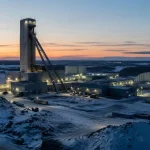
Despite the setback at Barnat, Agnico Eagle has been clear: the long-term future of the Canadian Malartic complex is underground. The development of the Odyssey mine: the underground extension of the complex: remains unaffected by the rock movement in the open pit.
The transition from the Barnat pit to the Odyssey underground operation is the centerpiece of the company’s strategy to reach approximately 1 million ounces of gold production per year at the complex by the early 2030s. The Odyssey project features a 1.2-kilometer-deep shaft and utilizes a massive fleet of automated and electric equipment to drive efficiency and safety.
Accelerated Underground Development
With the open-pit operations temporarily constrained, Agnico may look to accelerate certain aspects of the Odyssey development to fill the production gap. The Odyssey project is currently ramping up, with production from the Odyssey South and East Gouldie zones serving as the future pillars of the operation.

The separation of the open-pit and underground infrastructure is a critical advantage. The geotechnical issues at Barnat are localized to the pit’s north wall and do not interact with the structural integrity of the Odyssey shaft or the underground haulage levels. This decoupling allows the company to continue its high-stakes capital projects while managing the remediation of the legacy pit.
Market Reaction and Analyst Sentiment
The mining industry has generally reacted with caution but remains supportive of Agnico’s “safety first” approach. Geotechnical failures can lead to catastrophic consequences if ignored, and the early detection and proactive suspension are viewed as a testament to Agnico Eagle’s operational discipline.
Royalty holders, such as Osisko Gold Royalties, have indicated that their long-term delivery guidance remains unchanged, suggesting confidence in Agnico’s ability to navigate the medium-term production dip. However, the market remains attentive to the Q2 results for any signs of broader geotechnical instability or unexpected capital expenditure increases related to the wall stabilization.
For investors monitoring the gold sector, this event serves as a reminder of the volatility associated with physical mining operations, even for top-tier producers. Similar operational pivots have been seen recently in other major deals and halts across the industry, as detailed in our coverage of First Mining Gold and Silvercorp.
Conclusion: A Temporary Setback in a Long-Term Vision
The Barnat pit rock movement is a significant operational hurdle for Agnico Eagle in 2026, but it does not appear to be a thesis-changing event for the Canadian Malartic complex. The remediation plan is underway, and the use of low-grade stockpiles provides a necessary buffer to keep the mill active.
The revised 2026 guidance: placing the company at the lower end of its production target: reflects a realistic assessment of the time required to stabilize the north wall. As the focus shifts increasingly toward the Odyssey underground project, the Barnat pit’s role as a primary ore source was already nearing its end. This incident may simply hasten the transition to the site’s underground future.

For mining professionals and investors, the next six months will be critical for assessing Agnico Eagle’s ability to manage the technical complexities of remediation while maintaining the aggressive development schedule at Odyssey. The company’s 100-year legacy suggests it has the technical depth to handle such challenges, but the 2027 and 2028 production gaps remain a focal point for the market.