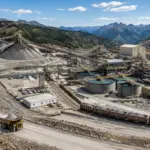
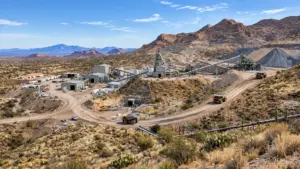
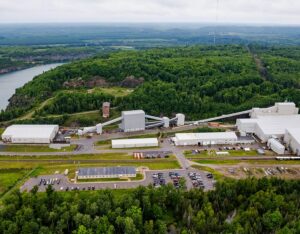
An Australian coal operation viewed from above.

Mining news around BHP has taken a legal and workforce turn after the Mining and Energy Union began funding a Federal Court class action that could cover as many as 7,000 workers employed through the company’s Operations Services labour-hire subsidiaries.
The claim concerns mineworkers who were allegedly required to work Christmas Day and Boxing Day shifts at BHP’s Daunia metallurgical coal mine in Central Queensland in 2019. The union says the workers were not given a genuine opportunity to refuse those public-holiday shifts, potentially breaching Australia’s Fair Work Act and National Employment Standards.
The case extends an earlier legal challenge involving 85 workers and could expose BHP to millions of Australian dollars in compensation if the broader claim succeeds.
BHP did not immediately respond to a Reuters request for comment. Its shares closed down 1.8% at A$63.44 in the trading session covered by the report.
What the class action alleges
The proposed class action is directed at workers employed by BHP’s Operations Services entities, which supplied production and maintenance labour to the miner’s Australian coal operations.

The Mining and Energy Union, or MEU, says the claim could include up to 7,000 workers engaged by Operations Services from late 2019 through March 2023. The central allegation is that public-holiday work was treated as an automatic part of the roster rather than work that employees could reasonably decline.
The immediate legal dispute relates to Christmas Day and Boxing Day shifts at Daunia in 2019. A previous Federal Court proceeding found that 85 Operations Services workers had been rostered for 12.5-hour shifts on those holidays without a genuine right to refuse.

The union says the new action could “deliver millions in compensation” if successful. The claim remains subject to the court process, and the final number of eligible workers and the value of any compensation would depend on the evidence and rulings in the case.
A hearing has been reported for Nov. 9, 2026.
BHP holiday-shift case at a glance
| Issue | Detail |
|---|---|
| Defendant | BHP Operations Services labour-hire entities |
| Union funding the action | Mining and Energy Union |
| Potential class size | Up to 7,000 workers |
| Core allegation | Workers were unlawfully required to work public holidays |
| Initial site at issue | Daunia metallurgical coal mine, Central Queensland |
| Shifts cited | Christmas Day and Boxing Day, 2019 |
| Earlier test-case cohort | 85 workers |
| Potential outcome | Compensation and further legal precedent |
| Reported hearing date | Nov. 9, 2026 |
The earlier court ruling matters
The new proceeding is built on a test case that established a more difficult legal position for employers using fixed rosters across public holidays.
In the earlier case, the court found that Operations Services had breached the National Employment Standards by requiring workers to perform public-holiday shifts without first giving them a meaningful opportunity to refuse. The workers were employed on annual salaries, but the court found that salary arrangements did not remove the statutory requirements governing public-holiday work.
The 85 workers were later awarded about A$84,000 in compensation, while the union received a A$15,000 penalty payment. Individual compensation amounts ranged from roughly A$800 to A$2,400, according to reporting on the decision.
That earlier liability was relatively limited because it involved a defined group at one operation. The new class action raises the possibility that similar rostering practices could be examined across a much larger Operations Services workforce.
The legal distinction is important for mining companies. A continuous operation may need employees on site every day of the year, but operational necessity does not necessarily remove the requirement to comply with public-holiday protections. Employers must still establish whether a request to work was made, whether the request was reasonable and whether employees had reasonable grounds to refuse.
Why labour-hire structures are under scrutiny
The case also places renewed attention on the use of in-house labour-hire entities in Australian mining.
Operations Services was established to provide production and maintenance personnel to BHP operations. Labour-hire models can give large operators flexibility in staffing, training and deployment, particularly when mines operate on 24-hour rosters. They can also create additional legal and industrial-relations complexity when employees are covered by awards rather than negotiated enterprise agreements.
The MEU has separately alleged that Operations Services breached provisions of the Black Coal Mining Industry Award. Those allegations include the use of 7-on, 7-off rosters involving 12.5-hour shifts without the required employee agreement for shifts longer than 10 ordinary hours.
The union has argued that the award was designed to ensure workforce consent around extended shifts, start and finish times and the allocation of public holidays. BHP’s position on those allegations has not been established by the new class action.
For operators, the issue is not limited to one holiday roster. It concerns the documentation of employee consent, the wording of employment contracts, the relationship between awards and enterprise agreements, and the way labour-hire subsidiaries are governed in practice.
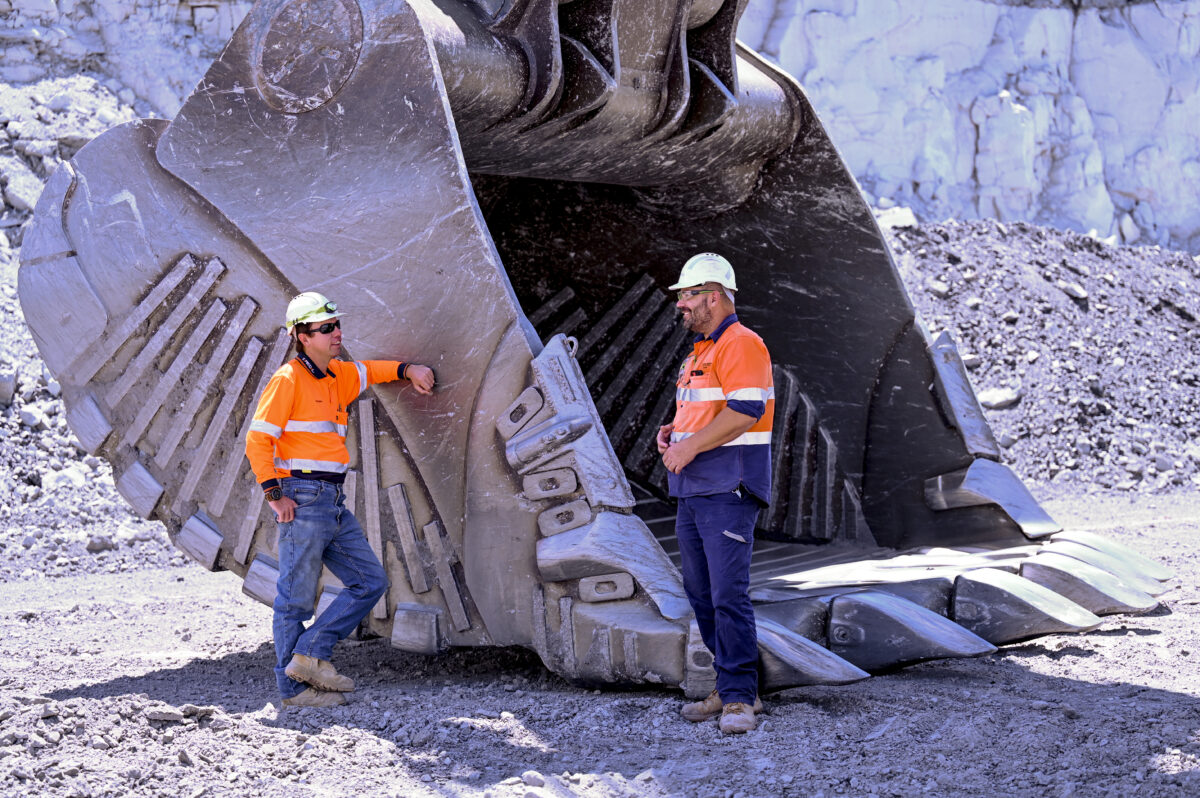
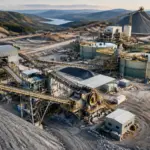
Mine workers beside large-scale coal-mining equipment.
The wider risk for Australian mining
The Daunia mine was sold by BHP to Whitehaven Coal in 2024, meaning the current action relates to historical employment practices during BHP’s ownership and operation of the site.
Even so, the consequences could extend beyond the former Daunia workforce. Australian mining companies rely on labour-intensive operations, long-distance commuting arrangements and rosters designed around continuous production. Public-holiday rules, shift lengths and award coverage can therefore affect coal, iron ore, gold and critical-minerals operations alike.
The risk is especially relevant to Australian iron ore producers. Large Pilbara operations depend on round-the-clock processing, rail and port systems, with thousands of employees and contractors working across multiple sites. A dispute over a single category of rostered workers may not translate directly into an iron ore liability, but the legal principle can still influence how operators review public-holiday scheduling and labour-hire arrangements.
Industrial disputes already carry operational consequences in iron ore. A stoppage or bargaining breakdown at a rail, mine or export terminal can affect shipments even when the underlying disagreement concerns employment conditions rather than commodity prices. Class actions add a different type of exposure: they can convert a historical practice into a financial claim covering multiple sites, employment categories or years.
BHP has also faced separate scrutiny over public-holiday leave calculations. The company previously acknowledged underpayments affecting about 28,500 current and former Australian employees, with remediation estimated at up to A$430 million. That matter is separate from the Operations Services class action, but it adds to investor attention on wage systems, payroll controls and employment governance.
Market lens: a small immediate cost, a larger governance signal
The direct financial exposure from the 85-worker test case was modest relative to BHP’s scale. The potential class action is different because the number of workers could be several orders of magnitude larger.
A simple sensitivity framework illustrates why investors are watching the case:
| Illustrative affected workers | Average compensation of A$1,000 | Average compensation of A$2,000 |
|---|---|---|
| 1,000 | A$1 million | A$2 million |
| 3,000 | A$3 million | A$6 million |
| 7,000 | A$7 million | A$14 million |
These figures are not a forecast of liability. They exclude penalties, legal costs, interest and any finding that different worker groups had different entitlements. They simply show how the scale of the class could change the financial significance of the dispute.
A Cramer-style company lens would focus less on whether a potential compensation bill could materially alter BHP’s balance sheet and more on what the case says about execution and governance. BHP is one of the world’s largest diversified miners, with a broad portfolio spanning iron ore, copper, coal and other commodities. Investors generally expect that scale to bring strong internal controls, particularly in payroll, workforce compliance and contractor management.
The market question is therefore not only “How much could BHP pay?” It is also whether the company can demonstrate that similar practices were isolated, corrected and properly documented across its Australian operations.
That distinction matters. A one-off legal cost may be manageable. Repeated disputes involving the same control weakness can increase remediation costs, weaken labour relations and raise the probability of production interruptions.
The case is not an investment recommendation, and its outcome remains uncertain. BHP’s share-price move on the day reflects market information available at the time, not a conclusion about the company’s value or the likely result of the proceedings.
What operators and investors will watch next
The Federal Court process should clarify the scope of the proposed class, the employment entities involved and the periods for which workers may seek compensation.
Key questions include:
- Which Operations Services employees qualify for inclusion?
- Were similar public-holiday rostering practices used at other BHP operations?
- What did employment contracts and rosters say about public-holiday work?
- Were workers asked to volunteer, or were they treated as automatically required?
- How did BHP’s award coverage and enterprise-agreement negotiations affect the arrangements?
- What remediation has been undertaken since the earlier court findings?
The MEU has indicated it may pursue further class actions involving other groups of mineworkers. That raises the possibility of additional claims if similar evidence emerges from other operations or employment periods.
For Australia’s mining sector, the case is a reminder that workforce compliance is an operational issue, not simply a human-resources matter. Public-holiday scheduling, extended shifts and labour-hire structures sit directly at the intersection of production continuity, legal exposure and investor confidence.
As the action proceeds, the court’s findings will be closely watched by operators across Australian coal and iron ore, as well as by companies developing new projects that depend on large rotating workforces. The central question is whether continuous mining production can be reconciled with statutory employee rights through better planning, genuine consent and clearer employment arrangements.
Sources: Reuters report via Mining Weekly, Mining and Energy Union statement, The Northern Miner coverage of class-action risks in mining, and Skillings coverage of autonomous mining technology.