The BMO Global Metals & Mining Conference returns to Hollywood, Florida in late February, and if you think this year's agenda is just another parade of optimistic CEO presentations and polite networking sessions, you're missing what's really happening beneath the surface.

Three strategic undercurrents will define this year's conversations: and they have nothing to do with the official program. M&A positioning, copper supply anxiety, and ESG reporting fatigue are colliding in ways that will shape dealmaking and capital allocation through 2027. The companies that understand these dynamics will walk away with competitive advantages. The ones that don't will spend another year wondering why their peers are outmaneuvering them.
The M&A Chessboard: Discipline vs. Desperation

Let's address the elephant in every conference suite: majors are sitting on record balance sheets while facing shrinking reserve lives. That's a recipe for dealmaking. But not all M&A appetite is created equal.
BHP's recent commentary signals a fascinating split in strategic philosophy. While competitors scramble for growth-at-any-price acquisitions, BHP is deliberately shunning M&A mania in favor of organic copper pipeline development. That's not conservative management: that's strategic confidence.
More Read

The undercurrent here isn't about who announces the biggest deal in 2026. It's about which management teams have built internal pipelines robust enough to walk away from overpriced assets. Watch for companies telegraphing desperation through aggressive bid posturing. They're the ones without backup plans.

Meanwhile, mid-tier producers face a different calculation entirely. Their reserve replacement needs are acute, but their balance sheets can't support billion-dollar transformational deals. Expect conversations about royalty structures, streaming agreements, and minority stake partnerships: arrangements that provide growth exposure without balance sheet destruction. The 2026 debate between royalty, streaming, and equity structures will dominate private meetings far more than public panels suggest.
Junior explorers, ironically, may have the most leverage they've had in years. Majors need projects. Juniors have them. But only juniors with advanced-stage assets in stable jurisdictions will see serious interest. Everything else is noise.
More Read
Copper Supply Reality: From Talk to Panic
The conference circuit has been discussing copper deficits for eighteen months. BMO 2026 marks the point where talk becomes tangible concern.
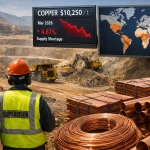
The supply gap everyone's been warning about is no longer theoretical. It's showing up in spot market tightness, lengthening lead times, and customer desperation. AI data center buildouts aren't slowing: they're accelerating. Grid infrastructure needs aren't optional. Electric vehicle production is rebounding after a soft 2025.

That 800-kiloton shortfall isn't getting fixed this year. Or next year. The projects required to close that gap are five to seven years away from first production, assuming everything goes right with permitting, financing, and construction. And nothing goes right anymore.
What makes this year's conference different is that copper buyers will actually be in the room: not just as observers, but as active participants in side conversations about long-term supply agreements. Tech companies that previously treated copper as a commodity they could source on-demand are suddenly realizing they're competing with every other electrification initiative on the planet.
The strategic undercurrent: producers with secured copper supply can extract unprecedented pricing power and contract terms. Those still dependent on merchant exposure or short-term contracts will find themselves negotiating from weakness. Watch which companies announce offtake agreements at BMO. Those are the ones who've already gamed this out.
Resource nationalism compounds the problem. Geopolitical risk hedging strategies that looked paranoid in 2024 now look prescient. Jurisdictional concentration risk has moved from academic concern to board-level priority. Expect serious discussions about geographic diversification: not because it's optimal, but because it's necessary.
ESG Reporting: From Compliance Theater to Competitive Weapon

The ESG conversation at BMO 2026 will sound nothing like it did in 2024. The earnest optimism about voluntary frameworks and stakeholder capitalism has been replaced by something more pragmatic: regulatory compliance and investor discrimination.
European miners face mandatory sustainability reporting under CSRD requirements that went live in January 2026. North American and Australian producers are watching their European peers struggle with implementation costs, data quality challenges, and auditor capacity constraints. The question isn't whether reporting requirements will expand globally: it's when, and whether early adopters gain competitive advantages or just absorb costs their competitors avoid.
But the real undercurrent isn't regulatory. It's financial.
Capital allocators are increasingly splitting mining equities into two categories: companies with credible decarbonization roadmaps and verified scope 3 data, and everyone else. That distinction is showing up in cost of capital differences that can't be ignored. Insurance pricing reflects it. Bond spreads reflect it. Even equity multiples are beginning to reflect it.
The companies worth watching at BMO aren't the ones with the glossiest sustainability reports. They're the ones treating ESG as operational efficiency drivers rather than PR exercises. Electrification of mine fleets reduces diesel costs. Water recycling reduces pumping costs and regulatory risk. Tailings management innovation reduces closure liabilities.
Some management teams have figured out that ESG compliance can be engineered into competitive advantage. Most haven't. The gap between those two groups will widen in 2026, and it'll show up in earnings calls long after the conference ends.
What Actually Matters in Side Conversations
Formal conference sessions will cover macro themes: economic outlook, commodity price forecasts, technological innovation. Fine. Necessary. Mostly useless for strategic positioning.
The real intelligence comes from who's meeting with whom in private suites, which management teams are taking calls from which investment banks, and which joint venture discussions are happening behind closed doors.

Watch for patterns:
Copper-focused producers meeting with tech sector representatives signal offtake negotiations that will shape supply allocation for years. These aren't courtesy calls: they're commercial discussions with billion-dollar implications.
Mid-tier gold producers clustering around the same investment banks suggest M&A activity warming up. Consolidation in the gold space has been predicted for years but never materializes. 2026 might actually be different, driven by cost pressures and reserve replacement needs that can't be solved organically.
Junior explorers from the same jurisdiction taking multiple meetings together indicate strategic partnerships or area-of-interest deals that could accelerate project timelines. In a world desperate for new copper supply, these collaborations might be the only path to meaningful production growth before 2030.
Private equity and alternative capital providers booking full conference schedules reflects a fundamental shift in mining finance. Traditional project finance is too slow and too rigid for current market needs. Alternative structures will fill the gap, and BMO is where those relationships get built.
The Bottom Line Nobody Wants to State Publicly
BMO 2026 takes place at an inflection point for mining fundamentals. Demand is surging, supply is constrained, capital is available, and operational execution has never been more critical.
The companies that will dominate the next cycle aren't necessarily the biggest or the best-capitalized. They're the ones with discipline in M&A, secured copper supply, and ESG frameworks that reduce costs rather than just check boxes. Everything else is positioning.
If you're attending BMO looking for the next hot junior or the next transformational deal, you're optimizing for the wrong variables. The strategic undercurrents that matter are about structural positioning for a supply-constrained decade, not quarter-to-quarter opportunism.
The companies that understand that distinction will be the ones worth watching. The ones that don't will spend 2026 explaining to shareholders why everyone else is capturing value they can't access.
Welcome to BMO 2026. The conversations happening off-program matter more than the ones on stage.