By Charles Pitts

The global race for rare earth elements (REEs) just found a new gear in the hills of Minas Gerais. Meteoric Resources (ASX: MEI) has announced a staggering 246% increase in the Measured Resource at its Caldeira Project, effectively cementing the asset’s status as the premier ionic absorption clay (IAC) deposit outside of China.
The updated Mineral Resource Estimate (MRE) now places 128 million tonnes (Mt) in the highest-confidence "Measured" category, grading at 2,815 parts per million (ppm) Total Rare Earth Oxide (TREO). This is not just a geological curiosity; it is a signal to Western supply chains that a low-cost, high-scale alternative to Chinese dominance is moving rapidly toward production. With a total global resource of 1.6 billion tonnes, Caldeira is no longer just a prospect: it is the burgeoning "Ionic Clay King."
The Technical Milestone: Why "Measured" Matters
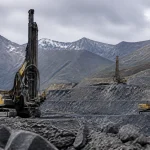
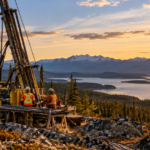
In the world of mining finance, the transition from "Inferred" or "Indicated" to "Measured" is the equivalent of moving from a well-educated guess to a bankable certainty. The 246% jump was underpinned by a massive 304-hole infill drilling program across the project's southern licenses, including the Capão do Mel and Soberbo deposits.
This level of geological density provides the precise data required for the upcoming Definitive Feasibility Study (DFS). For investors and operators, the "Measured" classification reduces the risk profile of the project’s first decade of production. Meteoric is targeting high-grade zones that exceed 4,000 ppm TREO for the initial years of operation, a strategy designed to maximize early cash flow and shorten the payback period.
More Read

Caldeira Resource Snapshot
| Category | Tonnage (Mt) | TREO (ppm) | NdPr Oxide (kt) | Dy+Tb Oxide (kt) |
|---|---|---|---|---|
| Measured | 128 | 2,815 | 80 | 4.2 |
| Indicated | 632 | 2,367 | 350 | 17.5 |
| Inferred | 840 | 2,204 | 373 | 18.3 |
| Total | 1,600 | 2,317 | 803 | 40.0 |


The Ionic Clay Advantage: Brazil vs. The World
To understand why Caldeira is attracting international attention, one must look at the metallurgy. Unlike the hard-rock carbonatite deposits found in Australia or North America, ionic clays like those at Caldeira offer a significantly simpler and cheaper processing route.
- Low-Intensity Mining: The ore at Caldeira is soft clay. There is no need for expensive drill-and-blast operations or primary crushing. It can be excavated using standard earth-moving equipment.
- Simple Leaching: Rare earths are "adsorbed" onto the surface of the clay. They can be liberated using a simple ammonium or mild acid leach at ambient temperatures. This bypasses the energy-intensive "cracking" furnaces required for hard-rock minerals like monazite or bastnäsite.
- ESG Credentials: One of the most critical advantages is the absence of a traditional tailings dam. The processed clays are dewatered and "dry-restacked" back into the mined-out pits for rehabilitation. This significantly lowers the environmental footprint and regulatory hurdles compared to projects like Mesabi Metallics' Minnesota operations or large-scale copper-gold mines.
Decoding the Competition: Meteoric vs. Lynas vs. Arafura
Meteoric’s rise places it in direct conversation with established Western champions like Lynas Rare Earths (ASX: LYC) and Arafura Rare Earths (ASX: ARU). While these companies have blazed the trail for non-Chinese supply, Caldeira offers a different value proposition.
More Read
Lynas (Mt Weld): Lynas remains the benchmark for Western production. Their Mt Weld deposit in Australia is world-class but is a hard-rock carbonatite. While Lynas has a proven, decades-long track record, its cost structure is inherently higher than an ionic clay operation due to the complexity of the flowsheet and global logistics.
Arafura (Nolans): Arafura’s Nolans project is another massive hard-rock asset with strong Western government backing. However, its high capital intensity and complex chemical processing have resulted in a longer lead time to production.
The Caldeira Edge: Meteoric is targeting an annual production of approximately 4,200 tonnes of NdPr (Neodymium-Praseodymium) oxide. This scale is comparable to Arafura’s planned output and a significant portion of Lynas’s current capacity. However, Caldeira’s secret weapon is its Heavy Rare Earth (HREE) content. Ionic clays are historically the world’s primary source of Dysprosium (Dy) and Terbium (Tb): elements essential for the high-temperature magnets used in electric vehicle (EV) drivetrains and wind turbines. Caldeira’s ability to provide a secure, non-Chinese source of "heavies" is a major strategic differentiator.

Supply Chain Implications for the West
The timing of the Caldeira expansion could not be more critical. As Western nations move to "de-risk" their critical mineral supply chains, the reliance on Chinese ionic clays has remained a stubborn bottleneck. China currently controls nearly 90% of global HREE production.
Brazil is rapidly positioning itself as the "Western Hemisphere's Rare Earth Powerhouse." The state of Minas Gerais offers a mature mining jurisdiction with low-cost renewable energy and a workforce already skilled in large-scale extraction. The Brazilian government has been proactive in categorizing REEs as "strategic minerals," providing a smoother permitting pathway than what is often seen in North America or Europe.
Furthermore, the recent success of Viridis Mining’s Colossus project in the same region highlights a "cluster effect" that could lead to centralized processing hubs in Brazil, further reducing costs for regional operators.
The 2026-2028 Outlook
Meteoric is currently operating a pilot plant in Poços de Caldas, which has already demonstrated magnet rare earth recoveries of around 70%. The data from this plant, combined with the new Measured Resource, will feed directly into the DFS expected later this year.
The company is targeting first production in 2028. For automotive OEMs and renewable energy firms, this represents a crucial window. By the late 2020s, the deficit in NdPr and HREEs is expected to widen as the energy transition accelerates. A low-cost, ESG-compliant source in Brazil could be the anchor that many Western supply chains are desperately seeking.

Conclusion: A New Era for Rare Earths
Meteoric Resources’ 246% Measured Resource jump is more than just a headline; it is a fundamental re-rating of what is possible in the rare earth sector outside of China. By proving the scale and the geological certainty of Caldeira, Meteoric has transitioned from an explorer to a near-term developer of global significance.
As the industry looks toward 2028, the "Ionic Clay King" stands poised to reshape the cost curve of the rare earth market. For the mining industry and its investors, the message is clear: the future of heavy rare earths is shifting south, and Brazil is leading the charge.
Shareable Social Snippet
Headline: Brazil’s REE Revolution: Meteoric Resources (ASX: MEI) jumps 246% in Measured Resources.
Insight: With 128 Mt at 2,815 ppm TREO, the Caldeira Project is now the world’s leading ionic clay prospect outside China. Low capex, high "heavies," and a 2028 production target. Is Brazil the new rare earth powerhouse? #RareEarths #Mining #EnergyTransition #MeteoricResources #CriticalMinerals