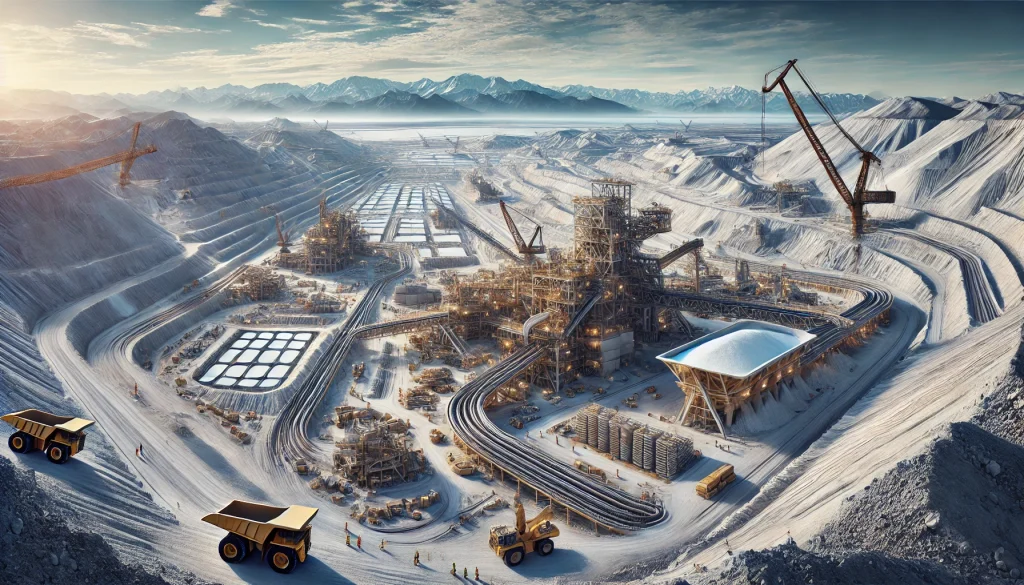
Chile, the world’s largest copper producer and second-largest supplier of lithium, has unveiled plans to invest $83.18 billion in mining projects through 2033, according to a report from state agency Cochilco. The figure represents a 27% increase from last year’s estimate and underscores the country’s commitment to bolstering its critical role in global mineral markets. With additional investments like BHP’s recently announced $14 billion expansion, total Chile mining investments 2033 could approach $100 billion.

Related News
- Rio Tinto Partners with Imperial College to Tackle Copper Supply Crunch in Energy Transition
- IMARC 2024: A Global Platform for Innovation and Collaboration in Mining
- Paladin Energy Warns of Looming Uranium Supply Gap Amid Rising Global Demand
- Blue Moon Metals Secures Norwegian Copper Assets, Strengthens Energy Transition Focus
Investment Drivers: Copper and Lithium
Cochilco’s report identifies 51 projects fueling the Chile mining investments 2033 boom, including expansions by global mining giants and improvements by state-owned Codelco, the world’s largest copper producer. Key initiatives include:
- A $14 billion expansion by BHP, operator of the massive Escondida mine.
- Freeport-McMoRan’s new developments, valued at $15.66 billion.
- State-owned Codelco’s ambitious plans at Chuqui Subterranea and a lithium project in the Maricunga salt flat.
- Anglo American’s Los Bronces expansion project.
Over half of the projected spending—$42.96 billion—is slated for projects between 2024 and 2026, signaling a concentrated push to bring new production online and meet growing global demand for critical minerals.
Strategic Importance of Chile Mining Investments 2033
Chile’s mining investments are vital for meeting the surging global demand for copper and lithium, two materials essential for renewable energy technologies. Copper is the backbone of electrification, used in power grids, electric vehicles, and wind turbines. Lithium, indispensable for rechargeable batteries, is a cornerstone of the energy transition.
Recent forecasts highlight dramatic increases in demand for both metals. The International Energy Agency (IEA) predicts copper demand will nearly triple by 2040, while lithium demand is expected to grow by over 40 times. Chile mining investments 2033 strategically position the country as a linchpin in supplying these essential materials.
More Read
Challenges and Opportunities
Chile’s ambitious mining agenda also comes with challenges, including regulatory and environmental hurdles. Efforts to balance resource development with sustainability and community impacts are a top priority. Environmentalists have raised concerns about water usage and ecological disruptions, especially in lithium-rich areas like the Maricunga salt flat.

Moreover, Chile’s mining sector faces political uncertainty as the government explores policies to increase state involvement in critical minerals. President Gabriel Boric’s announcement of a state-owned lithium company has sparked debates over the roles of public versus private sectors in resource development.
Despite these challenges, industry leaders remain optimistic. The involvement of major global players such as BHP, Freeport-McMoRan, and Anglo American demonstrates strong confidence in Chile’s mining ecosystem and its capacity to meet ambitious goals.
More Read
The Road Ahead for Chile Mining Investments 2033
As the world accelerates its energy transition, Chile mining investments 2033 reflect the nation’s strategic importance in supplying the raw materials critical for electrification and renewable energy. With significant projects scheduled for the next three years, Chile is well-positioned to solidify its role as a global mining powerhouse.
For Chile, the stakes are high. Success will hinge on navigating environmental challenges, ensuring community inclusion, and leveraging public-private partnerships to unlock the full potential of its rich mineral resources. The country’s nearly $100 billion investment plan not only aims to maintain its dominance in copper production but also to expand its leadership in lithium, reinforcing its role in powering a greener future.