Key Takeaways

- China steel exports to Russia surged 16% early this year, reaching record volumes.
- Moscow’s reliance on cheap Chinese imports exposes deep vulnerabilities under sanctions.
- The flood of low-cost metal fuels global concerns about Chinese steel dumping.
- Experts warn trade friction could soon derail Beijing’s export strategy.
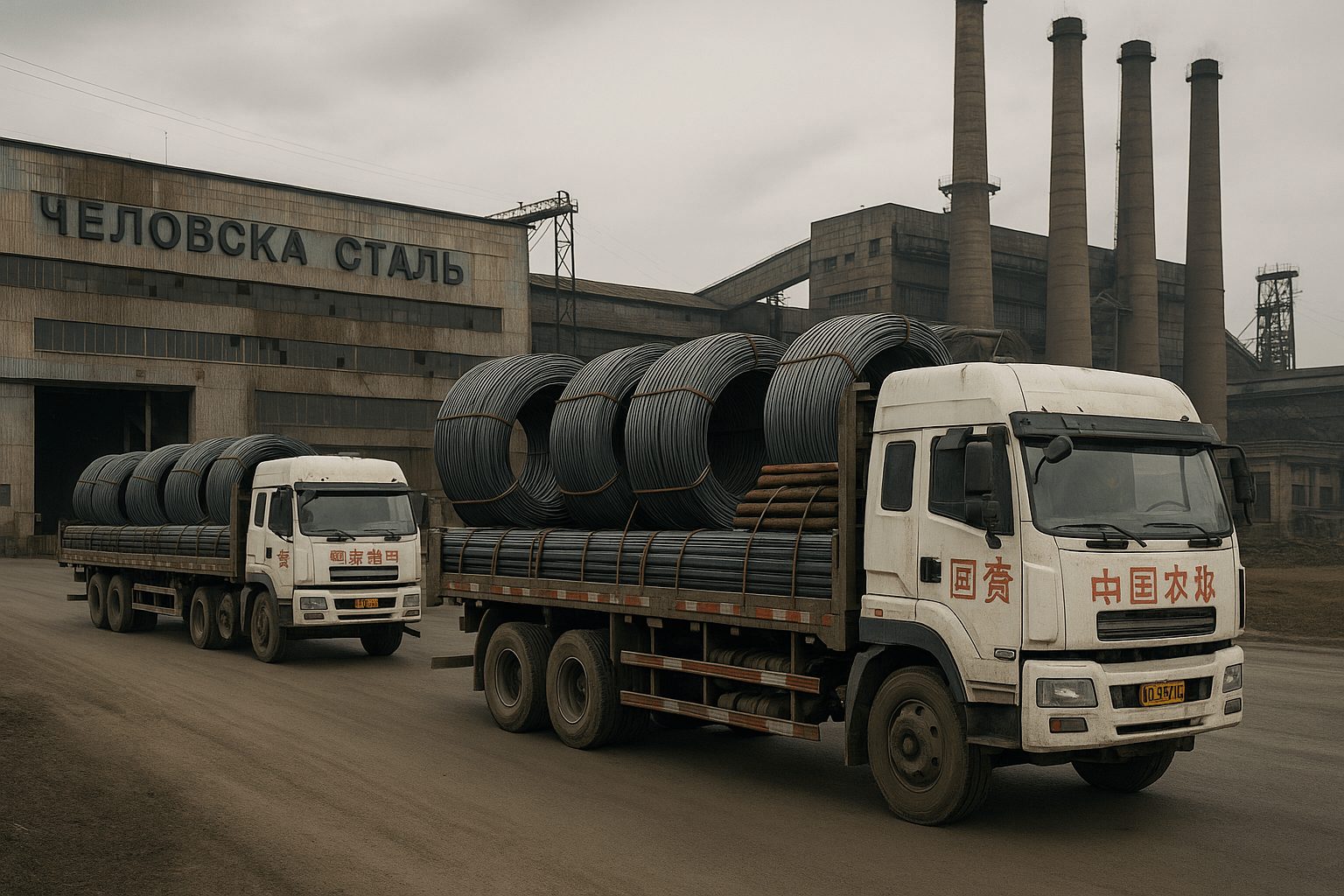
On the outskirts of Yekaterinburg, convoys of flatbed trucks roll into a quiet warehouse district, hauling loads of Chinese steel that have become a fixture in Russia’s struggling construction economy. Under the tarps lie cold-rolled coils and rebar—commodities that were once the pride of Russia’s own industrial output, now displaced by a torrent of Chinese imports.
China’s steel exports to Russia have jumped 16% year over year in the first five months of 2025, according to customs data—a surge that underscores Beijing’s determination to keep mills running despite slowing domestic demand and intensifying trade pressure abroad.
“China is in an export-or-die mindset,” said Alexei Kalinin, a metals analyst based in Berlin. “Domestic consumption is stagnating. The property sector isn’t recovering. So they are exporting wherever they can, including Russia.”
A Steel Sector Under Strain
Russia’s own steel industry has been reeling from Western sanctions imposed after the invasion of Ukraine. Production fell 7% in 2024 to about 70 million metric tons, World Steel Association data shows. Some mills have cut output by up to 14% as exports to Europe evaporated and financing dried up.
More Read

At first, Russian producers pivoted toward the Middle East, India, and China. But by late 2024, Chinese purchases of Russian semi-finished steel collapsed. Now, the dynamic has flipped, and Russia has become a destination for China’s overcapacity.

“Russia has a structural shortage in specialty grades—steel for petrochemical plants and railways,” said Olga Voloshina, a trade policy researcher in Moscow. “Chinese exporters are stepping in and gaining market share quickly.”
China’s Record-Breaking Export Push
Between January and May, China shipped nearly 48 million tons of steel products globally, an 8.9% rise from the same period a year ago. May alone saw shipments hit a seven-month high of 10.5 million tons, driven by aggressive price-cutting and state support.
More Read

“Steel is politically sensitive,” said Sarah Tan, commodities economist at Capital Economics. “Mills can’t shut down without triggering job losses and social tensions. Exports are a necessary outlet.”
While domestic consumption languishes, China has relied on destinations like Russia to absorb surplus supply. But some observers say this approach is unsustainable.
A Trade Strategy Under Fire
The flood of Chinese steel has provoked growing backlash. India and Vietnam have imposed new duties to counter alleged Chinese steel dumping, and Japan’s Nippon Steel has called on Tokyo to follow suit.
“China steel exports to Russia are just the most visible example,” Kalinin said. “The same story is playing out across Asia and Europe.”
Even within Russia, the impact is divisive. Contractors welcome the cheaper prices, but executives at Magnitogorsk Iron & Steel Works warn it is eroding competitiveness.
“Short-term savings come at the cost of long-term viability,” Voloshina said. “If this continues, Russia could lose capacity it can’t replace.”
Broader Economic Implications
Beijing’s export drive reflects a deeper problem: the difficulty of shifting from an investment-heavy growth model to one centered on consumption. For decades, steel was the engine of Chinese industrialization. But today, the returns have diminished.
“Steel is emblematic of an economic strategy that’s outlived its usefulness,” Tan said. “Exports buy time, but they won’t solve overcapacity.”
For Russia, the influx underscores a stark reality: sanctions have left its industrial sector more dependent on China’s scale and pricing power.
On Yekaterinburg’s loading docks, the trucks eventually rumble off to construction sites. For now, the flow of Chinese steel keeps projects alive—but no one is certain how long the arrangement can last.