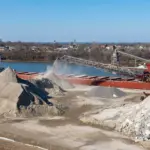
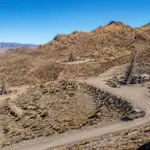
The Vicuña district spans the Argentina-Chile border in the high Andes.

Vicuña is moving from a large mineral discovery toward one of the mining industry’s most capital-intensive development decisions. The district, controlled through a 50/50 arrangement between Lundin Mining and BHP, combines the Josemaría copper-gold deposit in Argentina with Filo del Sol in Chile.
The February 2026 integrated technical study outlined a potential district-scale operation producing an average of 395,000 tonnes of copper, 711,000 ounces of gold and 22.2 million ounces of silver annually during its first 25 years. Peak output is projected at 508,000 tonnes of copper per year, based on the study’s 10-year production average.
That scale is drawing attention beyond traditional mining equity markets. European investors are following Vicuña through Lundin Mining’s Nasdaq Stockholm listing, specialist resource research and the wider debate over secure copper supply for electrification. However, public disclosures reviewed for this analysis do not identify a dedicated European equity commitment to the project. The more immediate European connection is through market access, institutional research, potential infrastructure finance and future offtake relationships.
Vicuña’s role in critical minerals supply
Copper is central to power grids, electric vehicles, renewable energy systems and data-center infrastructure. The International Energy Agency’s critical minerals outlook identifies Latin America as an important source of future mineral supply, particularly as governments and manufacturers seek to reduce concentration risk in processing and refining.

Vicuña’s potential contribution is significant because it offers copper alongside gold and silver, with a projected mine life of more than 70 years. The district’s updated mineral resource estimate contains, on a 100% basis:

| Mineral | Measured and indicated | Inferred |
|---|---|---|
| Copper | 14.3 million tonnes | 32.3 million tonnes |
| Gold | 36.1 million ounces | 61.3 million ounces |
| Silver | 729 million ounces | 1.05 billion ounces |
These figures are mineral resources, not mineral reserves, and do not demonstrate economic viability under the applicable reporting standards. The distinction is important for investors because the current project economics remain based on a preliminary economic assessment that includes inferred material.
The district’s economic significance also depends on its ability to connect two deposits, two national permitting systems and export infrastructure in Chile. That creates potential supply-chain diversification, but it also makes execution more complex than a single-country mine development.

A staged development model limits, but does not remove, capital risk
Vicuña is planned in three stages. The structure is intended to bring the Josemaría operation into production first, then use operating cash flow and additional financing to expand into the Filo del Sol oxide and sulphide zones.
| Development stage | Main scope | Estimated capital |
|---|---|---|
| Stage 1 | Josemaría open pit and sulphide concentrator | $7.1 billion |
| Stage 2 | Filo del Sol oxide mining and leaching facilities | $3.9 billion |
| Stage 3 | Filo del Sol sulphides, mill expansion and major infrastructure | $7.1 billion |
| Total | District development | $18.1 billion |
Source: Lundin Mining’s February 2026 integrated technical study. Figures are preliminary and rounded.
Stage 1 would establish a conventional open-pit mine and concentrator with initial processing capacity of 175,000 tonnes per day, or approximately 64 million tonnes per year. The operation would use crushing, grinding and flotation to produce copper concentrate, with gold and silver as important by-products.
Stage 2 would add Filo del Sol oxide processing through heap leaching and solvent extraction-electrowinning. The study contemplates production of copper cathode, gold and silver doré from oxide material.
Stage 3 would expand the concentrator from three processing lines to five, increasing nominal throughput to 293,000 tonnes per day. It would also require the most complex infrastructure package, including desalination, long-distance water delivery, a concentrate pipeline, a roaster and port upgrades.
The staged approach gives the project a clearer initial construction target, but it also creates dependencies. The economics of later phases rely on infrastructure that is not required at the same scale during Stage 1. This means investors will need to assess not only the first construction budget, but also the timing and financing structure of each expansion.
Infrastructure is the central investment question
Vicuña’s location offers substantial mineral potential but limited existing infrastructure. Most of the district’s major systems must be built or upgraded across difficult terrain.
The project’s infrastructure requirements include:
- A 220-kilometre Northern Access Road from San Juan province to the mine area.
- A new 500-kilovolt transmission line extending approximately 167 kilometres to the Chaparro substation.
- A 220-kilovolt connection from Chaparro to the Josemaría substation.
- Initial power requirements of approximately 380 megawatts for Stage 1 and Stage 2.
- Ultimate power demand of roughly 738 megawatts for the full district.
- A proposed 2,000-liter-per-second desalination system.
- A water pipeline extending approximately 200 kilometres from the Pacific coast.
- A 12-kilometre overland conveyor for Filo del Sol sulphide material.
- Concentrate transport from Argentina through Chile to port facilities.

Long-distance water, power and transport systems are fundamental to Vicuña’s expansion case.
The first phase would use groundwater from identified wellfields. The long-term plan is to supplement or replace that supply with desalinated seawater delivered from Chile’s coast.
This infrastructure has two implications for capital providers. First, it increases the project’s upfront complexity and exposure to construction inflation, equipment lead times and permitting delays. Second, it creates the possibility of a separate infrastructure financing vehicle.
The technical study assumes that the desalination plant, water pipeline, concentrate pipeline and roaster could be financed through a separate third-party infrastructure company. That structure may be relevant to European banks, export credit agencies, infrastructure funds and industrial contractors, although no final financing arrangement has been publicly confirmed.
Permitting crosses two regulatory systems
The Vicuña district must satisfy regulatory requirements in both Argentina and Chile. The Argentine side is governed through the Environmental Impact Assessment process, culminating in a Declaración de Impacto Ambiental. Chilean components require approval through the country’s environmental evaluation system and may also require sectoral permits and maritime concessions.
The Stage 1 exploitation DIA in Argentina has been secured, according to Lundin Mining’s technical disclosure. Additional approvals remain necessary, including hydraulic authorizations, blasting permits, easements, water-related approvals and other sectoral permissions.
On the Chilean side, the desalination plant, coastal intake, water pipeline, concentrate treatment facilities and port-related infrastructure will require separate approvals. The environmental baseline work described by the company covers hydrology, water quality, biodiversity, archaeology, paleontology and cryology.
Water will remain one of the most closely watched issues. The project is located in a high-altitude, semi-arid Andean environment that includes sensitive wetland systems known as vegas. The proposed desalination system could reduce reliance on groundwater during later development, but it introduces new questions involving coastal impacts, energy consumption, pipeline construction and cross-border water management.
Argentina’s investment regime strengthens the fiscal framework
In July, Argentina formally approved Vicuña’s entry into the Large Investment Incentive Regime, or RIGI, under the Long-Term Strategic Export Project designation.
According to Panorama Minero’s report on Resolution 1154/2026, the approved plan totals $9.737 billion, including $9.024 billion in eligible assets. The investment is divided into a first phase running through December 2026 and a second phase extending through December 2031. The project must meet the regime’s minimum investment commitment by Dec. 31, 2028.
RIGI is designed to improve fiscal visibility for large, export-oriented projects. Its importance to Vicuña is not limited to tax treatment. The regime may also affect foreign-exchange rules, import access, dispute resolution and the willingness of lenders to commit long-dated capital.
For European investors, the framework provides a formal reference point when comparing Argentina with other copper jurisdictions. It does not eliminate country risk, currency risk or political risk. Investors will still need to evaluate whether the regime remains durable through changes in government, how provincial and national approvals interact, and whether project obligations can be met on schedule.
Why European capital is watching
European exposure to Vicuña is developing through several channels rather than one announced financing package.
Lundin Mining’s shares trade on Nasdaq Stockholm, giving European institutional investors direct access to the company’s copper growth strategy. The company also submitted its February disclosure under the EU Market Abuse Regulation, reflecting its relevance to European-listed investors.
Specialist investment firms are assessing the district as part of the broader copper supply outlook. Janus Henderson’s analysis of Vicuña highlights the project’s potential role in future global copper supply, while also drawing attention to the scale and remote setting of the development.
The more tangible opportunity for European capital may emerge around project components rather than mine equity. Potential areas include:
- Infrastructure finance: desalination, pipelines, transmission and port upgrades.
- Equipment supply: crushers, mills, flotation systems, power equipment and automation.
- Export credit: financing linked to European engineering and industrial suppliers.
- Offtake and processing: long-term concentrate relationships with international smelters.
- Sustainability-linked capital: financing tied to water monitoring, energy efficiency or emissions performance.
None of these opportunities should be treated as confirmed commitments. They represent financing channels that could become relevant if Vicuña advances through detailed engineering, permitting and a final investment decision.
A framework for tracking execution risk
For operators, investors and policymakers, the project can be monitored through five linked indicators:
| Risk area | Current position | Next evidence to watch |
|---|---|---|
| Resource base | Large copper-gold-silver resource; includes inferred material | Conversion to reserves and updated feasibility work |
| Capital intensity | Stage 1 estimated at $7.1 billion; full district at $18.1 billion | Class 2 estimate, procurement awards and financing close |
| Infrastructure | Access road, transmission and water systems require major construction | Construction starts, permits and third-party infrastructure structure |
| Permitting | Argentine Stage 1 DIA secured; additional permits remain | Chilean environmental approvals and sectoral permits |
| Market access | Concentrate expected to move through Chilean ports | Port agreements, treatment terms and offtake contracts |
This framework matters because the project’s headline production numbers will not determine the outcome alone. Vicuña’s value will depend on whether infrastructure can be delivered across borders, whether capital costs remain manageable and whether the permitting timetable supports construction sequencing.
Outlook
Vicuña has the scale to become a material new source of copper, gold and silver, but it remains a development project rather than an operating mine. The February technical study provides a detailed conceptual plan, not a guarantee of construction or production.
The project’s next milestones are likely to include further engineering, permit amendments, access-road work, financing decisions and the possible sanctioning of Stage 1. European capital will remain relevant as a source of market scrutiny and potentially as a participant in infrastructure, equipment, lending and offtake.
For the critical minerals supply chain, the central question is straightforward: can a large resource in a remote, water-constrained and binational setting be converted into reliable production without allowing infrastructure and permitting complexity to overwhelm the capital plan?
Vicuña’s answer will shape more than one project. It will provide a test of how Argentina, Chile, mining companies and international investors cooperate to build the next generation of copper supply.
Shareable takeaways
LinkedIn:
Vicuña is emerging as one of the largest proposed copper-gold-silver developments in the Andes. Its $18.1 billion staged plan links Argentina’s RIGI investment regime with Chilean export, water and processing infrastructure. The opportunity is substantial, but execution will depend on permitting, power, desalination, logistics and capital discipline.
X:
Vicuña’s copper case extends beyond the orebody. The Argentina-Chile district requires a 220 km access road, new transmission, Chilean port logistics and a proposed 2,000 L/s desalination system. The $18.1B staged plan is a test of cross-border infrastructure and critical-minerals finance.