By Charles Pitts

LULEÅ, Sweden : In a move that further consolidates the European lithium supply chain, Talga Group (ASX: TLG) has entered into a non-binding Letter of Intent (LOI) with Japanese trading giant Hanwa Co., Ltd. for the offtake of battery anode material from its Vittangi Anode Project.
The agreement, announced Monday, establishes a framework for the supply of Talnode®-C, a high-performance graphite anode material produced using Talga’s proprietary technology and sourced from its 100%-owned graphite deposits in northern Sweden. This development comes as European automakers and battery manufacturers face an intensifying “supply crunch” for critical minerals as they attempt to diversify away from Chinese dominance.
For Talga, the partnership with Hanwa: a major player in the global battery materials sector: represents a significant commercial milestone. It follows a series of strategic agreements with other industrial leaders including ABB, Mitsui & Co., and Nyobolt, positioning the Vittangi project as a cornerstone of the EU’s domestic battery ecosystem.
Scaling the European Battery Anode Supply Chain
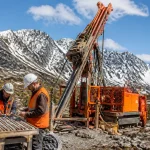
The Vittangi Anode Project is currently the most advanced large-scale graphite project in Europe. It comprises an integrated operation including a graphite mine at Vittangi and a refinery at the Port of Luleå. Once operational, the facility is designed to produce 19,500 tonnes per annum (tpa) of anode material, enough to power approximately 400,000 electric vehicles annually.
More Read

Under the terms of the LOI, Hanwa and Talga will negotiate a binding long-term offtake agreement. While specific volumes and pricing remain confidential during the negotiation phase, the partnership is expected to cover a substantial portion of the refinery’s initial production capacity.

“Securing a partnership with a tier-one Japanese trading house like Hanwa validates the quality of our Talnode®-C product and the strategic importance of the Vittangi project,” a company spokesperson noted. “As we move toward a Final Investment Decision (FID) in 2026, these offtake arrangements are critical for securing the project financing required to bring this facility online.”
The 2026 Market Context: A Graphite Supply Deficit
The timing of the LOI is notable. Market analysts at Skillings Mining Intelligence have identified 2026 as a pivotal “inflection point” for the graphite market. While much of the industry’s attention has focused on lithium and cobalt, graphite remains the largest single component of a lithium-ion battery by weight, often making up nearly 30% of the cell.
More Read

As of July 2026, the global market for battery-grade natural graphite is experiencing extreme tightness. China still controls over 90% of the processing capacity for spherical graphite, but recent export controls and the implementation of the EU’s Critical Raw Materials Act (CRMA) have forced a rapid realignment of procurement strategies.
Market Snapshot: European Anode Material Forecasts (2026)
| Metric | 2024 Actual | 2026 Forecast | 2030 Target |
|---|---|---|---|
| EU Graphite Anode Demand (tpa) | 95,000 | 185,000 | 450,000+ |
| EU Domestic Production Share | <1% | ~5% | 40% (CRMA Goal) |
| Avg. Price (Coated Spherical Graphite) | $3,800/t | $4,650/t | $5,500/t (Est.) |
| China Import Dependency | 94% | 88% | <60% |
Data Source: Skillings Market Intelligence Unit & EU Commission Raw Materials Survey.
Technical Edge: Low-Carbon Production in Sweden
One of the primary drivers behind Hanwa’s interest in Talga is the environmental profile of the Swedish operations. Unlike traditional graphite processing, which often relies on coal-fired power and harsh chemical leaching, the Luleå refinery will utilize Sweden’s nearly 100% renewable hydroelectric power grid.
Recent life-cycle assessments indicate that Talnode®-C has a carbon footprint approximately 90% lower than comparable synthetic graphite produced in China. For Hanwa and its downstream customers: predominantly Japanese and European battery makers: this low-carbon pedigree is essential for compliance with the EU Battery Regulation, which mandates strict carbon intensity reporting for all batteries sold in the bloc starting in 2026.

Infrastructure and Strategic Partnerships
The road to production at Vittangi has been supported by a network of infrastructure and technology partners. Talga’s ongoing collaboration with ABB for the electrification and automation of the mine and refinery ensures that the project maintains peak operational efficiency.
The project was recently granted “Strategic Project” status under the EU’s Net-Zero Industry Act, which provides for accelerated permitting and access to specialized funding pools. This status has already facilitated a €150 million loan from the European Investment Bank (EIB) and a €70 million grant from the EU Innovation Fund.
Key Risks and 2026 Outlook
Despite the momentum provided by the Hanwa LOI, several challenges remain for the Vittangi project as it enters the second half of 2026:
- Permitting Timelines: While the main environmental permits are in hand, minor appeals and land-use negotiations with local stakeholders are ongoing. Any delays in final site preparation could push the start of commercial production into late 2027.
- Capital Intensity: Building a vertically integrated mine-to-anode refinery is capital-intensive. Talga must finalize a multi-billion SEK financing package by the end of Q4 2026 to stay on schedule.
- Technological Shift: While graphite is currently the dominant anode material, the rise of silicon-anode blends and solid-state battery research poses a long-term substitution risk, though most experts believe graphite will remain the industry standard through at least 2035.

Strategic Implications for the Lithium Supply Chain
The Talga-Hanwa deal is a clear signal that the “Japanese-European Axis” is strengthening in response to global supply chain vulnerabilities. For investors and operators in the battery minerals space, this LOI highlights the premium being placed on secure, domestic, and ESG-compliant sources of supply.
“The industry is moving past the exploration phase,” says a lead analyst at Skillings Mining Intelligence. “2026 is the year of execution. Offtake deals like this are the prerequisite for the ‘gigafactory era’ to actually function. Without the anode material, the multi-billion dollar cell plants in Germany and Poland are just expensive warehouses.”
As Talga moves toward its Final Investment Decision, the industry will be watching closely to see if other Japanese trading houses or European OEMs follow Hanwa’s lead in locking down Swedish graphite supply.