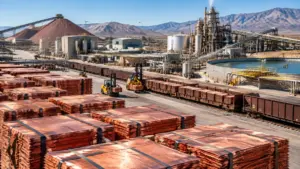
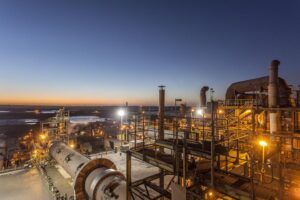
Global lithium supply faces unprecedented pressure as demand from electric vehicles and energy storage surges across Asia, Europe, and North America. With China dominating refining, Australia leading in production, and Latin America’s “Lithium Triangle” rising in importance, the next decade could reshape the balance of power in the battery metals market.

Global Lithium Supply Crunch and Price Volatility
Lithium has shifted from a niche industrial metal to the backbone of the global energy transition. From powering smartphones to enabling grid-scale storage, its role in the clean energy economy is non-negotiable.
According to Benchmark Mineral Intelligence, global demand for lithium is expected to triple by 2035, driven largely by electric vehicle (EV) adoption. Wood Mackenzie forecasts persistent deficits beginning as early as 2026, warning that supply shortfalls could derail decarbonization targets.
The stakes are clear: whoever controls lithium production and refining in the next decade will hold a decisive advantage in the world’s race toward electrification.
Australia: The Production Powerhouse
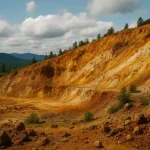
Australia remains the world’s largest lithium producer, responsible for nearly half of all global output in 2024, primarily from hard rock spodumene mines in Western Australia. Major players such as Pilbara Minerals, Allkem, and Tianqi continue to expand capacity.
More Read

Yet, most of Australia’s spodumene is exported to China for processing, raising questions about strategic independence. Canberra has pledged funding to expand domestic refining capacity, but analysts warn that without aggressive investment, Australia will remain a raw material supplier rather than a downstream powerhouse.

Latin America’s Lithium Triangle: Chile, Argentina, Bolivia
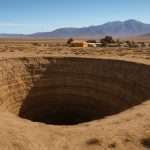
The Lithium Triangle — spanning Chile, Argentina, and Bolivia — holds nearly 60% of global reserves, mostly in salt flat brine deposits.
- Chile remains a cornerstone supplier, but President Gabriel Boric’s push for tighter state control under a new national lithium strategy has injected uncertainty for investors.
- Argentina has become the fastest mover, attracting significant foreign investment. If current project pipelines deliver, Argentina could overtake Chile in lithium output by 2030.
- Bolivia possesses vast untapped reserves but continues to struggle with political gridlock and infrastructure challenges, leaving most of its potential unrealized.
China: Refining Dominance and Strategic Leverage
While not the biggest miner, China controls more than 70% of global lithium refining capacity. Its state-backed companies are rapidly acquiring upstream assets worldwide — from Zimbabwe to Argentina — ensuring continued influence over global supply chains.
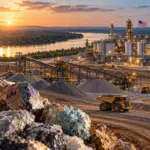
For Western automakers, this creates a bottleneck: even when lithium is mined in Australia, Chile, or Canada, it is often shipped to Chinese facilities for conversion. Without alternative refining hubs, Beijing’s leverage will remain strong throughout the decade.
Industry Impact: Lithium Prices and EV Supply Chains
Lithium carbonate prices illustrate the sector’s volatility. After peaking at nearly $80,000 per ton in 2022, they fell sharply in 2023–24 as supply surged and automakers built up inventories. Analysts expect a rebound by 2026 as EV adoption accelerates, pushing demand ahead of available refining capacity.
“Supply discipline is fragile, and demand curves are steepening,” notes a commodities strategist at BMO Capital Markets. “We could see another price spike by 2027 if refining capacity outside China doesn’t materialize.”
Automakers are responding by locking in long-term contracts: Tesla, BYD, and General Motors have signed deals stretching a decade or more. Vertical integration — once rare in the automotive supply chain — is becoming the new norm.
Global Stakes: U.S., EU, Canada, and Africa
For the U.S. and EU, lithium is not just an industrial commodity — it’s a strategic asset.
- Washington’s Inflation Reduction Act (IRA) incentivizes domestic and “friendly” sourcing of critical minerals.
- The EU’s Critical Raw Materials Act sets similar targets to reduce reliance on China.
- Canada is emerging as a key ally, with lithium projects advancing in Quebec and Ontario.
- In Africa, countries like Zimbabwe and Namibia are seeing rapid Chinese investment, raising concerns over whether new projects truly diversify supply chains or reinforce China’s grip.
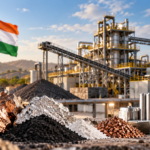
- India, though still nascent, is exploring domestic lithium reserves to reduce its import reliance.
This global competition will decide not just which nations dominate mining, but whether EVs remain affordable or face future price shocks.
? Skillings Analysis
Skillings Mining Review Commentary:
The short-term oversupply has cooled lithium markets, but structural shortages loom from 2026 onward as EV penetration crosses 40% in major economies. The critical question is not who mines lithium, but who refines it into usable chemicals. Unless Western nations accelerate midstream capacity, China’s dominance will persist.
Watch closely for:
- Chile’s policy updates in 2025, which may reshape global supply agreements.
- Argentina’s aggressive project growth, potentially overtaking Chile by 2030.
- Long-term auto contracts, which will lock in supply and prices for years ahead.
Looking Ahead
By the end of the decade, the contest over lithium will define the EV era. Australia must decide whether to build out refining, Chile must balance state control with private capital, Argentina is racing to scale, and China continues to consolidate its grip on processing.
The next 10 years will determine who wins the global lithium supply crunch — and who gets left behind in the transition to clean energy.