By Charles Pitts

DAR ES SALAAM, Tanzania : Mohammed Dewji, Tanzania’s wealthiest businessman and president of MeTL Group, has announced a $396 million commitment to accelerate domestic graphite production and midstream processing. The investment marks a decisive shift for the conglomerate as it seeks to capture high-margin segments of the electric vehicle (EV) and battery energy storage system (BESS) supply chains.
The project is slated to reach initial commercial production within 18 months. By moving beyond raw mineral extraction into advanced chemical processing, MeTL Group aims to position itself as a critical supplier for international battery manufacturers in Europe and Asia. The move is a central pillar of Dewji’s broader strategic roadmap to grow group revenue to $10 billion by 2035.
Strategic Pivot to Battery Minerals
The $396 million capital expenditure represents one of the largest private-sector industrial investments in Tanzania’s recent history. Traditionally focused on agribusiness, logistics, and consumer goods, MeTL’s foray into the mining sector is a calculated bet on the global energy transition.
“The focus is not just on mining the rock, but on the value-add,” said a company spokesperson familiar with the expansion. “By processing graphite to 99.5% purity domestically, we are retaining the economic value within Tanzania rather than exporting raw concentrates to be refined elsewhere.”
More Read

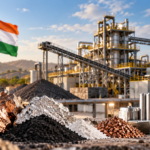
Tanzania holds the world’s fifth-largest graphite reserves, yet much of this potential has remained untapped due to infrastructure constraints and a historical lack of domestic processing facilities. Dewji’s investment aims to bridge this gap, establishing a facility capable of producing spherical graphite: the essential material for lithium-ion battery anodes.


Midstream Margins and the EV Supply Chain
The decision to invest heavily in midstream processing follows a global trend of resource-rich nations seeking to move up the value chain. Currently, China dominates approximately 90% of the world’s graphite refining capacity. By establishing a 99.5% purity threshold in Tanzania, MeTL Group is positioning itself as a “China-plus-one” alternative for Western automakers and battery firms.
More Read

For the mining industry, the move is significant. Raw graphite prices can be volatile, but the refined product used in lithium-ion battery anodes commands a substantial premium.
| Graphite Product Grade | Estimated Market Purity | Primary Application |
|---|---|---|
| Raw Ore / Concentrate | 90% – 94% | Industrial lubricants, steel, crucibles |
| Refined Flake | 95% – 98% | Expandable graphite, general electronics |
| Spherical Graphite | 99.5%+ | EV Battery Anodes, BESS |
| Synthetic Graphite | 99.9% | High-end EV batteries, specialized tech |
Data Source: Skillings Mining Intelligence Market Research 2026.
The 18-month timeline for first production is ambitious, requiring the rapid deployment of both extraction machinery and chemical processing infrastructure. Industry analysts suggest that the success of the timeline will depend on the speed of regulatory approvals and the integration of specialized refining technology, much of which is currently sourced from international engineering partners.
The 2035 Vision: A $10 Billion Goal
Dewji, who has built MeTL into a diversified powerhouse with interests in over 30 industries, sees graphite as the engine for the next decade of growth. The group’s current revenue stands as a major portion of Tanzania’s GDP, but reaching the $10 billion target by 2035 requires entry into high-growth, high-tech sectors.
The graphite project is expected to create thousands of jobs in the Lindi and Mahenge regions, areas known for high-grade flake graphite deposits. Beyond employment, the project includes significant investments in local energy infrastructure to power the refining kilns, which could have spillover benefits for regional electrification.

Market Dynamics and Geopolitical Impact
The investment comes at a time when the copper deficit and general scarcity of battery-grade minerals are driving up long-term contract prices. While lithium often dominates the headlines, graphite is numerically the largest component of an EV battery by weight. A single Tesla Model S, for instance, contains roughly 70 kilograms of graphite.
“The demand for graphite is projected to increase fivefold by 2030,” noted a recent report from Skillings Mining Intelligence. “Any company that can guarantee supply outside of the traditional Chinese corridors will find a ready market in the U.S. and European Union, particularly as the Inflation Reduction Act (IRA) and similar policies favor diversified sourcing.”
However, the project faces risks. Synthetic graphite production is scaling rapidly, and any breakthrough in silicon-anode technology could potentially reduce the graphite-to-silicon ratio in future batteries. MeTL’s bet assumes that natural flake graphite will remain the most cost-effective and energy-efficient material for the majority of the world’s BESS and mass-market EV needs through the mid-2030s.
Operational Logistics and Infrastructure
To support the 18-month sprint to production, MeTL is reportedly leveraging its existing logistics network: one of the largest in East Africa. The ability to move heavy equipment from the Port of Dar es Salaam to remote mining sites is a competitive advantage that few junior miners possess.

“Logistics is often where mining projects in Africa stall,” says one operations manager at a neighboring site. “Having the backing of a group that already owns thousands of trucks and has deep experience in Tanzanian regulatory environments changes the risk profile entirely.”
The project will also include a dedicated power plant, likely utilizing a mix of natural gas and renewable sources, to ensure the consistent energy supply required for high-purity graphite refining. This vertical integration: from the mine face to the shipping container: is designed to insulate the project from external shocks in the local power grid.
Looking Ahead to 2026
As the 18-month clock begins, the industry will be watching MeTL’s progress closely. If successful, Dewji’s $396 million gamble could transform Tanzania from a raw material exporter into a regional hub for battery mineral processing.
For investors, the project serves as a bellwether for private equity and conglomerate-led mining in Africa. While state-owned enterprises and Chinese giants have traditionally led these developments, the entry of domestic titans like MeTL signals a new era of African-led industrialization.
The 2026 outlook for the project includes:
- Q3 2026: Completion of primary crushing and flotation circuits.
- Q4 2026: Commissioning of the first-stage chemical refining plant.
- H1 2027: First exports of 99.5% battery-grade graphite to Asian markets.
About the Author:
Charles Pitts is a specialist in mining automation and resource economics. He currently serves as the Chief Automation Officer at Skillings Mining Intelligence, where he covers the intersection of industrial technology and critical mineral supply chains.